
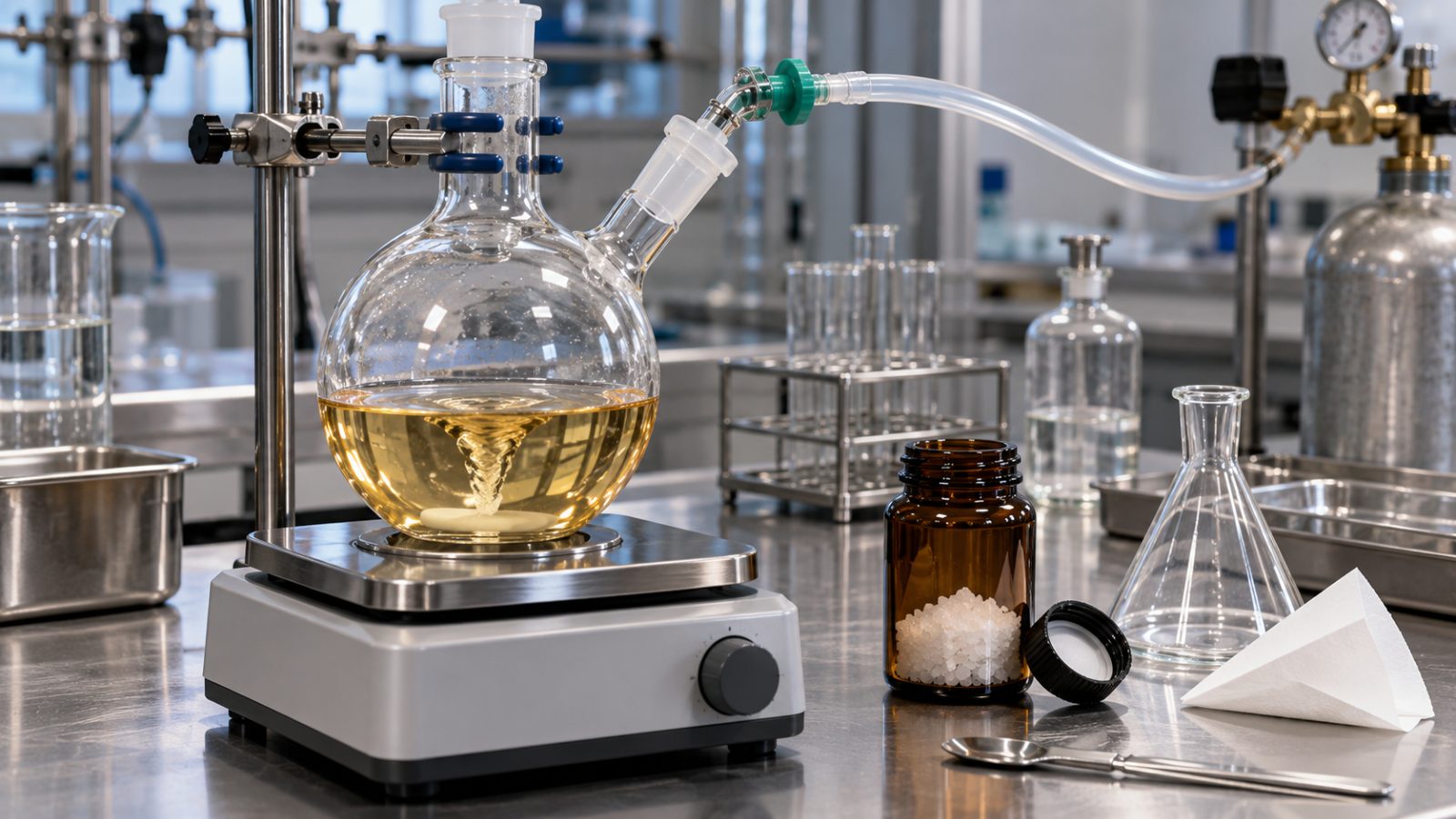
Lewis acids are chemical compounds that are able to accept a pair of electrons to form a covalent bond. These compounds are commonly used as catalysts in organic synthesis, a process that involves the synthesis of organic compounds from simpler starting materials.
One of the main advantages of Lewis acids is their ability to facilitate a wide range of organic synthesis conversions, including nucleophilic substitution, electrophilic addition, and elimination reactions. These reactions involve the transfer of electrons between reactant molecules, leading to the formation of new chemical bonds and the synthesis of new compounds.
Examples of common Lewis acids used in organic synthesis include aluminum chloride (AlCl3), boron trifluoride (BF3), and iron trichloride (FeCl3). These compounds are able to accept a pair of electrons from a nucleophile, such as a negatively charged molecule or an atom with a lone pair of electrons, and form a covalent bond with it.
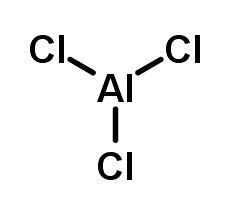
In the cannabis industry, Lewis acids are particularly useful for cannabinoid isomerization and conversion, enabling processors to transform CBD into various THC isomers through controlled catalytic reactions.

[…] trifluoride (BF3) is a Lewis acid that is commonly used as a catalyst in the isomerization of CBD to other cannabinoids, such as THC. The process involves the use of BF3 to facilitate the […]