
What Is Flower Rosin?
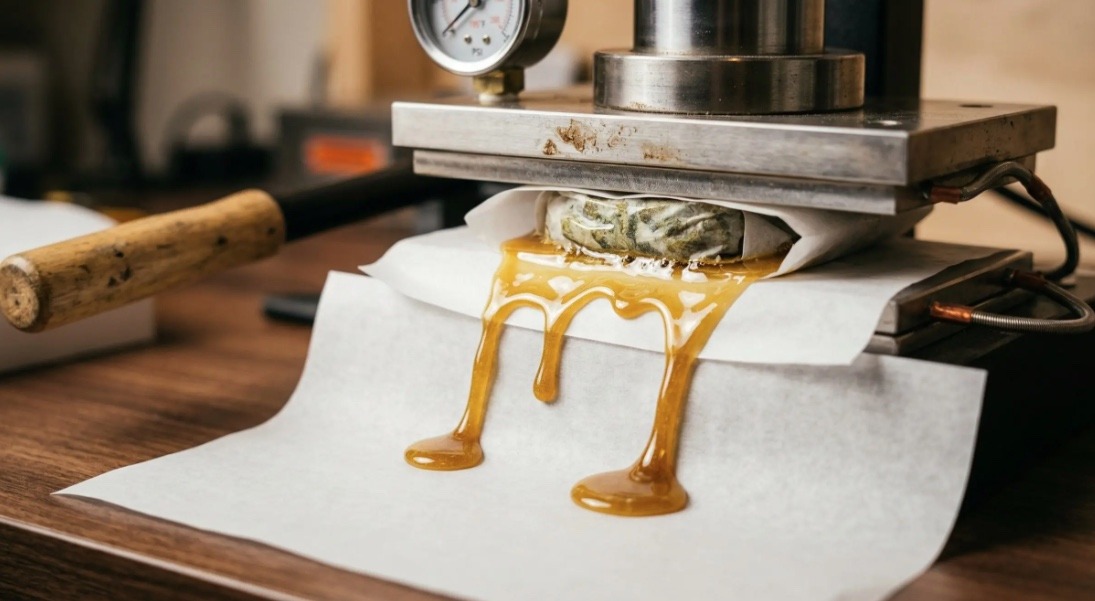
Flower rosin is a solventless cannabis concentrate made by applying heat and pressure to dried cannabis flower. No butane, no ethanol, no CO2. Just mechanical force and controlled temperature squeezing cannabinoids and terpenes out of the trichome heads and onto parchment paper. The result is a golden, terpene-rich extract that preserves the full chemical profile of the starting material.
Unlike closed-loop BHO extraction, rosin pressing requires no volatile solvents, no C1D1 room, and no complex permitting. That accessibility is what makes it the most popular entry point into concentrate production for home enthusiasts and small commercial operators alike.
Equipment You Need to Press Rosin
The quality of your rosin press directly impacts yield and consistency. Here is the essential equipment list:
- Rosin press: Hydraulic, pneumatic, or manual. Hydraulic presses (2 to 12 ton capacity) offer the most consistent pressure control. Popular brands include Dabpress, Lowtemp Industries, and Nugsmasher.
- Heated plates: Dual heated aluminum or stainless steel plates with independent PID temperature controllers. Plate size determines how much flower you can press per cycle.
- Filter bags (rosin bags): Nylon mesh bags in 90, 120, or 160 micron sizes. For flower rosin, 90 to 120 micron is the standard range.
- Parchment paper: Unbleached, silicone-coated parchment. Never use wax paper; it will melt and contaminate your extract.
- Collection tools: Stainless steel dabber or silicone mat for gathering pressed rosin.
- Digital scale: For weighing input material and calculating yield percentages.
- Humidity packs: Boveda 62% packs to condition flower before pressing.
Preparing Your Flower for Maximum Yield
Starting material quality is the single biggest variable in flower rosin production. Pressing mids will produce mid results regardless of technique. Here is how to optimize your input material:
Moisture Content
Target 55% to 62% relative humidity in your flower. Flower that is too dry produces lower yields because the trichomes shatter instead of flowing under pressure. Why the gland head fails before the flower shatters, and what 62% RH does to heat transfer through the puck, is worked through in the rosin press science guide. Flower that is too wet creates steam pockets that dilute your rosin with water and plant lipids. Use Boveda 62% humidity packs for 24 to 48 hours before pressing to bring the moisture content into the ideal range.
Trichome Density
Frosty, trichome-dense buds yield more rosin per gram. Inspect your flower under magnification. Milky, intact trichome heads indicate peak cannabinoid and terpene content. Amber or broken trichomes suggest degradation, which means lower yield and darker color.
Bag Packing
Break buds into roughly popcorn-sized pieces. Do not grind the flower; grinding exposes more plant surface area and pushes more lipids and chlorophyll through the filter bag. Pack the rosin bag firmly but not too tight. Air pockets reduce efficiency, but over-packing restricts resin flow. A good rule of thumb is 3.5 to 7 grams per press for plates in the 3×5 inch range.
Temperature, Pressure, and Time: The Three Variables
Rosin pressing comes down to balancing three variables: temperature, pressure, and time. Adjusting one affects the others. Understanding this relationship is what separates a beginner from someone producing dispensary-grade flower rosin.
Temperature Ranges
Flower rosin is typically pressed between 170°F and 220°F. Within that range, two approaches dominate:
- Low temperature (170°F to 190°F): Produces lighter colored rosin with superior terpene retention. Yields are slightly lower, but the flavor profile and consistency are premium. This is the “cold press” approach favored for dabbable flower rosin.
- High temperature (200°F to 220°F): Produces higher yields but darker rosin with more lipid co-extraction and some terpene loss. Better suited for edible infusions or cartridge production where terpene preservation is less critical.
Start at 185°F for a balanced first press. Adjust from there based on your specific strain and desired consistency.
Pressure Application
Apply pressure gradually over 15 to 30 seconds. Slamming full pressure immediately causes blowouts where the rosin bag ruptures, contaminating your extract with plant material. Once you reach full pressure (typically 800 to 1,200 PSI at the bag, not the gauge), hold steady and let the rosin flow.
Calculate platen PSI with this formula: (gauge pressure x cylinder area) / plate contact area. A 10-ton press does not mean 10 tons is hitting your bag. The actual PSI at the flower depends on your plate size and the surface area of your packed bag.
Press Duration
Total press time runs 60 to 120 seconds for flower rosin. At lower temperatures, press longer (90 to 120 seconds) to compensate for reduced resin flow. At higher temperatures, 60 to 90 seconds is usually sufficient. Stop pressing when you no longer see rosin flowing from the bag onto the parchment.
Step-by-Step Flower Rosin SOP
- Condition your flower to 58% to 62% RH using Boveda packs for 24 to 48 hours.
- Preheat your plates to the target temperature. Allow 10 to 15 minutes for full thermal equilibrium across the plate surface.
- Weigh your flower on a digital scale. Record the weight for yield calculations.
- Pack the rosin bag with broken-up (not ground) flower. Fold the open end over to seal.
- Place the packed bag between two sheets of parchment paper, centered on the heated plates.
- Close the press until the plates contact the bag with light pressure. Allow 10 to 15 seconds of “warm-up” contact before applying full force.
- Gradually increase pressure over 15 to 30 seconds until full tonnage is reached.
- Hold at full pressure for 45 to 90 seconds, monitoring rosin flow on the parchment.
- Release pressure and immediately remove the parchment from the heat.
- Collect the rosin from the parchment using a cold dabber tool. Work quickly; rosin softens fast at room temperature.
- Weigh the collected rosin and calculate yield: (rosin weight / flower weight) x 100 = yield percentage.
How Much Flower Does It Take to Make 1 Gram of Rosin?
Between 4 and 7 grams of dried flower per gram of rosin for most material, because flower rosin yields run 15 to 25% by weight. A 3.5 g eighth of 22% THC flower pressed at 200F with a 90 micron bag returns about 0.6 to 0.8 g; a 7 g quarter returns 1 to 1.7 g. The number that moves the answer is trichome density, not the press: fresh, frosty indoor flower at 58 to 62% relative humidity presses at the top of the range, dry or sparse flower at the bottom, and anything below 10% yield is a material problem a hotter plate will not fix.
| Flower pressed | 12% yield (dry, sparse) | 15% yield (average) | 18% yield (good indoor) | 22% yield (frosty, fresh) | 25% yield (top end) |
|---|---|---|---|---|---|
| 1 g | 0.12 g | 0.15 g | 0.18 g | 0.22 g | 0.25 g |
| 3.5 g (eighth) | 0.42 g | 0.53 g | 0.63 g | 0.77 g | 0.88 g |
| 7 g (quarter) | 0.84 g | 1.05 g | 1.26 g | 1.54 g | 1.75 g |
| 14 g (half) | 1.7 g | 2.1 g | 2.5 g | 3.1 g | 3.5 g |
| 28 g (ounce) | 3.4 g | 4.2 g | 5.0 g | 6.2 g | 7.0 g |
| Flower needed for 1 g of rosin | 8.3 g | 6.7 g | 5.6 g | 4.5 g | 4.0 g |
Is pressing rosin worth it?
Run the arithmetic on your own flower price before you buy a press. At $8 per gram of flower and an 18% yield you spend about $44 of flower per gram of rosin, which is near what a dispensary charges for mid-grade flower rosin, so the press pays for itself only on flower you grew or bought in bulk. At $4 per gram the same yield costs $22 per gram of rosin and the press wins in a month. The break-even moves with yield faster than with press price: every 3 points of yield is worth about 15% on the cost per gram, which is why the moisture and trichome checks in the preparation section matter more than a bigger plate.
How much is 1 g of rosin worth?
Retail flower rosin runs roughly $30 to $60 per gram in mature markets and hash rosin $50 to $90, with price tracking the terpene content and the wash grade more than THC. A gram of flower rosin that tests at 70% THC and 6% terpenes sits at the top of the flower-rosin band; the same gram pressed hot and dark sells as the bottom.
Can I press rosin with a hair straightener?
You can, and the result shows why people buy presses. A straightener has no pressure control, its plates sit at 230 to 400F with no way to hold 190F, and the contact area is a few square inches, so yields land at 5 to 8% with dark, terpene-poor rosin and the bag blows out at the edges. If the goal is one dab from a single nug it works; if the goal is a gram, it costs more flower than a $300 manual press does in its first week.
Expected Yields and What Affects Them
Flower rosin yields typically range from 15% to 25% by weight when pressing quality material. Here is what drives that range:
- Strain genetics: Some cultivars are known “rosin strains” that produce higher yields. Strains with dense trichome coverage and resinous genetics consistently outperform. GMO, Papaya, and Ice Cream Cake are well-known high-yield rosin cultivars.
- Freshness: Flower pressed within two weeks of harvest (properly cured) yields more than flower that has been sitting for months. Trichome heads degrade over time, reducing extractable resin.
- Moisture content: Dialed-in humidity (58% to 62%) maximizes flow. Too dry means lost yield; too wet means water-contaminated rosin.
- Bag micron size: Lower micron (90u) produces cleaner rosin but slightly lower yield. Higher micron (160u) lets more through, including plant lipids. 120 micron is the most common compromise for flower rosin.
- Temperature and pressure: Higher temperature and pressure increase yield but decrease quality. Find the sweet spot for your material.
If you are consistently getting below 15% yield from visually frosty flower, check your humidity, bag packing density, and temperature calibration first.
Strain-Specific Yield Benchmarks
Not all flower presses the same. Trichome density, resin gland morphology, and terpene-to-cannabinoid ratio all affect how much oil leaves the bag. These benchmarks are based on pressing cured flower at 62% RH through 90-micron bags at the listed temperatures.
| Cultivar | Optimal Temp (°F) | Yield Range (%) | Typical Consistency | Notes |
|---|---|---|---|---|
| GMO / Garlic Cookies | 185-195 | 22-28% | Wet badder | Consistently highest yielding. High thiol content gives distinctive garlic terp profile. |
| Papaya | 180-190 | 20-25% | Sappy to badder | Dense trichome stalks. Presses clean with minimal lipid contamination. |
| Ice Cream Cake | 180-190 | 19-24% | Stable badder | Excellent trichome-to-plant-matter ratio. Budders up within 24-48 hours at room temp. |
| Gorilla Glue #4 | 190-200 | 18-23% | Shatter to pull-snap | Needs slightly higher temp due to resin viscosity. Lower terpene fraction produces more stable texture. |
| Wedding Cake | 185-195 | 18-22% | Badder | High myrcene content makes it flow quickly at lower temps. Watch for over-pressing. |
| Zkittlez | 175-185 | 16-20% | Sappy jam | High terpene percentage (3-5%) produces runny output. Press low and slow for best flavor retention. |
| Blue Dream | 190-200 | 14-18% | Pull-snap | Moderate trichome coverage. Common sativa structure means less resin per gram. Needs higher temp to compensate. |
| Sour Diesel | 185-195 | 13-17% | Sap | Lower yield but exceptional terpene profile. Monoterpene-heavy (limonene, myrcene) so flavor output is disproportionately good relative to mass. |
These numbers shift with phenotype, grow conditions, and cure quality. A well-grown Sour Diesel from living soil will outpress a poorly grown GMO every time. Genetics set the ceiling. Everything else determines how close you get to it.
Common Mistakes and How to Fix Them
Dark or Green Rosin
Dark color usually means too much heat, too much pressure, or degraded starting material. Green tint indicates chlorophyll contamination, typically from grinding the flower too fine or using bags with too-large micron ratings. Lower your temperature by 10°F and ensure your flower is broken up by hand, not ground.
Low Yield Despite Good Flower
Check your humidity first. Bone-dry flower is the number one cause of disappointing yields from otherwise excellent material. Also verify your plate temperature with an infrared thermometer; PID controllers can drift, and a 15°F offset at the plate surface changes everything.
Bag Blowouts
Blowouts happen when pressure is applied too fast or bags are overpacked. Slow your pressure ramp to a full 30 seconds and reduce the amount of flower per bag by 20%. Double-bagging (one bag inside another) also reduces blowout risk at higher pressures.
Bag quality is the variable most people overlook. A cheap bag with loose stitching or an inconsistent mesh weave will rupture at the seam even when your pressure ramp and pack weight are dialed in, and a single blowout dumps plant material straight into an otherwise clean press. For flower work we recommend Gutenberg’s Dank Pressing rosin bags: consistent micron ratings and reinforced stitching are what let a bag take full plate pressure without failing, and that consistency is what gets you clean color and repeatable yields press after press.
Rosin is Too Runny or Unstable
High terpene strains pressed at higher temperatures produce rosin that will not hold shape at room temperature. This is not a defect; it is a characteristic of the chemical profile. If you want a more stable consistency, press at 175°F to 180°F and cold cure the rosin in a sealed glass jar at room temperature for 24 to 72 hours. The consistency will firm up as terpenes redistribute through the cannabinoid matrix.
Pressing Parameter Matrix: Dialing In by Goal and Material
The parameter tables below exist because most guides give you a single temperature range and call it done. In practice, your optimal settings shift based on what you are pressing, what you want out of it, and what the material’s trichome structure looks like. This is the reference operators pin next to the press.
| Goal | Temp (°F) | PSI at Bag | Duration (sec) | Bag (μm) | Yield Range | Quality Trade-off |
|---|---|---|---|---|---|---|
| Premium dab (max terpene) | 170-180 | 600-800 | 90-120 | 90 | 12-18% | Best flavor, lightest color. Lowest yield. |
| Balanced (yield + quality) | 185-195 | 800-1000 | 75-100 | 120 | 17-22% | Sweet spot for most operators. Good terpene retention with respectable yield. |
| Max yield (edibles/carts) | 200-220 | 1000-1200 | 60-90 | 120-160 | 20-25% | Highest yield. Darker color, more lipid co-extraction, reduced terpene profile. |
| Hemp CBD rosin | 190-210 | 800-1000 | 90-120 | 120 | 8-15% | Hemp has lower trichome density. Higher temps needed to extract available resin. |
| Second press (re-press) | 210-230 | 1000-1200 | 60-75 | Same bag | 3-8% additional | Lower quality than first press. Use for edibles or infusions, not dabbing. |
These are starting points, not gospel. Every cultivar responds differently. GMO presses best at 180°F. Papaya wants 190°F. Ice Cream Cake likes the 185°F sweet spot. Log your settings and yields per strain and you will build a pressing profile that no parameter chart can replace.
Plate Pressure: What the Gauge Actually Means
Press manufacturers advertise tonnage. That number means nothing until you calculate the actual PSI hitting your flower. The formula: (gauge force in pounds) / (bag contact area in square inches) = PSI at the bag. Here is what that looks like in practice:
| Press Size | Gauge Force | Bag Contact Area | PSI at Bag | Flower Load |
|---|---|---|---|---|
| 4-ton (hobby) | 8,000 lbs | ~8 sq in (2×4 bag) | 1,000 | 3.5-7g |
| 10-ton (prosumer) | 20,000 lbs | ~15 sq in (3×5 bag) | 1,333 | 7-14g |
| 20-ton (commercial) | 40,000 lbs | ~40 sq in (4×10 bag) | 1,000 | 14-28g |
Notice the 20-ton press hits the same PSI as a 4-ton because the plate and bag are larger. More tonnage does not mean more pressure. It means more capacity at the same pressure. That is the most common misunderstanding in rosin pressing. A 4-ton hobby press at full stroke delivers excellent PSI for a 3.5g bag. The 20-ton press just lets you press more flower per cycle.
Second Press Protocol
After your first press, the spent puck still contains 30% to 50% of its original resin. A second press at higher temperature recovers most of it. The process:
- Remove the spent puck from the first press. Do not break it apart.
- Re-fold the bag if it opened during the first press. No need to repack.
- Increase temperature by 20°F to 30°F above your first press setting. If you pressed at 185°F, set the second press to 210°F to 215°F.
- Use the same or slightly higher pressure. The puck is already compressed and will resist deformation, so more force is needed.
- Press for 60 to 75 seconds. Shorter duration because the easily accessible resin is already extracted.
- Collect separately. Second press rosin is darker and lower quality than first press. Keep it separate for edible infusions, topicals, or cart production where terpene profile is less critical.
Typical second press yields: 3% to 8% additional from the original flower weight. Combined with first press, total recovery reaches 20% to 30% from high-quality material.
Terpene Retention: What Actually Happens at the Plate
At rosin press temperatures (77°C to 104°C), terpenes do not boil. Their boiling points are all above 150°C. What happens instead is volatilization: the thin film of rosin exposed on the parchment surface loses terpenes through evaporation below boiling point. Higher plate temperatures accelerate this volatilization rate. That is why a 10°F difference at the plate changes the flavor profile of your rosin.
| Terpene | Boiling Point | Aroma | Volatilization Risk at Press | Preservation Strategy |
|---|---|---|---|---|
| β-Myrcene | 167°C (333°F) | Earthy, herbal, mango | HIGH: lowest BP of major terpenes. Lost first at elevated temps. | Press below 190°F. Collect immediately. Cold cure. |
| α-Pinene | 155°C (311°F) | Pine, sharp | HIGHEST: lowest BP of all major cannabis terpenes. Very volatile at any press temp. | Press at 170-175°F for maximum retention. Still expect 15-25% loss. |
| D-Limonene | 176°C (349°F) | Citrus, lemon | MODERATE: mid-range BP. Significant loss above 200°F. | Press below 195°F. Sealed cold cure preserves remaining limonene. |
| β-Caryophyllene | 262°C (504°F) | Pepper, spicy, woody | LOW: sesquiterpene (C15) with the highest BP in this table. Survives every normal press temperature. Loss is oxidative, not thermal: air exposure converts it to caryophyllene oxide in storage. | Press temperature does not matter for this one. Store sealed, cold, and dark to slow the oxide conversion. |
| Linalool | 198°C (388°F) | Floral, lavender | LOW: highest BP of common cannabis terpenes. Survives most press conditions. | Retained well even at higher press temps. Less temperature-sensitive. |
| Terpinolene | 186°C (367°F) | Piney, floral, herbal | MODERATE: mid-range volatility. More stable than myrcene, less stable than linalool. | Press below 195°F for best retention. |
The practical takeaway: if you are pressing a myrcene-dominant strain (most indica-leaning cultivars), every degree above 185°F accelerates myrcene loss. If you are pressing a limonene or linalool-dominant strain (many sativas and some hybrids), you have more temperature headroom before flavor suffers. Know your strain’s terpene profile before choosing your press temperature.
Collection speed matters too. Once rosin flows onto the parchment, it forms a thin film with maximum surface area. Every second it sits on the hot plates, terpenes volatilize from that exposed surface. Remove parchment from the press within 3 to 5 seconds of releasing pressure and fold it onto a cold surface immediately.
Rosin Texture and Consistency Control
Fresh-pressed rosin starts as a translucent, sappy material. From there, you control its final consistency through temperature and time. This is where pressing science meets product development.
| Target Texture | Cure Method | Temperature | Duration | Mechanism |
|---|---|---|---|---|
| Sap/Sauce (runny) | No cure. Store cold. | 35-45°F (fridge) | N/A | High terpene content prevents crystallization. Stays liquid at low temp. |
| Budder/Badder | Cold cure (sealed jar) | 65-75°F (room temp) | 24-72 hours | THCa begins nucleating into microcrystals. Terpenes redistribute. Texture firms to creamy, whippable consistency. |
| Jam | Extended cold cure | 65-75°F | 5-14 days | Longer nucleation period produces visible crystal clusters suspended in terpene-rich sauce. Two distinct phases emerge. |
| Rosin Diamonds | Warm cure then cold | 85-100°F for 24-48h, then room temp 2-4 weeks | 2-6 weeks | Warm phase increases molecular mobility for nucleation. Slow cooling phase grows THCa crystals. Requires high-potency starting material (70%+ cannabinoids). |
The key variable is THCa to terpene ratio. High-THCa, low-terpene rosin budders quickly and can be pushed to full diamond formation. High-terpene rosin stays sappy because the terpene fraction acts as a solvent keeping THCa in solution. Strain selection determines your texture options before you even turn the press on.
For a deeper look at solventless crystallization and the full rosin diamond SOP, see our complete guide to solventless THCa crystallization.
Failure Diagnostic Table
When something goes wrong at the press, the symptom tells you exactly where to look. This table covers every common flower rosin failure with the specific adjustment that fixes it.
| Symptom | Root Cause | Diagnostic Test | Fix |
|---|---|---|---|
| Zero or trace yield (<5%) | Flower is too dry (<50% RH). Trichomes shatter instead of flowing. | Squeeze a bud between fingers. If it crumbles to dust, it is too dry. | Rehydrate with Boveda 62% pack for 48 hours minimum before pressing. |
| Dark brown or black rosin | Plate temp too high, degraded flower, or excessive lipid extraction. | Verify plate temp with IR thermometer (PID controllers drift 5-15°F). Check trichome heads under magnification. | Drop temp 10-15°F. If flower trichomes are amber or broken, it is the material, not the press. |
| Green-tinted rosin | Chlorophyll contamination from ground flower or too-large micron bag. | Check if flower was ground. Check bag micron (160μm+ passes chlorophyll). | Hand-break flower only. Switch to 90μm bag. Drop temp to 180°F. |
| Bag blowout (plant material in rosin) | Pressure applied too fast or bag overpacked. | Did you ramp to full pressure in under 10 seconds? Is flower load above 7g on a 3×5 plate? | Slow pressure ramp to 30 seconds. Reduce load by 20%. Double-bag at higher pressures. |
| Rosin sizzles or bubbles when dabbed | Moisture in the rosin from flower that was too wet (>65% RH). | Press a small test amount. If steam visibly escapes during pressing, flower is too wet. | Dry flower to 58-62% RH. Use Boveda 62% packs or 24 hours in open air at 55-65°F. |
| Inconsistent yield between presses | Uneven plate temperature or inconsistent bag packing density. | Measure plate surface temp at 4 corners with IR thermometer. Check for >5°F variance. | Allow 15 min for full thermal equilibrium. Standardize packing weight and density per bag. |
| Rosin does not budder during cold cure | Too much terpene content relative to THCa. Terpenes keep THCa in solution. | If rosin stays liquid at room temp after 72 hours, the strain has high terpene:cannabinoid ratio. | Not a defect. This is the strain’s profile. If you want budder, select a higher-THCa, lower-terpene cultivar. |
If you want to learn these diagnostic processes hands-on with lab walkthroughs and SOPs you can actually use, that is exactly what we built extractiontraining.com for.
What is the best strain for pressing flower rosin?
The best rosin strains combine dense trichome coverage with high resin production and a favorable terpene-to-cannabinoid ratio. GMO (Garlic Mushroom Onion) is the benchmark: it consistently presses 20% to 25% yield at 185°F with a greasy, terpy profile that budders in 24 hours. Papaya, Ice Cream Cake, and Grape Pie are close behind at 18% to 23% yield. The common thread is genetics selected for trichome density and resin volume. Avoid sativa-dominant strains with airy bud structure; loose trichome coverage means low yields regardless of technique. When evaluating a strain for pressing, check trichome heads under 40x magnification: milky, intact, bulbous heads mean high-yield material. Clear or collapsed heads mean you are pressing at the wrong time.
How do I make rosin diamonds from flower rosin?
Rosin diamonds form through controlled THCa crystallization from pressed rosin. Press your flower at low temperature (170°F to 180°F) using 90μm bags to produce the cleanest possible starting material. Collect the rosin into a sealed glass jar, leaving minimal headspace. Place the jar at 85°F to 100°F for 24 to 48 hours to increase molecular mobility and initiate nucleation. Then move to room temperature (65°F to 75°F) for 2 to 6 weeks without opening the jar. THCa molecules slowly organize into crystal structures while terpenes separate into a liquid sauce layer. Higher-potency starting material (70%+ total cannabinoids) produces better diamond formation. Low-potency flower rosin may never fully crystallize. For the complete process and troubleshooting, see our solventless THCa crystallization guide.
Can I make vape cartridges from flower rosin?
Yes, but flower rosin needs processing before it works in a cartridge. Raw flower rosin contains plant lipids and waxes that clog vape hardware and produce harsh, throat-irritating vapor. The solution is winterization at cold temperatures: dissolve the rosin in ethanol at a 10:1 ratio, freeze at -20°F to -40°F for 24 hours, then filter through a 0.45μm syringe filter to remove precipitated fats. Evaporate the ethanol under low heat (110°F to 120°F) and you have a refined rosin suitable for cartridges. Alternatively, use a rosin press with 25μm bags to mechanically separate the lipid fraction, though this is less effective than winterization. Note: once you add ethanol to rosin, the product is no longer technically “solventless,” which matters for labeling and marketing in regulated markets.
Flower Rosin vs. Hash Rosin: What Is the Difference?
Flower rosin is pressed directly from dried cannabis flower. Hash rosin starts with ice water hash (bubble hash) that is then pressed through the rosin press. The key differences:
- Purity: Hash rosin is cleaner because the ice water hash process removes plant lipids and waxes before pressing. Flower rosin contains more lipids since the flower is pressed whole.
- Potency: Hash rosin typically tests 70% to 85% total cannabinoids. Flower rosin ranges from 50% to 70%.
- Flavor: Both preserve terpenes well, but hash rosin has a cleaner terpene profile without the lipid background notes.
- Yield: Flower rosin yields 15% to 25% from flower. Hash rosin yields 50% to 80% from bubble hash, but the hash itself yields 10% to 20% from flower. Net yield from raw flower is comparable.
- Equipment: Hash rosin requires ice water hash equipment in addition to the rosin press, adding cost and process steps.
For beginners, flower rosin is the logical starting point. Once you master the fundamentals of temperature, pressure, and material preparation, hash rosin is the natural next step for producing solventless THCa diamonds and other premium textures.
Scaling Flower Rosin to Commercial Production
Home presses work for personal use, but scaling to commercial volumes requires different equipment and workflow considerations:
- Press capacity: Commercial operations use pneumatic or hydraulic presses with 10×12 inch or larger plates, pressing 14 to 28 grams per cycle.
- Throughput: A single operator on a commercial press can process 1 to 2 pounds of flower per 8-hour shift, producing roughly 50 to 100 grams of rosin.
- Pre-press molds: Rectangular pre-press molds create uniform pucks that distribute pressure evenly across larger plates, reducing blowouts and improving consistency.
- Cold curing at scale: Commercial operations cold cure in bulk using sealed glass jars or PTFE-lined containers in climate-controlled rooms at 60°F to 70°F.
- Testing and compliance: Every batch needs potency and residual contaminant testing. Solventless does not mean unregulated. State testing requirements apply to rosin just like any other concentrate.
Frequently Asked Questions
What temperature should I press rosin from flower?
For flower rosin, the optimal pressing temperature is 170°F to 220°F. Low-temperature presses at 170°F to 190°F preserve more terpenes and produce lighter colored rosin with superior flavor. High-temperature presses at 200°F to 220°F maximize yield but sacrifice some terpene content and produce darker rosin. Start at 185°F and adjust based on your strain and desired consistency.
How much rosin should I expect from a gram of flower?
Quality flower typically yields 15% to 25% rosin by weight. One gram of premium, trichome-dense flower should produce 0.15 to 0.25 grams of rosin. Factors affecting yield include strain genetics, flower freshness, moisture content (target 58% to 62% RH), bag micron size, and pressing parameters. Yields below 15% usually indicate dry flower or suboptimal pressing conditions.
Do I need rosin filter bags to press flower?
Filter bags are not strictly required, but they are strongly recommended. Pressing without a bag allows plant material, lipids, and chlorophyll to contaminate your rosin, resulting in a darker, harsher product. Use 90 to 120 micron nylon mesh bags for flower rosin. The 90 micron bags produce the cleanest rosin with slightly lower yield, while 120 micron bags offer a balance between purity and yield.
Why is my flower rosin coming out dark?
Dark rosin is typically caused by three factors: excessive heat (pressing above 220°F), degraded starting material (old flower with oxidized trichomes), or too much pressure forcing chlorophyll and plant lipids through the filter bag. Lower your temperature to 180°F to 185°F, verify your flower is fresh with intact milky trichomes, and reduce pressure by 10% to 15%. Also ensure you are not grinding your flower before packing the bag.
Is flower rosin as potent as BHO concentrates?
Flower rosin typically tests between 50% and 70% total cannabinoids, while BHO concentrates like shatter and wax range from 60% to 90%. However, potency is not the full picture. Flower rosin preserves a broader terpene and minor cannabinoid profile because there is no solvent stripping volatile compounds during extraction. Many consumers prefer the “entourage effect” of full-spectrum rosin over higher-potency but narrower-profile solvent extracts.
Can I press rosin from hemp flower?
Yes, hemp flower can be pressed into rosin using the same equipment and technique. Hemp rosin will be CBD-dominant with THC levels below 0.3% (matching the input material). Yields from hemp flower are typically lower (8% to 15%) because most hemp cultivars have less trichome density than high-THC cannabis varieties. The process, temperatures, and bag sizes remain the same.
How do I store flower rosin to preserve freshness?
Store flower rosin in an airtight glass jar in a cool, dark location. For short-term storage (up to two weeks), room temperature is fine. For longer storage, refrigerate at 35°F to 45°F. Allow refrigerated rosin to reach room temperature before opening the jar to prevent condensation from forming on the rosin surface. Avoid silicone containers for long-term storage because terpenes can leach into the silicone over time.
What is the difference between cured rosin and live rosin?
Cured rosin is pressed from dried and cured cannabis flower or hash. Live rosin is pressed from ice water hash made with fresh-frozen (never dried) cannabis material. Live rosin preserves a higher concentration of monoterpenes that would otherwise evaporate during the drying and curing process, resulting in a more aromatic product with a broader terpene profile. Live rosin commands premium pricing but requires fresh-frozen material and ice water hash equipment.
For operators pressing higher-grade input material, hash rosin is the natural next step. See our complete SOP for pressing hash rosin from bubble hash for the lower-temperature workflow that premium concentrate markets demand.
Before scaling up, run the numbers. Our live rosin production economics breakdown covers cost per gram at four scales, equipment ROI, yield reality vs vendor claims, and margin analysis against BHO and ethanol.
Ready to level up your extraction game? Contact WKU Consulting for personalized guidance on building your extraction lab.
For more deep dives into cannabis chemistry, extraction SOPs, and lab design, subscribe to the WKU Consulting YouTube channel.
Watch a related video:
