
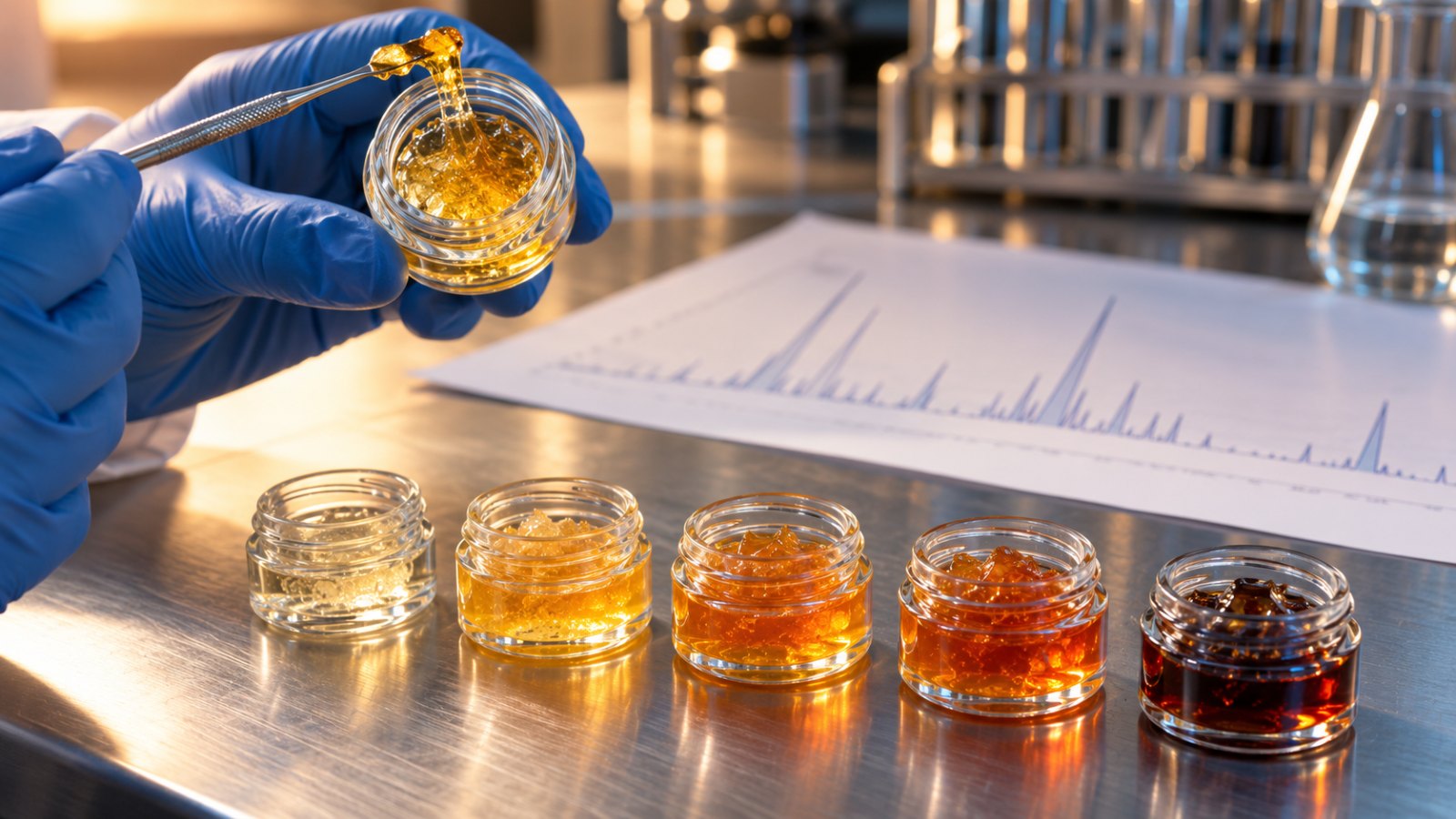
What are off-flavors in cannabis concentrates? Off-flavors are undesirable taste and aroma characteristics in cannabis extracts that deviate from the expected terpene profile of the source material. They range from sulfurous, burnt, or chemical tastes to flat, muted profiles where expected flavors are entirely absent. Off-flavors are the single most common quality complaint in concentrate production, and in most cases they trace back to one of seven root causes: input material contamination, thermal degradation, oxidation, residual solvent artifacts, CRC media interactions, microbial contamination, or improper storage. Understanding the chemistry behind each category is the difference between guessing and systematically diagnosing the problem.
This guide provides a structured, root-cause-first approach to identifying, diagnosing, and correcting off-flavors in cannabis concentrates. Every section is built from processing chemistry fundamentals, not anecdotal forum advice.
Off-Flavor Lookup: What the Taste Is Telling You
Why does a dab taste like burnt rubber? Two very different causes produce that taste. Sulfur compounds carried in from sulfur-based pest control (dimethyl sulfide above 50 ppb, hydrogen sulfide above 10 ppb) taste like burnt match or rubber at every temperature. A banger run too hot produces the same descriptor from a clean extract: in Meehan-Atrash 2017 the pyrolysis product methacrolein was undetectable at 322C, measured 131 ppb per dab at 403C and 185 ppb at 526C, and benzene appeared only at the top of that range. The test that separates them takes one dab: the same extract on a clean quartz banger cooled to 260 to 290C (500 to 550F). If the rubber taste is gone, the problem was the hardware. If it is still there, it came in with the biomass and no purge, CRC pass, or terpene addition will take it out.
Use the table the way a lab would: taste first, confirm with one measurement, then fix the variable that failed. Every number comes from the threshold data later in this guide.
| What it tastes like | Most likely cause | Confirm it | Fix |
|---|---|---|---|
| Burnt match, fireworks, rotten egg, burnt rubber at any temperature | Sulfur compounds carried in from sulfur-based IPM (DMS above 50 ppb, H2S above 10 ppb) | GC-SCD on the extract; pull the grower’s IPM log | Reject the biomass. Copper scrub in ethanol recovers some of a finished batch; it never fixes the next one |
| Burnt, acrid, rubbery only when dabbed hot; clean at lower temperature | Banger above about 400C (750F): methacrolein appears at 403C and benzene only at the top of the range (Meehan-Atrash 2017); carbon film on the quartz | Dab the same extract on a clean quartz banger cooled to 260 to 290C (500 to 550F) | Drop the temperature, cold-start, clean the quartz with 99% isopropanol every session |
| Chemical, metallic, harsh | Pesticide or PGR residue, or residual solvent | COA pesticide panel; GC-FID headspace for solvents | Reject the biomass, or extend the purge (see below) |
| Gassy, lighter fluid | Residual butane: detectable at 50 to 100 ppm, objectionable above 500 ppm, a regulatory fail at 5,000 ppm in most states | GC-FID headspace | Thin the slab to 1 to 2 mm, full vacuum at 32 to 43C, verify by GC before packaging |
| Boozy, warming, medicinal | Residual ethanol above 5,000 ppm | GC-FID | Longer rotovap tail, thinner film, final decarb or vacuum pass |
| Rubbing alcohol | Isopropanol cross-contamination (objectionable above 1,000 ppm) | GC-MS | Solvent audit: wrong drum, shared recovery lines, cleaning solvent left in the system |
| Flat, muted, no flavor | CRC over-stripping or warm processing; monoterpenes lost before the product was finished | Terpene panel against the input material | Cut CRC media loading, keep the cold chain unbroken, reintroduce CDT at 1 to 5% for dabs or 5 to 15% for carts |
| Cooked, caramelized, toasty | Thermal degradation and decarb overshoot; CBN rising | HPLC potency panel (CBN above 2% means more than 15% of the THC oxidized) | Lower the decarb temperature and time; purge below 50C |
| Stale, hay, cardboard | Oxidation of terpenes and THC (limonene oxide above 200 ppm, myrcene oxide above 300 ppm) | GC-MS oxide peaks against the intact terpene | Inert gas headspace, -20C storage, no light |
| Musty, earthy, basement | Microbial off-flavors from the biomass: geosmin above 50 ppt, MIB above 100 ppt | TYM count; GC-MS/MS trace panel | Reject the lot; these survive extraction and CRC |
| Sour, vinegar | Fermentation in wet biomass before extraction | Water activity on the input | Hold input material below 0.65 aw before it is extracted |
| Gritty, chalky, mineral | CRC media fines passing the filter stack | Microscopy or ash test on the extract | Tighter final filter (1 micron), repack the column |
If the product is flower, not extract, the same logic applies with different variables: a harsh or hay taste in flower is almost always a dry or cure problem (water activity outside 0.55 to 0.65, a jar opened too early, or terpenes lost to a room above 21C), a chemical taste is pesticide or nutrient residue, and a burnt taste on a clean strain is the lighter held on the bowl too long. Everything below this point is about concentrates, where the extraction and post-processing steps add seven more ways to ruin the flavor.
What Causes Off-Flavors in Cannabis Concentrates?
Off-flavors in cannabis concentrates trace to seven root causes: contaminated input material, thermal degradation of terpenes above their boiling points, oxidation of terpenes and cannabinoids on exposure to air and light, residual solvent left by an incomplete purge, CRC media stripping or shedding, microbial activity in the biomass, and storage that lets oxygen, light, or heat at the finished product. Each produces a distinct signature, a burnt or hay taste from heat, a stale cardboard note from oxidation, a chemical bite from residual butane, so the flavor itself tells you which variable broke. Fixing it means diagnosing the cause, not masking the symptom.
The Chemistry of Flavor in Cannabis Concentrates
Before troubleshooting what went wrong, you need to understand what “right” looks like at the molecular level.
Cannabis flavor and aroma come primarily from terpenes and terpenoids: volatile organic compounds synthesized in the glandular trichomes alongside cannabinoids. A typical cannabis cultivar produces 20 to 40 detectable terpene species, with total terpene content ranging from 1% to 5% by weight in flower and 2% to 15% in properly processed concentrates.
The major monoterpenes (C10 compounds like myrcene, limonene, linalool, and pinene) are the most volatile, with boiling points between 155 and 177°C at atmospheric pressure. Sesquiterpenes (C15 compounds like caryophyllene, humulene, and bisabolol) are heavier, less volatile, and boil between 246 and 280°C. This volatility difference matters enormously for processing: monoterpenes are the first to be lost or degraded during extraction and post-processing, while sesquiterpenes are more thermally resilient but also more susceptible to oxidation.
Beyond terpenes, flavor can be influenced by:
- Flavonoids (cannflavin A, cannflavin B): contribute subtle bitter or astringent notes
- Esters and aldehydes: formed during curing and aging, contributing fruity or earthy undertones
- Thiols and sulfur-containing compounds: naturally present in trace amounts (responsible for “skunky” or “gassy” aroma in certain cultivars), but problematic when introduced from agricultural inputs
A “clean” concentrate should express the terpene profile of its source material proportionally. When it does not, something in the chain from biomass to finished product has altered that chemistry.
Root Cause #1: Input Material Contamination
The most common and most frequently misdiagnosed cause of off-flavors starts before extraction even begins.
Sulfur Contamination
Sulfur is the most notorious off-flavor culprit in cannabis concentrates. Elemental sulfur and sulfur-based fungicides (used to combat powdery mildew) are absorbed by the plant tissue and concentrated during extraction. The result is a distinct burnt match, rotten egg, or firework taste that is immediately recognizable and nearly impossible to mask.
The chemistry: Sulfur compounds in cannabis include elemental sulfur (S8), hydrogen sulfide (H2S), and various organosulfur species. During hydrocarbon extraction, these compounds dissolve readily in butane (sulfur’s solubility in n-butane is approximately 0.5 g/L at 25°C). During distillation, low-molecular-weight sulfur compounds co-distill with terpenes and light cannabinoid fractions.
Diagnosis: Sulfur off-flavors present as:
- Burnt match or firework taste on exhale
- Rotten egg or “hot springs” aroma in the jar
- Throat irritation disproportionate to cannabinoid potency
- Copper test: dissolve concentrate in ethanol and add clean copper wire or mesh. If the copper darkens or turns black within hours, sulfur is present.
Corrective actions:
- Prevention (best approach): Screen incoming biomass. Reject material from operations using sulfur burners within 30 days of harvest. Request IPM logs from suppliers.
- Copper scrubbing: Dissolve extract in warm ethanol (190-proof), add copper mesh or powder at 1-5% w/w, stir for 2-4 hours, filter. Copper reacts with sulfur to form insoluble copper sulfide (CuS), removing it from solution.
- Activated carbon treatment: Pass dissolved extract through activated carbon at 5-10% w/w loading. Carbon adsorbs organosulfur compounds but will also strip terpenes at higher loadings.
- Distillation: Sulfur compounds can be partially separated during short path or wiped film distillation in the heads fraction, but this is not 100% effective for all sulfur species.
Pesticide and PGR Residues
Plant growth regulators (PGRs, particularly paclobutrazol and daminozide) and certain pesticides produce harsh, chemical, or metallic off-flavors in concentrates. Unlike sulfur, these compounds are often tasteless at trace levels in flower but become concentrated 10x to 50x during extraction.
Diagnosis: Chemical or metallic taste that does not correspond to any known terpene profile. Lab testing for pesticide panels is the definitive diagnostic tool.
Corrective actions: There is no reliable post-extraction remediation for pesticide contamination. Prevention through supplier qualification and COA verification is the only viable approach.
Nutrient Lockout and Excess
Unflushed biomass carrying excess mineral salts (particularly phosphorus and potassium from bloom nutrients) can produce a harsh, acrid, or “chemical” aftertaste in concentrates. While less dramatic than sulfur, this is a persistent quality issue in concentrates made from poorly finished flower.
Diagnosis: Harsh, mineral, or soapy aftertaste. The extract may appear visually normal. Ash testing (combustion residue analysis) of the biomass can confirm high mineral content.
Corrective actions:
- Source biomass from operations with proper flush protocols (minimum 7-14 days of plain water before harvest)
- Post-extraction: water washing (liquid-liquid extraction with distilled water) can remove some water-soluble mineral contaminants from crude extract
Root Cause #2: Thermal Degradation of Terpenes
Heat is the most common processing-related cause of flat, muted, or “cooked” flavor profiles in concentrates.
The Degradation Cascade
Terpene thermal degradation follows predictable kinetics. Monoterpenes begin to degrade at temperatures above 100°C with extended exposure. The degradation products include:
- p-Cymene (from myrcene, limonene, or terpinolene): aromatic, chemical, solvent-like taste
- Terpineol (from pinene): musty, stale flavor
- Cineole/eucalyptol (from various monoterpenes): medicinal, camphoraceous note
- Isoprene and methyl vinyl ketone (MVK): acrid, irritating volatiles formed at vaporization temperatures above 230°C
These degradation products are sometimes more thermally stable than the parent terpenes, meaning once formed, they persist through subsequent processing steps.
Where Thermal Damage Occurs
During extraction:
- Warm or hot solvent extraction (ethanol above -20°C, hydrocarbon above 0°C) causes terpene loss through co-evaporation with the solvent. Cryogenic extraction (-40°C to -80°C) preserves monoterpenes by keeping them below their vapor pressure thresholds.
- Rotary evaporation of ethanol extracts above 40°C bath temperature strips monoterpenes aggressively.
During decarboxylation:
- Decarboxylation at 120°C for 45 minutes (standard protocol) will cause 15-30% monoterpene loss if terpenes have not been stripped and collected beforehand.
- Over-decarboxylation (temperatures above 150°C or times exceeding 90 minutes) converts THC to CBN, produces a sedative, flat, “sleepy” product, and destroys the majority of remaining terpenes. If your COA shows CBN above 3% in a product that should be THC-dominant, you have over-decarboxylated.
During distillation:
- Short path distillation residence times of 4-6 hours on a 5L system expose the entire crude to sustained heat. CBN formation rates of 2-4% per 6-hour run are documented. Wiped film distillation reduces residence time to seconds, limiting thermal degradation significantly.
- Collecting terpene fractions too aggressively during heads collection strips desirable flavor compounds.
Corrective actions:
- Extract cold: -40°C minimum for hydrocarbon, -60°C or colder for ethanol
- Separate terpene collection before decarboxylation (vacuum strip at 60-80°C under deep vacuum)
- Minimize time on heat during distillation. Prefer wiped film over short path for thermal sensitivity
- Monitor CBN levels: if CBN exceeds 2% in a THC-dominant distillate, reduce distillation temperature or switch to deeper vacuum
- Reintroduce collected terpene fractions post-distillation for flavor restoration
Root Cause #3: Oxidation
Oxidation is the slow killer of concentrate quality. Unlike thermal degradation, which happens during processing, oxidation occurs during and after processing, continuing through storage.
How Oxidation Alters Flavor
Oxygen reacts with terpenes through free-radical chain reactions, converting them into epoxides, peroxides, and aldehydes. These oxidation products are responsible for:
- Stale, hay-like, or cardboard flavors: characteristic of aged or improperly stored concentrates
- Harsh throat irritation: terpene peroxides are significantly more irritating to mucous membranes than parent terpenes
- Color darkening: the same oxidative processes that degrade flavor also polymerize pigments, turning golden extracts dark amber or brown
Limonene oxidation is particularly well-studied: it forms limonene oxide, carvone, and carveol, each with distinctly different (and generally less pleasant) flavor profiles than the parent compound. Myrcene oxidizes to produce harsh, resinous off-notes.
Cannabinoids also oxidize: THC converts to CBN (which contributes to sedative effects and a flat flavor profile), while CBD oxidizes to form hydroxy-CBD derivatives.
High-Risk Oxidation Points
- Rotary evaporation without nitrogen blanket: hot extract spinning in a thin film exposed to ambient air is a fast-track to oxidation
- Storage in non-airtight containers: headspace oxygen in jars is the most common cause of shelf-life flavor degradation
- Extended processing times: crude extract sitting in collection vessels for hours between processing steps
- UV exposure: light accelerates oxidative reactions by generating free radicals (photooxidation)
Corrective actions:
- Process under nitrogen or argon atmosphere whenever possible, especially during solvent recovery and decarboxylation
- Minimize headspace in storage containers. Vacuum-seal when practical.
- Store finished concentrates at -20°C or colder in opaque, airtight containers
- Use antioxidant-compatible packaging (no reactive metals)
- Process biomass to finished product within the shortest practical timeline. Do not let crude “sit” between steps.
- Dark storage: UV-blocking containers or amber glass
Root Cause #4: Residual Solvent Artifacts
Residual solvents produce off-flavors ranging from chemical and gassy to flat and muted, depending on the solvent system and purge completeness.
Hydrocarbon Residuals
Butane and propane themselves are relatively odorless in pure form. However, commercial-grade solvents may contain:
- Mercaptans (added as odorants in fuel-grade butane): produce a skunk-like or natural gas smell
- Impurity hydrocarbons (pentane, hexane, isobutylene): chemical or “plasticky” off-notes
- Lubricant carry-over: from poorly maintained recovery pumps, producing an oily, mechanical taste
Residual butane above 500 ppm produces a detectable “gassy” flavor. Most state regulations require below 5,000 ppm total residual solvents, but flavor-conscious operators target below 100 ppm.
Diagnosis: Gassy, chemical, or “lighter fluid” taste. Residual solvent testing confirms.
Corrective actions:
- Use instrument-grade or 99.9%+ purity solvents. Never use hardware-store butane.
- Proper devolatilization in a vacuum oven: 90-110°F (32-43°C) at full vacuum (-29.9 inHg) for 24-72 hours depending on slab thickness
- Verify with residual solvent testing before release
- Maintain and rebuild recovery pumps regularly to prevent lubricant contamination
Ethanol Residuals
Ethanol is GRAS (Generally Recognized As Safe), but residual ethanol above 0.5% by weight produces a detectable “boozy” or warming flavor that masks terpene expression. This is particularly common in quick-wash ethanol (QWET) extracts that were not fully purged.
More problematic: denatured ethanol (containing heptane, isopropanol, or methanol denaturants) leaves toxic and foul-tasting residuals that no amount of purging will fully resolve.
Corrective actions:
- Use only food-grade or USP-grade ethanol (190-proof or 200-proof). Never denatured.
- Rotary evaporate to near-dryness, then vacuum oven purge at 40°C under full vacuum for 12-24 hours
- Target below 0.1% residual ethanol for terpene-forward products
Root Cause #5: CRC Media Interactions
Color Remediation Chromatography (CRC) is a powerful purification tool, but improper CRC technique is one of the most common causes of stripped, flat, or chemically off-tasting concentrates.
How CRC Strips Flavor
CRC media (silica gel, magnesium silicate, activated carbon, bentonite clay, and diatomaceous earth) adsorb molecules based on polarity and molecular size. The problem: many desirable terpenes fall within the polarity range of the impurities being targeted.
- Activated carbon is the worst offender for terpene stripping. At loadings above 5% w/w, carbon adsorbs significant quantities of monoterpenes alongside the target pigments and off-flavors. The result is a visually beautiful, water-white extract that tastes like nothing.
- Excessive media loading (total media above 15% of extract weight) increases contact time and surface area, stripping not just color but flavor.
- Slow flow rates through the column increase residence time, allowing more terpene adsorption.
CRC-Specific Off-Flavors
Beyond stripping, CRC can introduce off-flavors:
- Media fines contamination: inadequately filtered columns release silica or clay particles into the extract, producing a gritty, mineral, or chalky taste
- pH shifts from unbuffered bentonite: certain bentonite clays are alkaline (pH 9-10 in aqueous suspension). Contact with extract can catalyze terpene rearrangements, producing unexpected flavor artifacts.
- Improperly activated or contaminated media: media that was not properly dried or was stored in humid conditions may contain moisture that reacts with extract components
Corrective actions:
- Minimize activated carbon loading: 1-3% w/w maximum for terpene preservation. Use carbon as a thin polishing layer, not a primary remediation tool.
- Total media loading should not exceed 10% of extract weight for flavor-sensitive products
- Maintain faster flow rates (2-3 column volumes per hour) to reduce terpene contact time
- Always include a 5-micron or finer inline filter downstream of the CRC column to catch media fines
- Pre-rinse media with clean solvent before passing extract through
- For flavor-critical products (live resin, sauce), consider skipping CRC entirely and relying on quality input material
For a deeper dive into CRC chemistry and media selection, see our upcoming [Color Remediation Chromatography: The Complete Guide].
Root Cause #6: Microbial Contamination and Fermentation
Microbial activity produces some of the most distinctive and objectionable off-flavors in cannabis concentrates, though it is less commonly discussed than other causes.
How Microbes Create Off-Flavors
- Mold and mildew on input biomass: Aspergillus, Penicillium, and Botrytis species produce musty, earthy, or ammonia-like volatile organic compounds (VOCs) that survive extraction. Even if the biomass passes visual inspection, subclinical mold colonization produces detectable metabolites.
- Yeast fermentation in wet or improperly dried biomass: produces acetic acid (vinegar), ethanol, and various esters. Biomass with water activity above 0.65 aw is at risk.
- Anaerobic decomposition: biomass stored in sealed containers while still above 12% moisture can undergo anaerobic microbial metabolism, producing butyric acid (rancid butter smell), ammonia, and sulfur compounds.
Diagnosis: Musty, sour, vinegar, ammonia, or rancid flavors in the extract that do not correspond to any processing variable. Often accompanied by elevated total yeast and mold (TYM) counts on COA, though this is not always reliable since extraction may reduce viable counts while concentrating metabolites.
Corrective actions:
- Reject biomass with visible mold or musty odor. Period.
- Verify biomass moisture content is below 12% (ideally 8-10%) before accepting for extraction
- Water activity testing (target below 0.60 aw) is more predictive than moisture content alone
- If microbial off-flavors are detected in crude extract: activated carbon treatment (5-10% w/w) can reduce some VOC-type off-flavors, but results are inconsistent. Distillation is usually required.
- Prevent cross-contamination: clean extraction equipment between batches, especially when switching between suppliers
Root Cause #7: Improper Storage and Shelf-Life Degradation
Even a perfectly produced concentrate will develop off-flavors if stored improperly.
Storage-Related Flavor Changes
- Terpene evaporation: monoterpenes (myrcene, limonene, pinene) evaporate at room temperature from high-surface-area formats like shatter and crumble. Over weeks, the terpene profile shifts toward heavier sesquiterpenes, producing a “flat” or “earthy” flavor.
- Autooxidation: progressive oxidation in the presence of headspace oxygen. Rate approximately doubles with every 10°C increase in storage temperature (Arrhenius relationship).
- Light degradation: UV radiation catalyzes both terpene and cannabinoid degradation. THC photodegrades to CBN; terpenes form oxidation products.
- Container interactions: certain plastics (particularly polystyrene and low-grade silicone) absorb terpenes from the concentrate, altering flavor. Terpenes are aggressive solvents and can also leach plasticizers back into the extract.
Corrective actions:
- Store at -20°C or colder for long-term preservation (freezing virtually halts oxidation and evaporation)
- Use glass (borosilicate preferred) or PTFE-lined containers. Avoid silicone pucks for terpene-rich products.
- Minimize headspace. Fill containers as completely as practical or use vacuum-sealed packaging.
- Opaque containers or amber glass to block UV
- FIFO (first in, first out) inventory management: concentrates should not sit on shelves for months
- For retail products: nitrogen-flush packaging extends shelf life significantly
The Diagnostic Framework: A Systematic Approach
When troubleshooting off-flavors, resist the urge to guess. Use this systematic approach:
Step 1: Characterize the Off-Flavor
| Flavor Description | Most Likely Root Cause | Priority Investigation |
|---|---|---|
| Burnt match, fireworks, rotten egg | Sulfur contamination | Input material IPM history |
| Chemical, metallic, harsh | Pesticides/PGRs or residual solvents | COA review, residual solvent test |
| Flat, muted, “no flavor” | CRC over-stripping or thermal degradation | Review CRC loading, processing temps |
| Cooked, caramelized, “toasty” | Thermal degradation (decarb overshoot) | Check CBN levels, decarb parameters |
| Stale, hay-like, cardboard | Oxidation | Storage conditions, processing atmosphere |
| Musty, earthy, ammonia | Microbial contamination | Biomass quality, TYM testing |
| Gassy, lighter fluid | Residual solvent | Purge protocol, solvent purity |
| Boozy, warming | Ethanol residual | Purge verification, solvent grade |
| Sour, vinegar | Yeast/fermentation in biomass | Biomass moisture, water activity |
| Gritty, chalky, mineral | CRC media fines | Filtration, column packing |
Step 2: Isolate the Variable
- Same biomass, different batches produce different flavors? Processing variable.
- Different biomass, same process produces the same off-flavor? Equipment or environmental issue.
- Off-flavor present in crude but not in distillate? Input material cause (distillation separated it).
- Off-flavor absent in crude but present after CRC? CRC media issue.
- Off-flavor develops over time in storage? Oxidation or storage conditions.
Step 3: Test and Confirm
Before implementing corrective actions, confirm your diagnosis:
- Residual solvent testing (if chemical/gassy notes)
- Potency panel with CBN quantification (if thermal degradation suspected)
- Terpene profiling (compare to expected cultivar profile to identify what was lost or converted)
- Pesticide/heavy metals panel (if chemical/metallic notes on new supplier material)
- Microbial testing of biomass and/or extract
Off-Flavor Compound Thresholds: When Chemistry Becomes Detectable
Knowing what causes an off-flavor is useless without knowing at what concentration it becomes a problem. These thresholds represent the point where each compound becomes organoleptically detectable in a cannabis concentrate matrix. Below threshold, the compound exists but the consumer cannot taste it. Above threshold, it dominates the flavor profile.
| Compound / Contaminant | Sensory Description | Detection Threshold in Extract | Objectionable Threshold | Source / Root Cause | Analytical Method |
|---|---|---|---|---|---|
| Dimethyl sulfide (DMS) | Cooked corn, sulfur | 12-15 ppb | >50 ppb | Sulfur-based IPM, curing conditions | GC-FID, GC-MS headspace |
| Hydrogen sulfide (H2S) | Rotten egg | 0.5-1.5 ppb | >10 ppb | Sulfur burners, anaerobic decomposition | GC-SCD (sulfur chemiluminescence) |
| Butane (residual) | Lighter fluid, gassy | 50-100 ppm | >500 ppm (also regulatory fail at 5,000 ppm in most states) | Incomplete purge, cold spots in oven | GC-FID headspace |
| Propane (residual) | Sweet gas, mild chemical | 100-200 ppm | >800 ppm | Incomplete purge, faster off-gassing than butane | GC-FID headspace |
| Ethanol (residual) | Boozy, warming, medicinal | 500-1,000 ppm | >5,000 ppm (regulatory limit varies: 5,000 ppm CA, no limit in some states) | Rotovap incomplete, thick film | GC-FID |
| Isopropanol (contaminant) | Rubbing alcohol, harsh | 200-400 ppm | >1,000 ppm | Wrong solvent used, cross-contamination | GC-MS |
| CBN (from THC oxidation) | Stale, sedative, flat | Not tasteable directly | >2% (indicates >15% THC loss from oxidation) | Oxygen exposure, UV light, heat over time | HPLC potency panel |
| Myrcene oxide | Harsh, chemical, not-terpene | 50-100 ppm | >300 ppm | Myrcene oxidation from O2 exposure during processing | GC-MS (compare to intact myrcene peak) |
| Limonene oxide | Stale citrus, cleaning product | 30-60 ppm | >200 ppm | Limonene oxidation, UV exposure | GC-MS |
| Geosmin | Earthy, musty, basement | 5-10 ppt (parts per trillion) | >50 ppt | Actinomycetes (soil bacteria) in biomass | GC-MS/MS (ultra-trace) |
| 2-Methylisoborneol (MIB) | Musty, damp cardboard | 10-20 ppt | >100 ppt | Cyanobacteria, mold in biomass or water source | GC-MS/MS |
| Benzoic acid (from CRC media) | Sweet medicinal, plastic | 500-1,000 ppm | >5,000 ppm | CRC media off-gassing (certain bleaching earths) | GC-MS or HPLC |
| Chlorophyll degradation products | Vegetal, grassy, bitter | Visible (dark green color) | Any detectable level in distillate | Warm ethanol extraction, insufficient winterization | UV-Vis spectrophotometry (peak at 665nm) |
Geosmin deserves special attention. The human nose detects geosmin at 5-10 parts per trillion. That is 5 molecules per trillion molecules of air. No analytical instrument in a standard cannabis testing lab can match your nose for this compound. If an extract smells musty and the terpene profile looks normal on paper, geosmin from soil bacteria in the biomass is the most likely explanation. The fix is upstream: reject biomass with any earthy or musty aroma at intake.
If you want to build this diagnostic process into your standard operating procedures with lab walkthroughs and batch record templates, that is exactly what we built extractiontraining.com for.
Prevention: Building Quality Into the Process
The most cost-effective approach to off-flavors is prevention, not remediation.
Input material qualification:
- Establish supplier specifications: maximum moisture content, minimum terpene content, no sulfur-based IPM within 30 days of harvest, current COA with pesticide panel
- Organoleptic evaluation: if the flower smells off, the concentrate will taste off. Trust your nose.
Process controls:
- Temperature logging at every processing stage. If you cannot measure it, you cannot control it.
- Nitrogen blanket during solvent recovery, decarboxylation, and any open-vessel processing
- Standard operating procedures with defined parameters, not “approximately” or “until it looks right”
- Retain crude samples from each batch for troubleshooting if downstream issues arise
Quality verification:
- Terpene profiling on finished product (not just potency)
- Sensory evaluation panel: even informal taste/smell testing catches issues before products reach consumers
- Shelf-life stability studies: test product at 0, 30, 60, and 90 days under your storage conditions
Off-Flavor Prevention: Critical Processing Parameters
Every off-flavor traces back to a processing parameter that exceeded its safe range. This table consolidates the critical thresholds across all seven root causes into a single reference you can post on your lab wall.
| Processing Stage | Parameter | Safe Range | Failure Threshold | Off-Flavor Consequence |
|---|---|---|---|---|
| Extraction (BHO) | Solvent temperature at contact | -40 to -20C | >0C | Chlorophyll, wax, lipid co-extraction (vegetal, waxy taste) |
| Extraction (Ethanol) | Soak time at -40C | 3-10 min | >30 min | Chlorophyll co-extraction even at cryo temps |
| Extraction (Ethanol) | Soak time at room temp | Not recommended | >5 min | Heavy chlorophyll, wax, water-soluble compounds (harsh, bitter) |
| Decarboxylation | Temperature | 105-120C | >140C | Terpene flash-off, CBN formation (flat, stale, sedative) |
| Decarboxylation | Time at 120C | 30-45 min | >90 min | Over-decarb, terpene degradation (toasty, caramel) |
| Vacuum purge (BHO) | Temperature | 30-40C | >50C | Terpene loss, texture change (muted flavor) |
| Vacuum purge (BHO) | Vacuum depth | -29 inHg | >-25 inHg (too shallow) | Residual solvent (gassy, lighter fluid) |
| Distillation (SPD/WFE) | Terpene collection temp | 100-160C at full vacuum | >180C | Cannabinoid contamination in terpene fraction (harsh) |
| CRC | Media loading (g media per g crude) | 0.05-0.15 g/g | >0.25 g/g | Terpene stripping (flat, lifeless flavor) |
| CRC | Contact time | 30-90 sec (inline) | >5 min (batch soak) | Over-remediation, media leaching (medicinal, plastic) |
| Storage | Temperature | -20 to 4C | >25C for >30 days | Terpene evaporation, oxidation (stale, flat) |
| Storage | Headspace atmosphere | N2 purged | Ambient air | THC→CBN oxidation at 5%/year, terpene oxide formation |
| Storage | Light exposure | Amber/opaque container | Clear glass, fluorescent lighting | Photodegradation of THC and terpenes (stale, off-color) |
If you are troubleshooting an off-flavor and cannot identify the root cause from the diagnostic table above, run your entire processing chain against this parameter reference. The failure is almost always a parameter that drifted outside its safe range without being measured. The operators who never have off-flavor problems are the ones who measure and log every parameter in this table on every batch.
Frequently Asked Questions
Why does my BHO taste like sulfur?
Sulfur taste in BHO almost always traces back to the input material. Sulfur-based fungicides (particularly sulfur burners used for powdery mildew) are absorbed by the plant and concentrated during hydrocarbon extraction. The best fix is rejecting contaminated biomass. Post-extraction, copper scrubbing in ethanol solution can reduce sulfur content, but prevention is far more effective than remediation.
Can CRC fix off-flavors?
CRC can reduce certain off-flavors (particularly those from pigments and some oxidation products), but it is not a universal fix. CRC cannot remove sulfur compounds effectively, and aggressive CRC protocols will strip desirable terpenes along with the off-flavors. CRC is a color and clarity tool, not a flavor correction tool.
Why does my distillate have no flavor?
Distillation inherently separates terpenes from cannabinoids. Standard distillate is expected to be low-flavor. If you are producing “terpene-enhanced” distillate by reintroducing collected fractions and it still tastes flat, your terpene collection was either too aggressive (collecting past the terpene fraction into light cannabinoids) or your crude was already terpene-depleted from warm extraction or over-decarboxylation.
How do I know if my concentrate has oxidized?
Color darkening over time is the visual indicator. Flavor shifts from bright and terpene-forward to muted, stale, or hay-like. Analytically, elevated CBN (above 2% in a product that was below 1% at production) confirms THC oxidation. Terpene profiling showing reduced monoterpene content relative to sesquiterpenes confirms terpene oxidation.
What is the ideal storage temperature for preserving flavor?
-20°C (standard freezer) is sufficient for most concentrates stored less than 6 months. For long-term preservation exceeding 6 months, -40°C or colder is recommended. At these temperatures, oxidation and evaporation rates are negligible. Always allow frozen concentrates to equilibrate to room temperature before opening to prevent moisture condensation.
Does vacuum purging affect flavor?
Yes. Proper vacuum oven devolatilization removes residual solvents, which improves flavor. However, excessive vacuum purging temperatures (above 50°C for extended periods) or purging without initial cold temperature ramping will also strip monoterpenes. The balance point is 32-43°C at full vacuum for 24-72 hours, depending on product format and thickness.
Can I add terpenes back to fix a flat-tasting concentrate?
You can, but there are important distinctions. Cannabis-derived terpenes (CDTs) reintroduced from the same cultivar or strain produce the most authentic flavor restoration. Botanical-derived terpenes (BDTs) can approximate a profile but often taste perceptibly different to experienced consumers. Synthetic or isolated single-compound terpenes produce artificial, one-dimensional flavor. In all cases, addition rates should be 1-5% by weight for concentrates and 5-15% for vape formulations. Start low and titrate upward.
How do I prevent off-flavors from forming during live resin production?
Live resin production preserves the most complete terpene profile because it bypasses drying and curing (where significant terpene loss occurs). The critical control points are: harvest to freezer within 1 hour, maintain -40°C or colder throughout extraction, use chilled solvent (-40°C to -80°C butane/propane), and minimize post-extraction heat exposure. Any break in the cold chain degrades monoterpenes.
Why does my dab taste like burnt rubber?
Either sulfur compounds from the biomass or a banger run too hot. Sulfur off-flavors (DMS above 50 ppb, H2S above 10 ppb) show up at every temperature and survive every post-processing step. Heat off-flavors show up only above about 400C (750F) on the quartz, where terpene pyrolysis products such as methacrolein are measurable. Dab the same extract on a clean banger at 260 to 290C (500 to 550F): if the taste disappears, lower your temperature; if it stays, reject the input material.
What does residual butane taste like in a concentrate?
Gassy, like lighter fluid, with a sharp chemical edge on the exhale. Butane is detectable by taste at 50 to 100 ppm and objectionable above 500 ppm, well below the 5,000 ppm regulatory limit most states use, so a product can pass its residual solvent test and still taste like gas. The fix is a thinner slab (1 to 2 mm), full vacuum at 32 to 43C, and a GC-FID headspace result below 500 ppm before packaging.
This guide is part of WKU Consulting’s definitive guide series for cannabis processing professionals. For consulting, lab design, or SOP development, visit cannalabsconsulting.com.
Join our professional community: Discord | Newsletter
