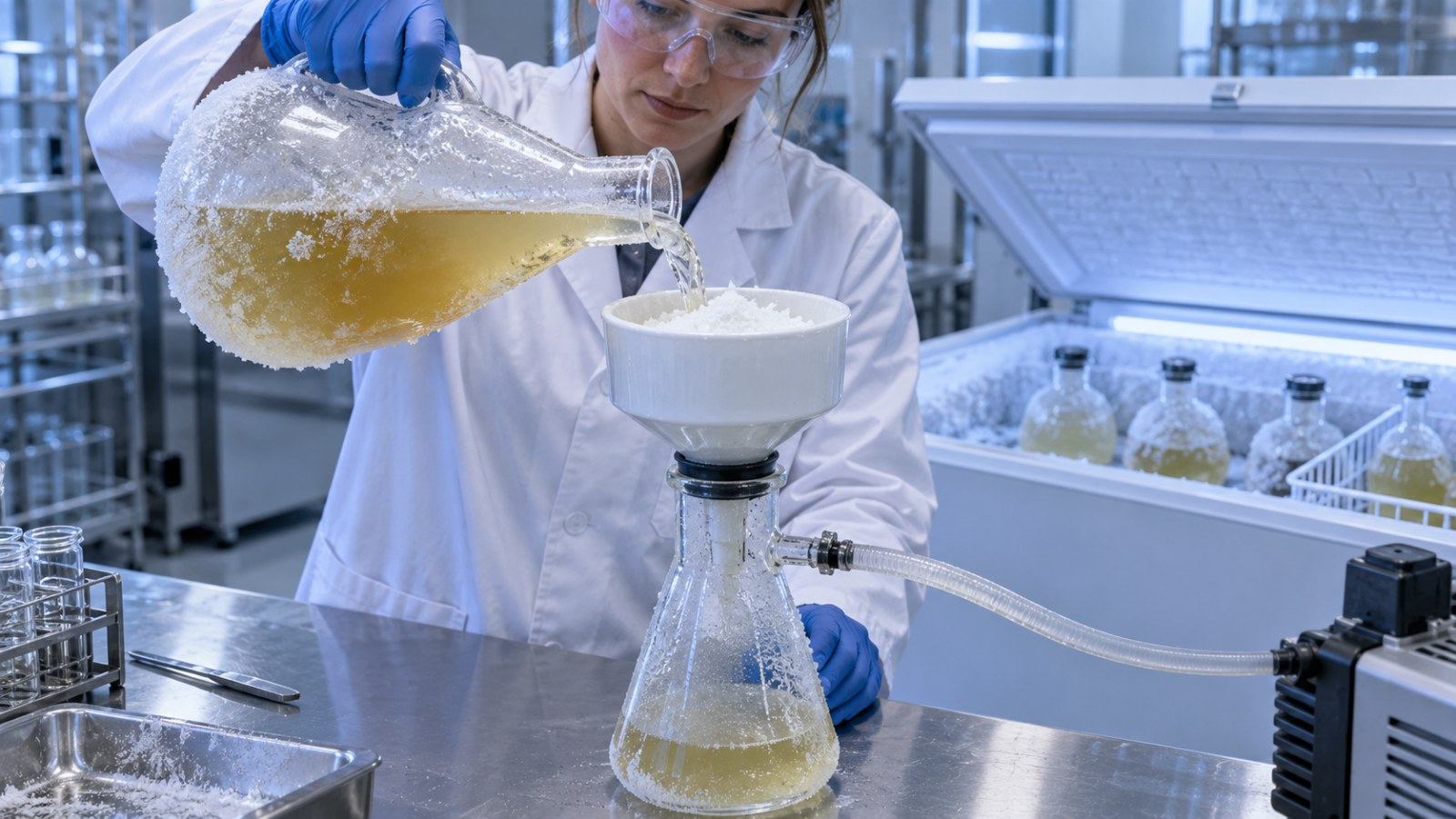
Rosin Diamonds: The Complete Guide to Solventless THCa Crystallization

What Are Rosin Diamonds? Rosin diamonds are crystallized THCa isolate produced entirely through heat, pressure, and mechanical separation. No solvents. No chemical catalysts. No CRC media. The end product is a near-pure THCa crystal structure that rivals the potency and visual clarity of solvent-based diamonds at a fraction of the overhead cost. In dispensaries, THCa [...]

By |2026-09-23T17:08:38+00:00March 20th, 2026|Cannabis Chemistry, Lab Techniques|Comments Off on Rosin Diamonds: The Complete Guide to Solventless THCa Crystallization

What is Wiped Film Distillation? The Complete Guide to Cannabis Oil Purification

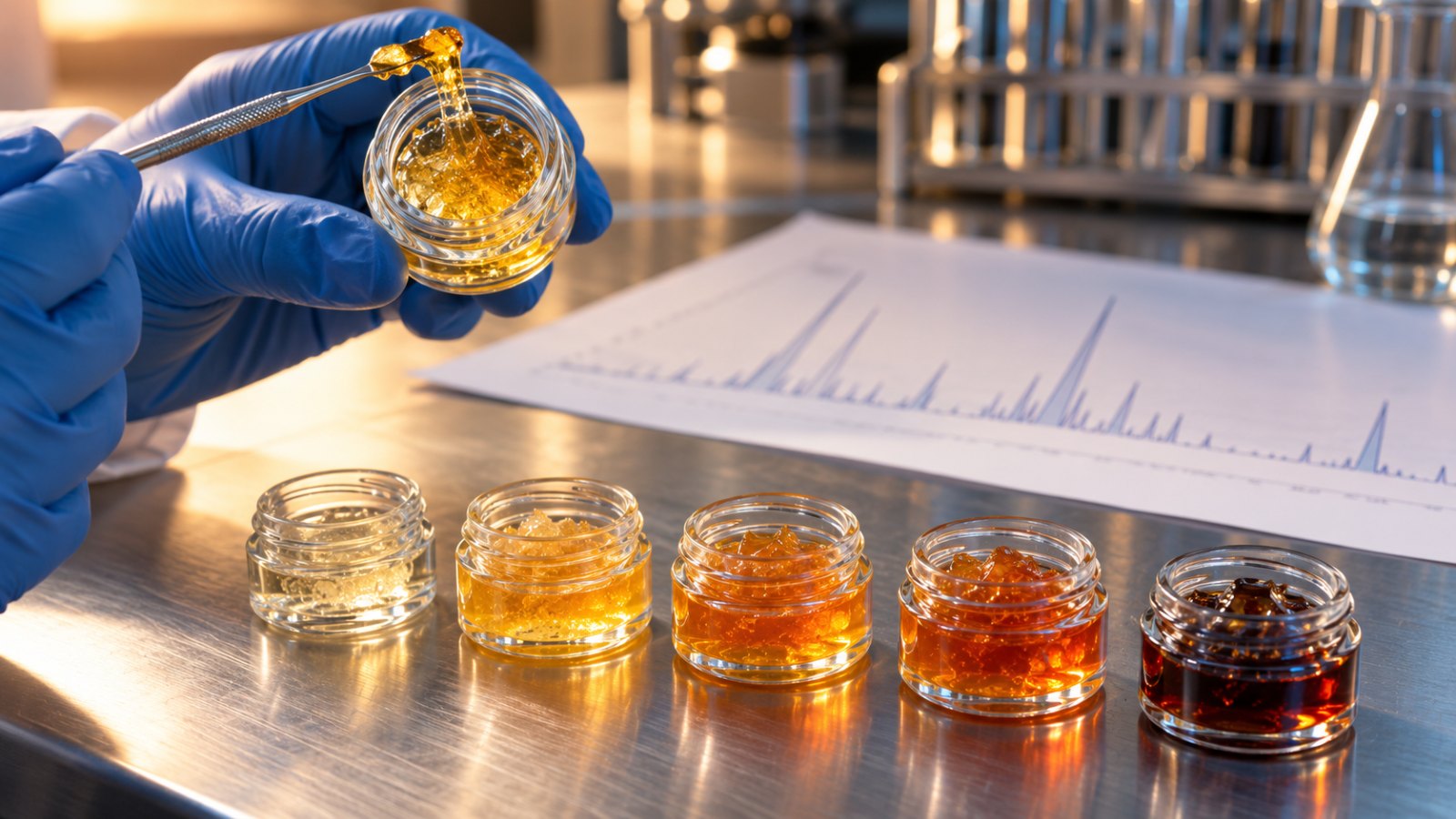
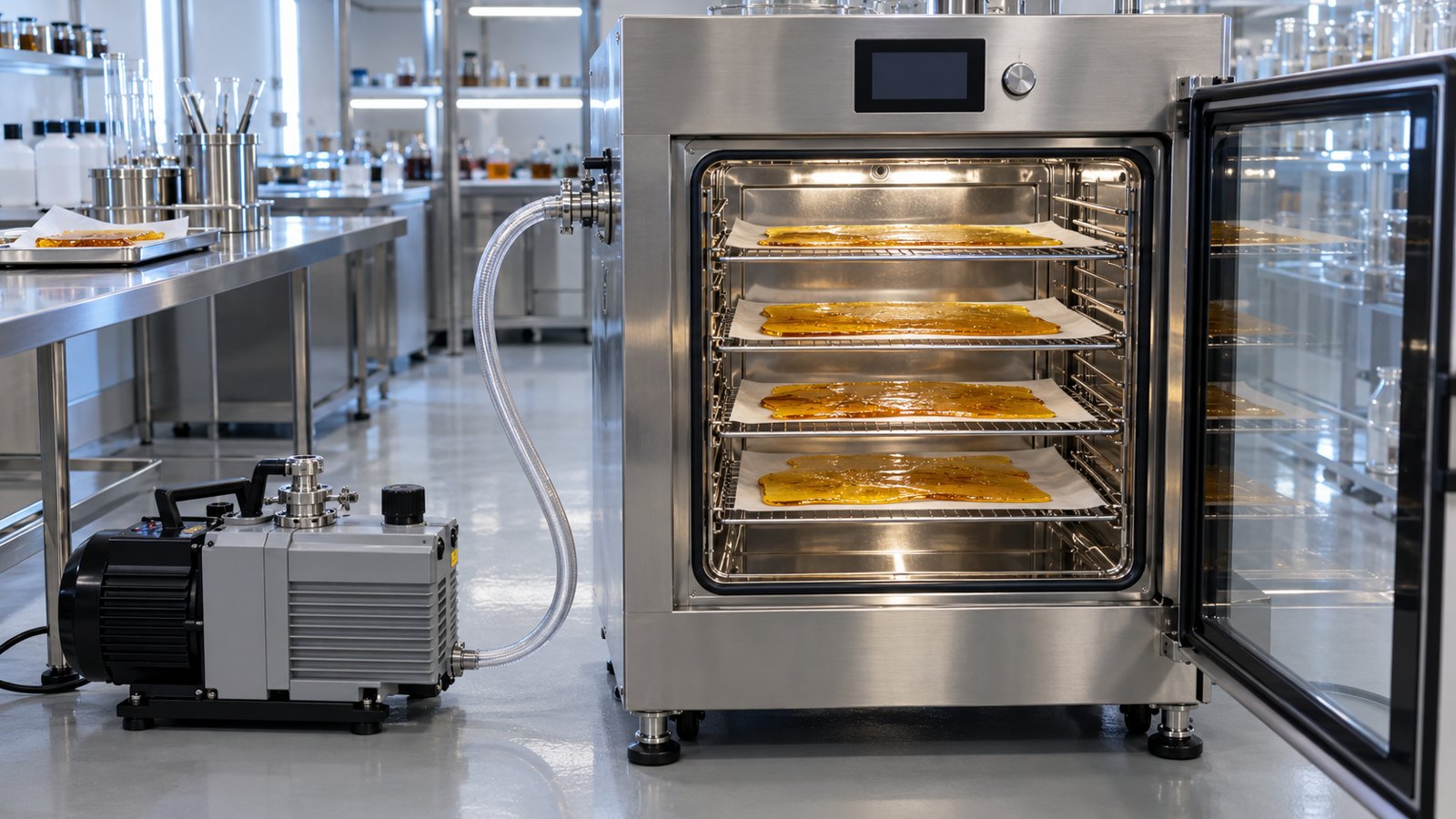
Wiped film distillation purifies cannabis crude oil to 90-95% total cannabinoids by spreading a sub-1mm film across a heated cylinder at 160-180°C under sub-100-micron vacuum. Residence time is 1-3 minutes (vs 10-60 minutes in short path), reducing thermal CBN formation from 4% to under 0.5%. A 2-inch Pope system processes 500-800 mL/hour at 30% rotor [...]

By |2026-10-01T16:16:39+00:00March 18th, 2026|Lab Techniques, Post-Processing|Comments Off on What is Wiped Film Distillation? The Complete Guide to Cannabis Oil Purification

Cannabis Remediation: When to Fix, Reprocess, or Destroy a Failed Batch

What Is Remediation in Cannabis Processing? Cannabis remediation is the processing step that takes a batch that failed state testing back under the limit and through a retest: a kill step on flower for microbial failures (ozone, radio frequency heating, X-ray, electron beam, or heat), distillation on extract for the same failure, an extended thin-film [...]

By |2026-09-24T20:47:18+00:00March 15th, 2026|Cannabis Safety, Lab Techniques, Post-Processing|Comments Off on Cannabis Remediation: When to Fix, Reprocess, or Destroy a Failed Batch

Color Remediation Chromatography (CRC): The Complete Guide

What Is Color Remediation Chromatography? Color remediation chromatography (CRC) is a post-extraction purification technique that uses layered adsorbent media in a pressurized column to selectively remove pigments, chlorophyll, carotenoids, and other color-causing impurities from cannabis extracts. Originally adapted from the edible oil refining industry: where magnesium silicate and activated carbon have been used for decades [...]

By |2026-09-28T17:34:51+00:00March 9th, 2026|Extraction Techniques, Lab Techniques, Post-Processing|Comments Off on Color Remediation Chromatography (CRC): The Complete Guide

How to Make Delta 8 THC from CBD: Complete SOP Using a Short Path Distillation System

Learn how to convert CBD isolate into delta 8 THC using T-41 bleaching clay and a short path distillation system. Complete SOP with legality breakdown, equipment list, step-by-step procedure, and storage tips from WKU Consulting.

By |2026-03-20T00:37:41+00:00February 27th, 2026|Cannabis Chemistry, Lab Techniques|Comments Off on How to Make Delta 8 THC from CBD: Complete SOP Using a Short Path Distillation System

Follow These Steps for the Highest THC Potency: Devolatilization & Decarboxylation Explained

If you’re running a cannabis extraction lab and skipping devolatilization before distillation, you’re making a costly mistake — both in product quality and safety. This is the step that separates amateur operators from professionals who consistently produce high-potency THC distillate.When to skip pre-distillation decarb: Some processors intentionally distill non-decarbed crude to produce THCa-rich crystalline isolate, [...]

By |2026-06-04T22:31:12+00:00February 18th, 2026|Lab Techniques|1 Comment

Cannabis Distillation: The Theory Every Lab Operator Needs to Know

Cannabis distillation is a boiling-point separation run under deep vacuum. Every compound in your crude, the terpenes, the cannabinoids, and the residual solvents, carries a different vapor pressure, and vacuum is the lever that lets you exploit those differences without cooking the product. At atmospheric pressure THC will not distill cleanly because it starts to [...]

By |2026-09-24T20:50:16+00:00February 18th, 2026|Lab Techniques|1 Comment

Preparative Chromatography for Cannabinoid Isolation: Column Selection, Mobile Phase, Loading, and Cost per Gram

Preparative chromatography isolates one cannabinoid from a hemp or cannabis extract by loading decarboxylated distillate onto a column at 1 to 10 percent of the stationary-phase mass and eluting it with an alcohol and water mobile phase. On a C18 reversed-phase column, CBG comes off first, CBD right behind it, and THC last, so a [...]

Go to Top