
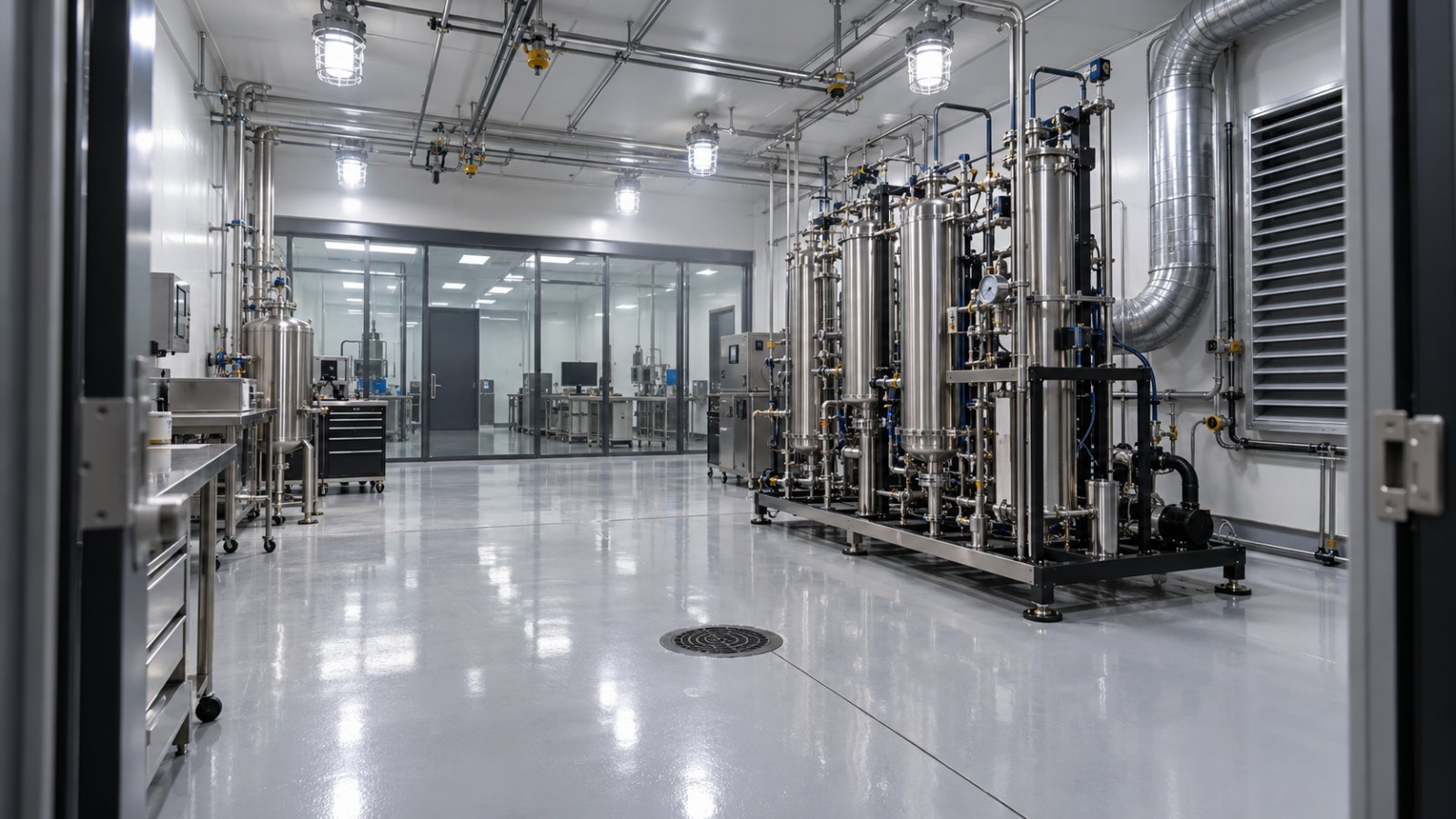
Cannabis Extraction Lab Design: The Definitive Guide to Building a Safe, Efficient, Profitable Lab
Quick answer: A good cannabis extraction lab is designed backward from the product, solvent, throughput, and safety envelope. If you start with equipment catalogs instead of process flow, you usually overspend, create bottlenecks, and build a lab that fights you every day.
Most operators make the same mistake. They think lab design starts with picking an extractor. It does not. Lab design starts with chemistry, workflow, utilities, and hazard management. The extractor is just one node in the system.
If you are building a hydrocarbon, ethanol, or multi-process facility, the right question is not, “What machine should I buy?” The right question is, “What process am I trying to run, what impurities will it create, and what rooms, utilities, and safety controls are required to keep that process stable?”
That difference matters. A lab that looks impressive on paper can still fail in real life because solvent recovery is undersized, ventilation is wrong, winterization is jammed into the wrong room, decarb becomes a production choke point, or operators have to carry semi-processed oil back and forth across the facility just to finish a batch.
This guide breaks cannabis extraction lab design down the way an operator should think about it: product target first, process path second, equipment third, building constraints fourth, and compliance wrapped around all of it. If you get that order right, the rest gets much easier.
If you need a deeper technical foundation on the downstream unit operations discussed here, start with these related guides: closed-loop extraction systems, cannabis winterization, cannabis devolatilization, and wiped film distillation.
What is cannabis extraction lab design?
Cannabis extraction lab design is the process of planning a facility so the building, process flow, equipment, utilities, safety systems, and operator movement all support repeatable extraction and post-processing. The goal is not just to “fit the equipment.” The goal is to produce the target product safely, consistently, and at the right cost per kilogram.
- Process design determines what unit operations happen, and in what order.
- Facility layout determines where those operations happen and how material moves.
- Utility design determines whether power, HVAC, chilled capacity, vacuum, gas detection, and solvent handling are actually adequate.
- Safety design determines whether the lab can run without creating unacceptable fire, explosion, or contamination risk.
If any one of those pieces is weak, the whole facility underperforms.
What should you decide before designing the lab?
Before you draw a single room outline, answer these questions directly.
1. What products are you actually manufacturing?
Different products create different process paths.
- Dabbables care about terpene preservation, low thermal abuse, and texture control.
- Distillate feedstock cares about clean winterization, efficient decarb, and stable distillation throughput.
- Vape oils care about clean post-processing, formulation control, and filling efficiency.
- Edible or topical ingredients care more about cost per unit and bulk consistency than boutique sensory quality.
If you say you want to make everything, that usually means the process is still undefined. A lab designed for premium live hydrocarbon products is not laid out the same way as a lab optimized for bulk ethanol crude and distillate. Trying to serve both with one sloppy layout often gives you the worst of both systems.
2. What solvent platform are you committing to?
Hydrocarbon, ethanol, CO2, and solventless-supporting workflows create very different engineering demands.
| Platform | Main Strength | Main Design Consequence |
|---|---|---|
| Hydrocarbon | Excellent terpene retention, strong selectivity for premium concentrates | Classified environment, gas detection, emergency ventilation, ignition control |
| Ethanol | High throughput, useful for crude and distillate pipelines | Large cold storage, solvent storage, recovery capacity, filtration space |
| CO2 | Nonflammable solvent system, niche fit for some operators | High capital cost, high-pressure infrastructure, broader cleanup burden |
| Hybrid facility | Multiple product pathways | More complexity, more utility coordination, more room discipline |
The solvent is not a branding decision. It is a mass transfer and purification decision. Your solvent determines what dissolves, what stays behind, how much cleanup you need later, and what hazards dominate the building.
3. What throughput do you need?
Throughput should be defined in biomass input and finished-product output. If you cannot state your target in pounds or kilograms per shift, you are not ready to size the lab.
Throughput drives:
- extractor size and cycle count
- solvent recovery capacity
- number of ovens or purge positions
- winterization vessel volume
- filtration area
- decarb vessel size
- distillation feed rate
- storage volume for crude, intermediate oil, and finished goods
The most expensive mistake in lab design is not buying cheap equipment. It is creating a hidden bottleneck that forces expensive equipment to sit idle while one undersized step strangles the line.
4. What are the local code and licensing constraints?
Room classification, solvent storage limits, occupancy, fire suppression requirements, hazardous exhaust, and local permit interpretation can change the entire design. Permit and licensing requirements vary widely by state; see our cannabis extraction license requirements by state guide. Do not assume a layout that worked in one state or county will be approved in another. The fire code side of that interpretation is IFC Chapter 39: the Chapter 39 permit and equipment-approval walkthrough covers what the fire code official asks for before the extractor is placed, and the C1D1 vs C1D2 classification guide covers the electrical side.
If your process puts you in Class I, Division 1, the room carries its own compliance spec. Our C1D1 room requirements guide covers the electrical, ventilation, gas detection, and AHJ inspection details.
This is where many projects lose months. Operators lease a building first, then discover ceiling height, power availability, exhaust pathways, setback limitations, or landlord restrictions make the intended process painful or impossible.
The core principle: design the lab around process flow
Good process flow is simple. Material should move forward, not sideways and backward all day.
A typical hydrocarbon-to-distillate or hydrocarbon-to-vape workflow looks like this:
- Biomass receiving and controlled storage
- Material preparation
- Primary extraction
- Solvent recovery and crude collection
- Winterization or cleanup filtration if needed
- Devolatilization and decarboxylation
- Distillation or formulation
- Filling, packaging, quarantine, and release
Every unnecessary handoff increases labor, spill risk, contamination risk, and batch confusion. Every unnecessary room transition slows output. If operators must carry warm oil across the building because the decarb setup is in the wrong room, the design is wrong.
The rooms most extraction labs actually need
Not every facility needs every room, but most serious extraction labs need clearly defined areas for the following functions.
1. Receiving and raw material storage
This space should keep incoming biomass controlled, organized, and segregated by lot. If lots blend accidentally at intake, your traceability is already compromised before extraction starts.
Key design points:
- clear lot segregation
- controlled humidity and temperature
- staging space for sampling and inspection
- simple material flow into prep without crossing finished goods
2. Material preparation room
Grinding, sizing, packing columns, and staging feedstock all happen here. This room should support clean material handling, fast turnover, and low dust escape.
If the prep room is too small, everything downstream suffers because the extractor is constantly waiting on packed material.
3. Extraction room
This is the room people obsess over, but the extractor only performs well if the room is engineered correctly.
For hydrocarbon systems, the extraction room needs proper hazardous-location design, gas detection, emergency exhaust, ignition control, and disciplined operator movement. For ethanol, the main issue shifts toward cold process handling, solvent management, and supporting throughput. The room should be designed around safe operation, maintenance access, and movement of material, not around squeezing the largest machine into the smallest footprint.
If you are comparing systems, this closed-loop guide is a useful companion: Closed-Loop Extraction Systems for Cannabis.
4. Post-processing room
This is where crude becomes a product stream instead of a raw intermediate. Depending on the lab, this may include vacuum ovens, crystallization support, winterization vessels, filtration hardware, and decarb setups.
Many operators underbuild this room because extraction equipment feels more exciting. That is backward. Post-processing is where product quality is won or lost.
5. Distillation room
Short path and wiped film both need disciplined thermal and vacuum operation. They also need enough space for feed staging, fraction handling, pump placement, and cleaning. Distillation should not be wedged into a random corner because it “only needs a bench.”
If you are designing around high-volume distillate output, read this before locking equipment selection: Wiped Film Distillation: Cannabis Oil Purification.
6. Formulation and filling area
This room should be clean, temperature-stable, and organized for repeatability. If you are filling carts, heated transfer lines, heated needles, and controlled hold temperatures matter because viscosity control is half the battle.
Do not place this area where high-traffic raw processing constantly contaminates it. Finished oil handling should feel like final assembly, not shop-floor chaos.
7. Quarantine, finished goods, and waste management
Intermediate oils, retained samples, released lots, failed material, and waste streams need separate logic, including the RCRA classification of your solvent waste. If your finished inventory and suspect material are managed casually, sooner or later a labeling or release mistake will happen.
Safety systems are not accessories
In cannabis extraction, bad safety design is usually a process problem disguised as a facilities problem. If operators are improvising around weak ventilation, poor grounding, bad alarm placement, or awkward solvent movement, the facility is telling you it was not designed by someone thinking through the real workflow.
The hardware list behind that principle is in the extraction lab safety equipment checklist, and the room most designers get wrong because it holds no flammable solvent is covered in the CO2 extraction room design guide.
At minimum, a serious extraction facility should account for:
- hazard classification appropriate to the solvent and room use
- LEL gas detection positioned where releases will actually accumulate
- emergency exhaust sized for the solvent hazard, not sized for wishful thinking
- fire suppression selected for the actual environment
- bonding and grounding discipline for transfer steps
- egress paths that remain usable during an event
- PPE storage and access that match the process
- operator visibility, communication, and no-lone-work discipline
Safety equipment without procedural discipline is theater. But procedural discipline without engineered safeguards is gambling.
Utility planning: where expensive mistakes hide
Most design failures show up in utilities before they show up in product quality.
Ask these questions early:
- Is there enough electrical service for chillers, heaters, pumps, HVAC, and future scale?
- Can the building support the exhaust path and makeup air requirements?
- Is the vacuum system sized for the actual process load, not just the brochure rating?
- Is chilled capacity enough for the extraction method and ambient conditions?
- Is solvent recovery fast enough to keep extraction from waiting?
- Do you have enough hot water, process heat, or thermal fluid support where needed?
An extractor that can theoretically run six cycles per shift does not matter if the chiller recovery time only supports three. A distillation skid that looks good in a quote does not matter if the vacuum system collapses under real feed load. Utility mismatches kill throughput quietly.
Common design mistakes that wreck extraction labs
1. Designing around equipment sales pitches
Equipment vendors sell equipment. That does not mean they are designing your full process correctly. A piece of equipment can be mechanically sound and still be a bad fit for your chemistry, budget, staffing, or production targets.
2. Underbuilding post-processing
Extraction gets attention. Cleanup gets neglected. Then the lab discovers winterization, purge, decarb, and distillation determine the real output ceiling.
3. Ignoring operator movement
If operators have to walk too far, move too many trays, or transfer material through crowded pathways, labor cost and error rate go up fast.
4. Treating all square footage as equal
A thousand square feet of badly arranged space can be worse than a smaller, disciplined layout. Usable process adjacency matters more than gross area alone.
5. Confusing throughput with batch size
A larger extractor does not automatically mean more profitable production. Throughput is determined by the whole cycle, including loading, chilling, extraction, recovery, cleanup, and downstream finishing.
6. Building without future flexibility
If the layout cannot absorb an extra oven, a larger filter skid, another feed tank, or a shift toward different product mix, you may be forced into expensive retrofits too soon.
Hydrocarbon vs ethanol lab design: what changes?
Operators often ask whether the same lab can support both. The answer is yes in some cases, but only if you respect how different the process burdens are.
| Design Factor | Hydrocarbon-Oriented Lab | Ethanol-Oriented Lab |
|---|---|---|
| Main hazard focus | Flammable vapor control, ignition prevention | Flammable liquid handling, cold storage, bulk solvent logistics |
| Primary product fit | Dabbables, terpene-rich concentrates, specialty products | Crude oil, distillate feedstock, higher-throughput ingredient streams |
| Cleanup burden | Lower wax pickup when run correctly, but still process-dependent | Usually more winterization and cleanup demand |
| Footprint pressure | Extraction room discipline and safety envelope matter most | Tankage, filtration, storage, and recovery infrastructure matter most |
| Typical bottleneck | Recovery, purge, post-processing capacity | Solvent recovery, filtration, distillation feed prep |
If your business depends on premium sensory products, hydrocarbon deserves serious consideration. If your business depends on bulk oil and ingredient throughput, ethanol may make more sense. The right choice is not moral. It is process-economic.
How much space do you need?
There is no honest one-size-fits-all number, but many small-to-mid-scale extraction operations underestimate space because they only count machine footprints. You need room for access, cleaning, staging, maintenance, safe movement, and intermediate storage. Size the spares shelf from our equipment maintenance schedule: a year of gaskets, pump oil, and filters.
For many dedicated extraction and post-processing builds, around 750 square feet can be a workable starting point for the core production functions if the workflow is disciplined. But that does not include every possible support need, and it does not mean 750 square feet automatically works for your process.
A better question is this: how much square footage do you need per unit operation plus safe movement around it? Design from adjacency and workflow, not from a real-estate listing headline.
How should you choose extraction lab equipment?
Equipment selection should come after process definition, not before. The right extractor for one lab can be the wrong extractor for another because the answer depends on solvent, feed quality, staffing, downstream cleanup, and target product mix.
When comparing equipment, focus on these questions:
- Can it hold stable operating conditions? Temperature swing, vacuum instability, poor seal quality, and weak recovery rates destroy consistency.
- Can it be cleaned and maintained without drama? A machine that looks good in a showroom but is miserable to clean will cost you in downtime and contamination risk.
- Does it match the actual bottleneck in your line? Oversizing the extractor while undersizing decarb, ovens, or filtration does not increase output.
- Is the control strategy useful or just flashy? Automation is only helpful when it improves repeatability. Extra buttons do not automatically mean better process control.
- Can the equipment fit your real utility envelope? Chiller load, electrical draw, exhaust burden, and pump demand need to work in the actual building, not just in a brochure.
That is why serious operators should evaluate equipment as part of the full line. Extraction, cleanup, devolatilization, and distillation behave like a chain. The weakest link sets the real pace.
Commissioning the lab before full production
A finished build is not the same thing as a production-ready lab. Before commercial output starts, the facility should be commissioned like a process plant, not admired like a showroom.
That means verifying:
- room pressures and airflow are performing as designed
- gas detection and alarm interlocks actually trigger the expected response
- solvent recovery rates match the modeled production cycle
- vacuum systems reach and hold the needed performance under load
- material movement is practical during real operation, not just on a floor plan
- SOPs match the actual installed equipment and room sequence
- operators can perform startup, shutdown, transfer, cleaning, and emergency response without improvising
The first production runs should be used to identify friction points early. For a detailed breakdown of what inspectors check in every SOP section, see our Cannabis Extraction SOP Templates guide. Watch where technicians wait, where trays stack up, where oil cools too long, where hoses become awkward, and where labels or lots can be confused. Those are design signals. Fix them before scale magnifies them.
How should you think about staffing during design?
Lab design and staffing are tied together. A layout that only works with heroic operators is a bad layout.
Ask:
- How many people are needed per shift for extraction, cleanup, distillation, and filling?
- Can one operator safely manage the intended equipment load?
- Where do handoffs happen between technicians?
- Where are the likely training failures?
- Can supervisors actually see critical operations?
A process that depends on one irreplaceable “wizard” is fragile. A well-designed lab supports repeatability by normal, trainable operators following good SOPs.
The highest-leverage decision in any lab design is who makes it. A good cannabis extraction consultant owns these calls before the money is spent, with no equipment to sell you.
If you are building this room and not just researching it, this is where the expensive mistakes live: a misclassified space, a ventilation design that fails inspection, a six-figure redesign after the AHJ walks through. Designing extraction facilities so that does not happen is what WKU does. If you want that on your project before the concrete is poured, here is how to work with us.
FAQ: direct answers operators actually need
What is the most important part of cannabis extraction lab design?
Process flow. If product, solvent, throughput, cleanup, and safety logic are wrong, no equipment package can save the facility.
How do you design a cannabis extraction lab for safety?
Start with the solvent hazard, room use, operator movement, and failure scenarios. Then design gas detection, ventilation, electrical classification, suppression, grounding, and egress around those realities.
How much does it cost to build a cannabis extraction lab?
Cost depends on process choice, scale, local code, building condition, and how much retrofit work is required. The dangerous mistake is focusing on extractor price while ignoring HVAC, electrical, ventilation, recovery, filtration, and build-out costs that often control the real budget.
Can one lab handle hydrocarbon extraction, ethanol extraction, and distillation?
It can, but only if the layout and safety logic are intentional. Mixed-process facilities are possible. They are just less forgiving when the design is lazy.
Do you need winterization space in the original design?
Yes, if the process path needs it. Many operators act like winterization can be “fit in later.” That usually creates clutter, contamination risk, and workflow inefficiency. If you want distillate-grade cleanup, plan for it from day one. This guide helps define the burden: Cannabis Winterization.
Should you design around current production or future scale?
Both. Design the present layout so it runs efficiently now, but leave expansion paths for the next likely bottlenecks. Future-proofing does not mean overspending blindly. It means avoiding dumb dead ends.
Final takeaway
A cannabis extraction lab is not a collection of machines. It is a chemical manufacturing system. Product target, solvent choice, utilities, safety envelope, and operator workflow all have to agree with each other. When they do, the facility runs clean. When they do not, the lab bleeds money through downtime, rework, failed batches, and constant operational friction.
The fastest way to waste capital is to buy equipment first and ask process questions later. The fastest way to build a lab that actually works is to define the chemistry, define the workflow, then engineer the facility around both.
If you want help pressure-testing your extraction lab design before you commit capital, WKU Consulting can help you think through the process path, bottlenecks, safety requirements, and equipment logic before expensive mistakes get poured into concrete.
Want more practitioner-level extraction chemistry and process guidance? Join the WKU newsletter here: https://forms.gle/BpFA9MmDdMRPa5Bq9.
Want to discuss lab design and process troubleshooting with other serious operators? Join the WKU Discord here: https://discord.gg/wku.
Author bio: WKU Consulting provides cannabis and hemp extraction consulting, lab design, process engineering, and SOP development for operators who need technical clarity instead of guesswork.
Layout is only half the job. The room also needs gas detection, ventilation, relief strategy, shutdown logic, eyewash access, fire protection, and PPE that match the chemistry being run inside it. This cannabis extraction lab safety equipment guide shows which protection layers matter and where operators usually get them wrong.
If your lab handles Schedule III medical cannabis, DEA registration adds facility requirements beyond state C1D1 compliance. Our DEA Schedule III Registration Guide covers the specific storage, alarm, and recordkeeping gaps between state and federal standards.
If the room is designed well but the operators are still winging critical steps, you are leaving quality and safety up to tribal knowledge. Our cannabis extraction SOP guide breaks down how to build procedures that operators actually follow, with real control points, deviation logic, and batch-record alignment.
If the room is designed well but the operators are still winging critical steps, you are leaving quality and safety up to tribal knowledge. Our cannabis extraction SOP guide breaks down how to build procedures that operators actually follow, with real control points, deviation logic, and batch-record alignment.
