
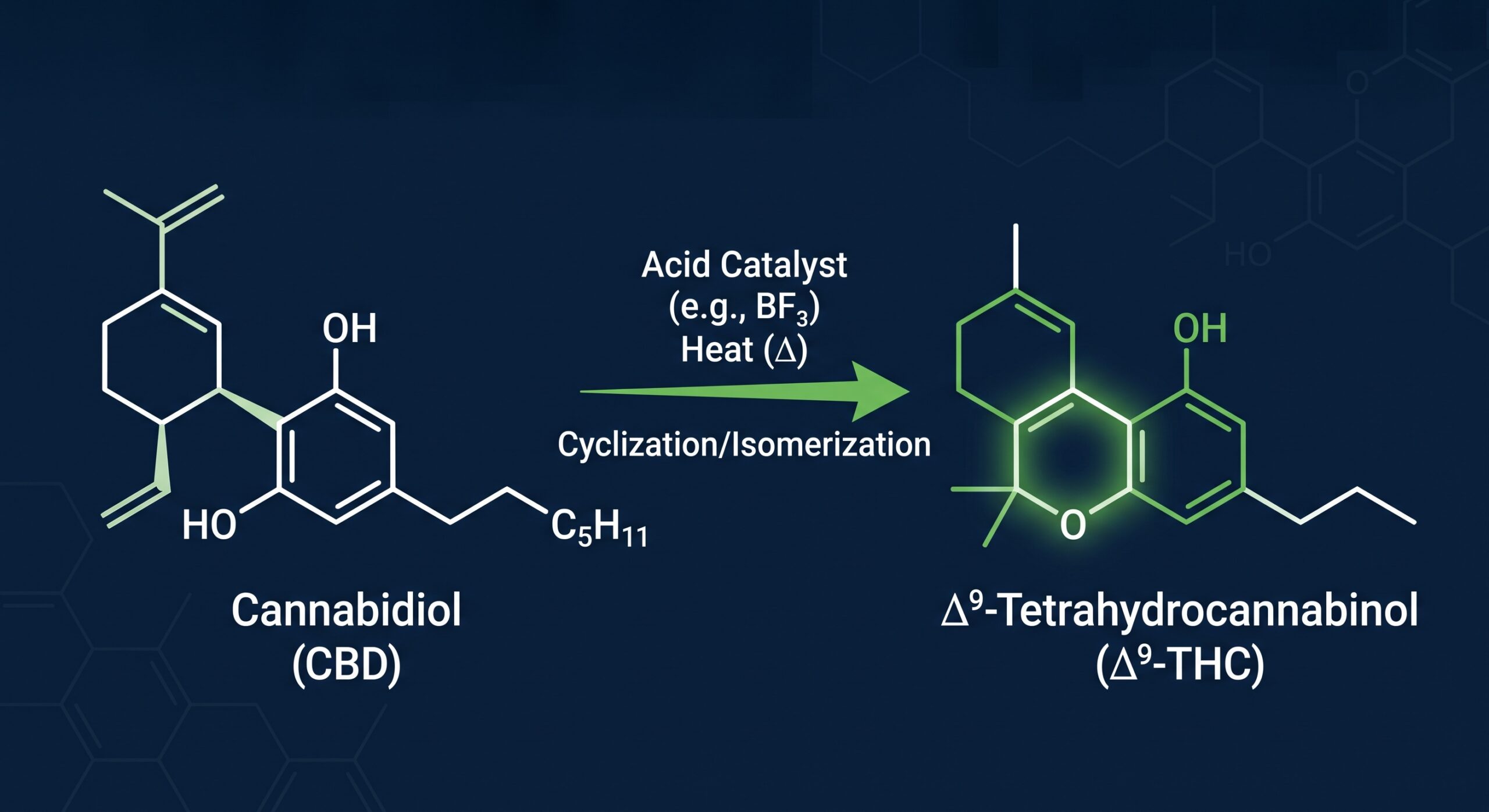
CBD converts to THC through acid-catalyzed isomerization: a Lewis acid rearranges the molecular structure of CBD (C21H30O2) into delta-9-THC or delta-8-THC by cyclizing the open ring. The catalyst used in this procedure is boron trifluoride acetic acid complex (BF3·AcOH) at 11.3 mol% loading in n-heptane at 0°C for one hour, yielding 50-60% delta-9-THC with the remainder as delta-8 and minor cannabinoids. The reaction itself is straightforward. The purification afterward is where most operators fail.
How to Convert CBD to THC at Home: A Complete Isomerization SOP
Yes, you can convert CBD to THC. The process is called isomerization, a chemical reaction that rearranges the molecular structure of CBD into THC using an acid catalyst. CBD and THC share the same molecular formula (C21H30O2) but differ in how their atoms are arranged. A Lewis acid catalyst, in this case boron trifluoride in acetic acid, provides the activation energy to break and reform the bonds that distinguish the two molecules.
This guide is a complete, step-by-step SOP for converting CBD isolate to both delta 9 and delta 8 THC at home or in a small lab setting. Total equipment budget runs approximately $1,500 to $2,000 USD. The reaction takes one hour once setup is complete. The same boron trifluoride catalyzed reaction is used in professional laboratories at scale, and the chemistry does not change between bench and industrial volumes. If you are interested in other cannabinoid conversion processes, check out our guide on how to make delta 8 THC from CBD using short path distillation.
What is CBD-to-THC Isomerization?
CBD-to-THC isomerization is an acid-catalyzed rearrangement that converts CBD into delta-9 and delta-8 THC without changing the molecular formula (C21H30O2). A Bronsted or Lewis acid protonates CBD, the ring closes, and the product distribution depends on acid strength, temperature, and time: milder conditions favor delta-9, while harsher or longer conditions push toward the more stable delta-8. Typical bench conversions reach 60 to 80 percent before cleanup, and the byproducts, not the conversion itself, are where most operators fail.
Why Convert CBD to THC?
There are several legitimate reasons someone might want to perform a CBD to delta 9 conversion at home:
- Legal accessibility: In many regions and countries, CBD isolate is legal and easy to source, while delta 9 THC remains restricted. Converting CBD provides access to THC’s medicinal and psychotropic properties.
- International demand: Many international clients can source CBD isolate but lack access to the full laboratory equipment needed for traditional cannabis extraction.
- Medicinal needs: Family members or patients who could benefit from delta 9 THC’s therapeutic effects but have limited access to dispensaries or legal markets.
- Cost efficiency: CBD isolate prices have dropped dramatically, making this conversion economically viable for small-scale production.
CBD to THC Conversion Parameters: Quick Reference
The table below summarizes the critical reaction parameters for each CBD isomerization pathway. These values represent optimized conditions based on acid-catalyzed cyclization in laboratory-scale reactors. Every variable interacts: changing catalyst loading without adjusting temperature or reaction time will shift your product distribution toward unwanted isomers.
| Parameter | CBD → Delta-9 THC | CBD → Delta-8 THC | CBD → Delta-10 THC |
|---|---|---|---|
| Catalyst (common) | BF3·AcOH | H2SO4, BF3·Et2O, or Amberlyst-15 | Bi(OTf)3 or Lewis acids |
| Catalyst loading | 5-10 mol% | 1-5 mol% (acid) or 10-20 wt% (Amberlyst) | 5-15 mol% |
| Solvent | Heptane or DCM | Toluene, heptane, or solventless | DCM or chloroform |
| Reaction temp | 0-5°C | 80-120°C (acid) or 60-80°C (Amberlyst) | 25-40°C |
| Reaction time | 1-2 hours | 4-18 hours (acid) or 12-72 hours (Amberlyst) | 1-6 hours |
| Typical yield (target isomer) | 50-60% D9 | 70-85% (D8-THC) | 30-50% (D10-THC, lower selectivity) |
| Key byproducts | D8-THC (30-40%), CBN (2-5%) | D9-THC (5-10%), unknown isomers (3-8%) | D8/D9-THC mixture (20-40%) |
| Critical failure point | Over-temp above 5°C shifts to D8 | Over-time beyond 24h degrades to CBN | Moisture sensitivity, requires anhydrous conditions |
Note on pTSA and other Brønsted acids: they will convert CBD, but at 60-80°C they strongly favor delta-8 and yield only ~25% delta-9. They are delta-8 catalysts, not delta-9 catalysts. See the full Acid Catalyst Comparison below.
These parameters serve as starting points. Your specific CBD isolate purity, solvent grade, and reactor geometry will require optimization runs. The troubleshooting section below covers the most common reasons conversions fail and how to fix each one.
Equipment and Supplies You’ll Need
The total budget for this setup runs approximately $1,500-$2,000 USD. Here’s what you’ll need:
- 1L round-bottom flask (3-neck preferred) — Your reaction and wash vessel. A 3-neck flask lets you keep a thermometer and stir bar in place while adding reagents through the center neck. Available from lab supply for $30-60.
- Magnetic stir plate — Provides the bulk mixing that makes this reaction work. Must reach 500+ RPM. $100-200.
- Boron trifluoride acetic acid complex (BF3·AcOH, CAS 373-61-5) — The Lewis acid catalyst that drives the isomerization. Available reagent-grade from laboratory supply websites. ~36% BF3 basis. Handle with splash goggles and gloves.
- Rotary evaporator — Used strictly for heptane recovery after the reaction is complete. Budget options available for $400-500.
- n-Heptane (CAS 142-82-5) — Non-polar solvent for dissolving CBD. ACS grade or better.
- Cooling system — Either a recirculating chiller ($300-500) or the budget option: a 5-gallon bucket with ice water and a $15 aquarium pump with silicone tubing.
- Vacuum oven or hot plate — For melting CBD isolate before adding to the reactor. Any hot plate that holds 70-80°C works.
- Sodium bicarbonate (baking soda, CAS 144-55-8) — For neutralizing the acid catalyst.
- Citric acid (CAS 77-92-9) — For chelating residual boron compounds during the wash sequence.
- Distilled water — For multiple wash steps.
- Sodium sulfate, anhydrous (CAS 7757-82-6) — Drying agent for the organic phase after washing.
- pH test strips — For verifying wash completion (target pH 6-7).
- LEL monitor — Non-negotiable for any operation involving heptane.
Safety Considerations
Before beginning any cannabinoid conversion, safety must come first. If you’re new to lab safety protocols, we recommend reviewing our comprehensive guide on cannabis extraction lab safety.
- Always wear splash goggles and nitrile gloves when handling BF3·AcOH or heptane.
- Boron trifluoride acetic acid complex is corrosive. It causes severe burns to skin and eyes on contact and generates hydrofluoric acid (HF) when it contacts moisture. Handle with respect.
- Never inhale vapors. BF3·AcOH and heptane both produce harmful vapors. Work outdoors or in a well-ventilated space.
- Heptane is flammable AND explosive. Flash point: -4°C. Lower explosive limit: 1.05% in air. Heptane vapor/air mixtures within the LEL-UEL range (1.05-6.7%) detonate on contact with a spark, static discharge, or open flame. Ground all vessels. Keep an LEL monitor active throughout the entire procedure. No ignition sources in the workspace.
- Work in a well-ventilated area. A garage with open doors or an outdoor covered space is ideal for home-scale work. If working indoors, use a fume hood.
Step-by-Step SOP: CBD to THC Isomerization
Step 1: Melt the CBD Isolate
CBD isolate is a crystalline solid that melts at approximately 66°C. Trying to dissolve crystals directly into cold heptane is slow and unreliable. Instead, melt the CBD first.
Weigh 100 g of CBD isolate on a laboratory scale. Place it in a vacuum oven set to 70-80°C, or in a sealed heat-safe glass container on a hot plate set to 80°C. The material is fully melted when it becomes a clear, viscous liquid with no visible crystals. This takes 10-15 minutes.
Why melt first? Molten CBD mixes with heptane instantly. Crystalline CBD sitting at the bottom of a cold flask can take 30+ minutes to dissolve, and if you add the catalyst before the CBD is fully in solution, you get uneven conversion and wasted catalyst.
Step 2: Charge the Reactor and Add Heptane
Transfer the molten CBD to your 1L round-bottom flask (the reactor). Add 200 mL of n-heptane to the flask. Seal it immediately with a glass stopper or septum.
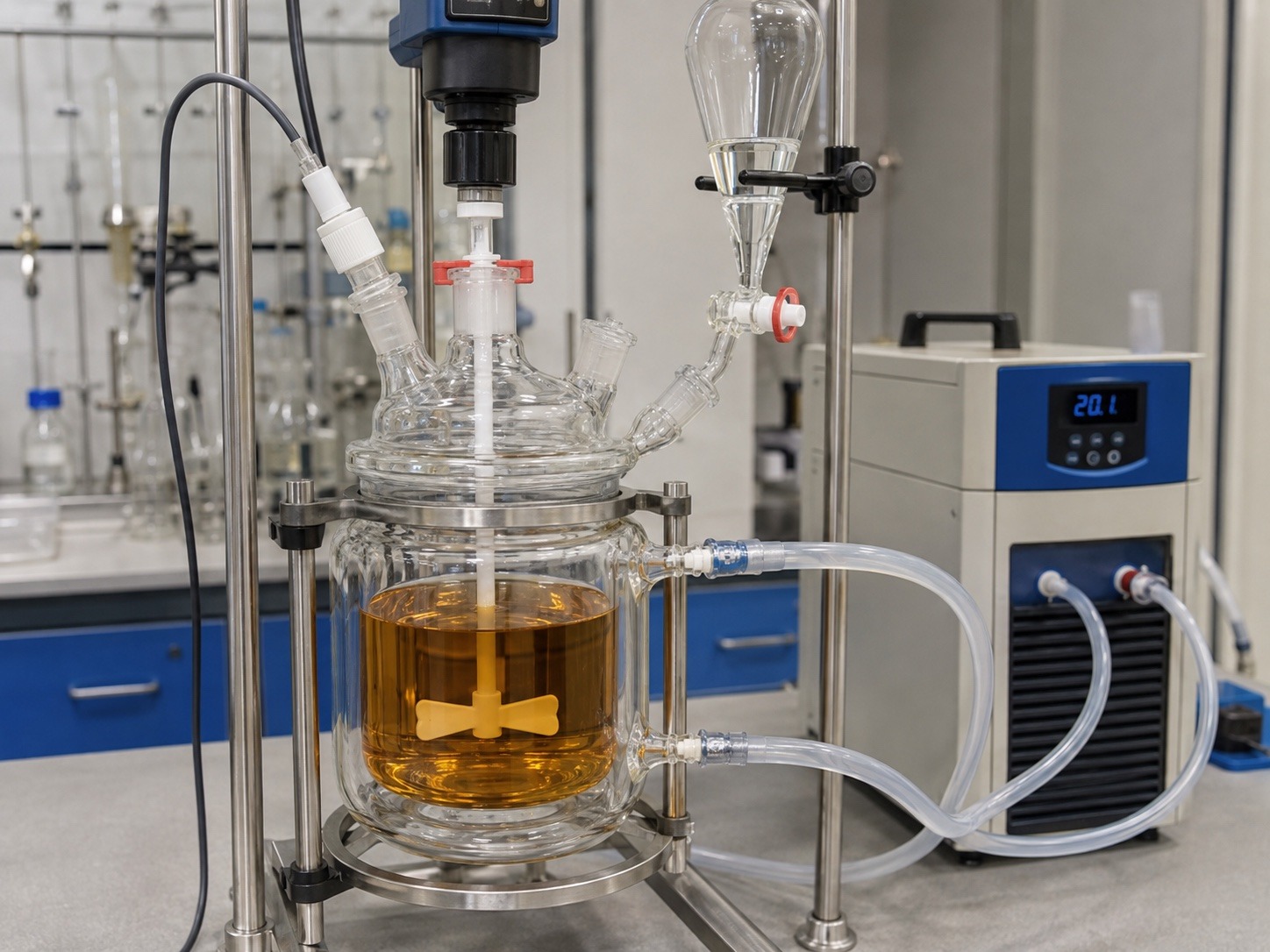
Drop in a magnetic stir bar and place the sealed flask on your stir plate. Start stirring at 400-500 RPM. The molten CBD and heptane will homogenize into a clear amber solution within 2-5 minutes.
All heptane operations happen inside the sealed reactor. You never have an open container of heptane near a heat source. The CBD was melted separately, in a sealed container, before the heptane entered the picture. This is the safe sequence.
Step 3: Cool to 0°C
With stirring active, engage your cooling system.
Option A (chiller): Set the recirculating chiller to -5°C and circulate coolant through the flask jacket or a coil wrapped around the flask. Monitor the internal temperature. Target: 0°C (±2°C).
Option B (budget): Fill a 5-gallon bucket with ice water. Submerge a small aquarium pump ($15 at any pet store) in the bucket. Connect silicone tubing from the pump’s outlet, wrap the tubing around the flask (or run it through a jacket if your flask has one), and return the tubing to the bucket. The pump continuously circulates ice water around your flask. Add ice as needed to keep the water near 0°C.
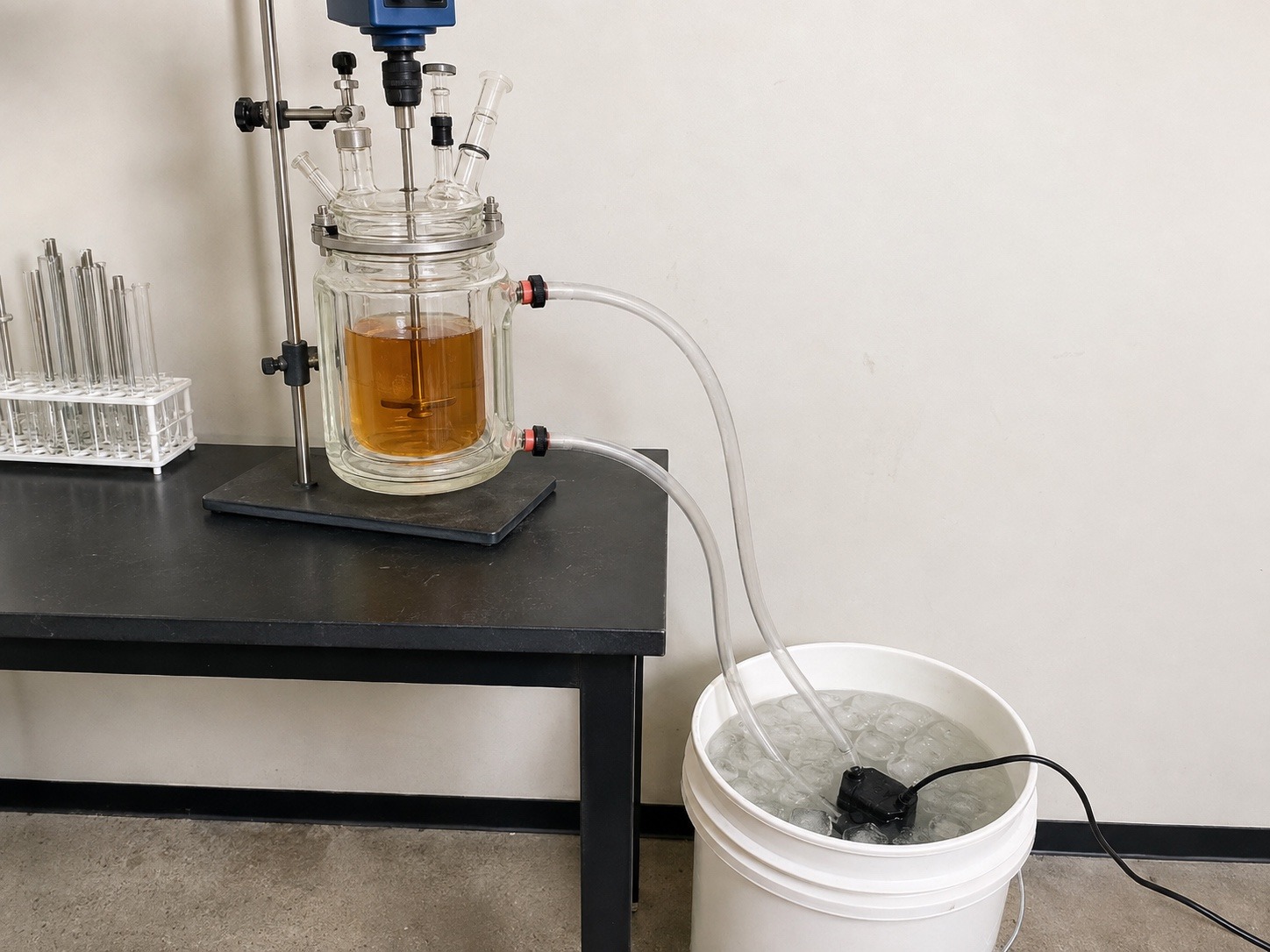
Keep stirring at 400-500 RPM throughout cooling to prevent CBD from crashing back out of solution. If you see crystals forming, increase the stir speed and let the bath warm 2-3°C until they redissolve before resuming cooling.
Step 4: Add the Catalyst and React
With the solution at 0°C and stirring, measure 5.0 mL of BF3·acetic acid complex using a glass syringe or graduated pipette. That’s 6.8 g of catalyst delivering 36 mmol of BF3, which is 11.3 mol% relative to the 318 mmol of CBD in the flask.
Briefly unseal the reactor, add the BF3·AcOH in a single addition, and re-seal immediately. Resume stirring at 400-500 RPM.
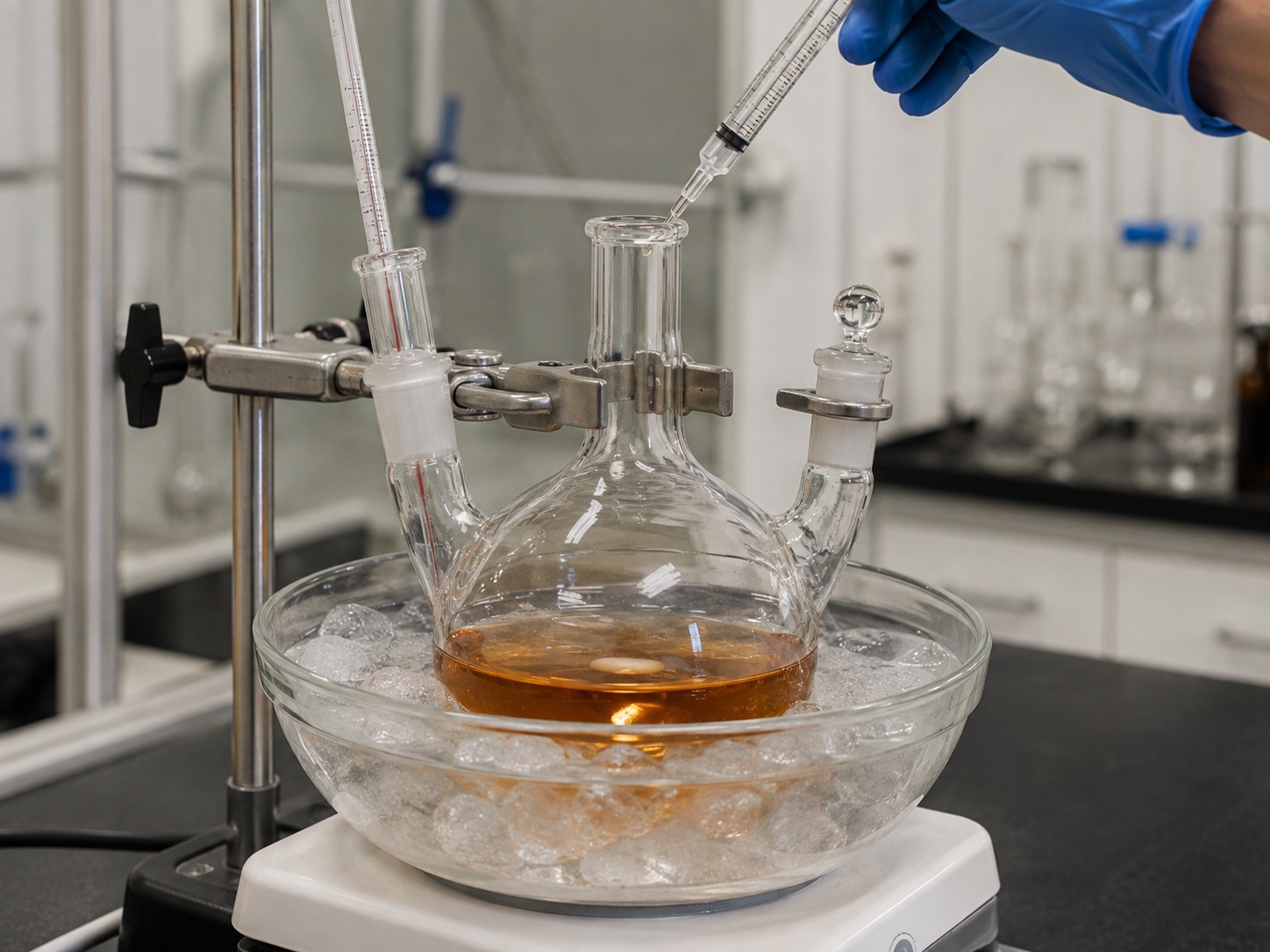
Start a timer for one hour. Maintain the cooling bath as close to 0°C as possible. This is when the isomerization happens. The BF3 coordinates the terpenoid hydroxyl and phenolic oxygen of CBD, pulling the open ring closed to form the THC dibenzopyran scaffold.
Temperature is everything in this step. At 0°C, the kinetic product (delta-9-THC) is favored. If the bath drifts above 5°C, the thermodynamic product (delta-8-THC) starts to dominate. At 10°C+, you lose meaningful D9 selectivity. If your bath warms, add ice immediately. Do not compromise on this.
Step 5: Quench and Wash (In-Vessel)
After one hour, turn off the cooling system and remove the flask from the bath. Let the solution warm to room temperature (5-10 minutes) while stirring continues.
You are going to wash the product inside the same reactor flask you ran the reaction in. No transfers. No separatory funnel. The flask does double duty.
Wash 1 (neutralization): Dissolve 25 g sodium bicarbonate in 500 mL distilled water (5% solution). Add 200 mL of this solution directly to the flask. Stir at 200 RPM for 5 minutes. CO2 gas will bubble off as the acid catalyst is neutralized. Leave the flask neck open during this step to vent the gas. Stop stirring, let the layers separate for 5-10 minutes. Heptane floats to the top (density 0.684 g/mL). Water sinks to the bottom. Remove the lower aqueous layer with a large glass pipette or syringe.
Wash 2 (water): Add 200 mL distilled water. Stir 5 minutes, settle, remove lower aqueous layer.
Wash 3 (citric acid): Dissolve 2 g citric acid in 200 mL distilled water. Add to the flask. Stir 5 minutes, settle, remove lower aqueous layer. This wash chelates residual boron compounds (fluoroborates) that the bicarbonate wash leaves behind.
Wash 4 (neutralization): Add 200 mL of the 5% NaHCO3 solution. Stir 5 minutes, settle, remove lower aqueous layer. This neutralizes the citric acid from wash 3.
Wash 5 (water): Add 200 mL distilled water. Stir 5 minutes, settle, remove lower aqueous layer. Test the pH of this last aqueous removal with a pH strip. You want 6-7. If it reads below 6, repeat this water wash until it does.
Step 6: Dry the Organic Phase
Transfer the heptane layer from the reactor into a clean 500 mL Erlenmeyer flask. Add approximately 20-30 g of anhydrous sodium sulfate (Na2SO4). Swirl the flask. Let it sit for 10 minutes. The Na2SO4 absorbs water. If it clumps into a hard mass, add more until fresh additions stay granular (that means there’s no more water left to absorb).
Filter the dried solution through fluted filter paper into a clean flask. Rinse the Na2SO4 cake with 25 mL of fresh heptane and add the rinse to your filtrate.
Step 7: Recover the Heptane
This is where the rotary evaporator earns its place.
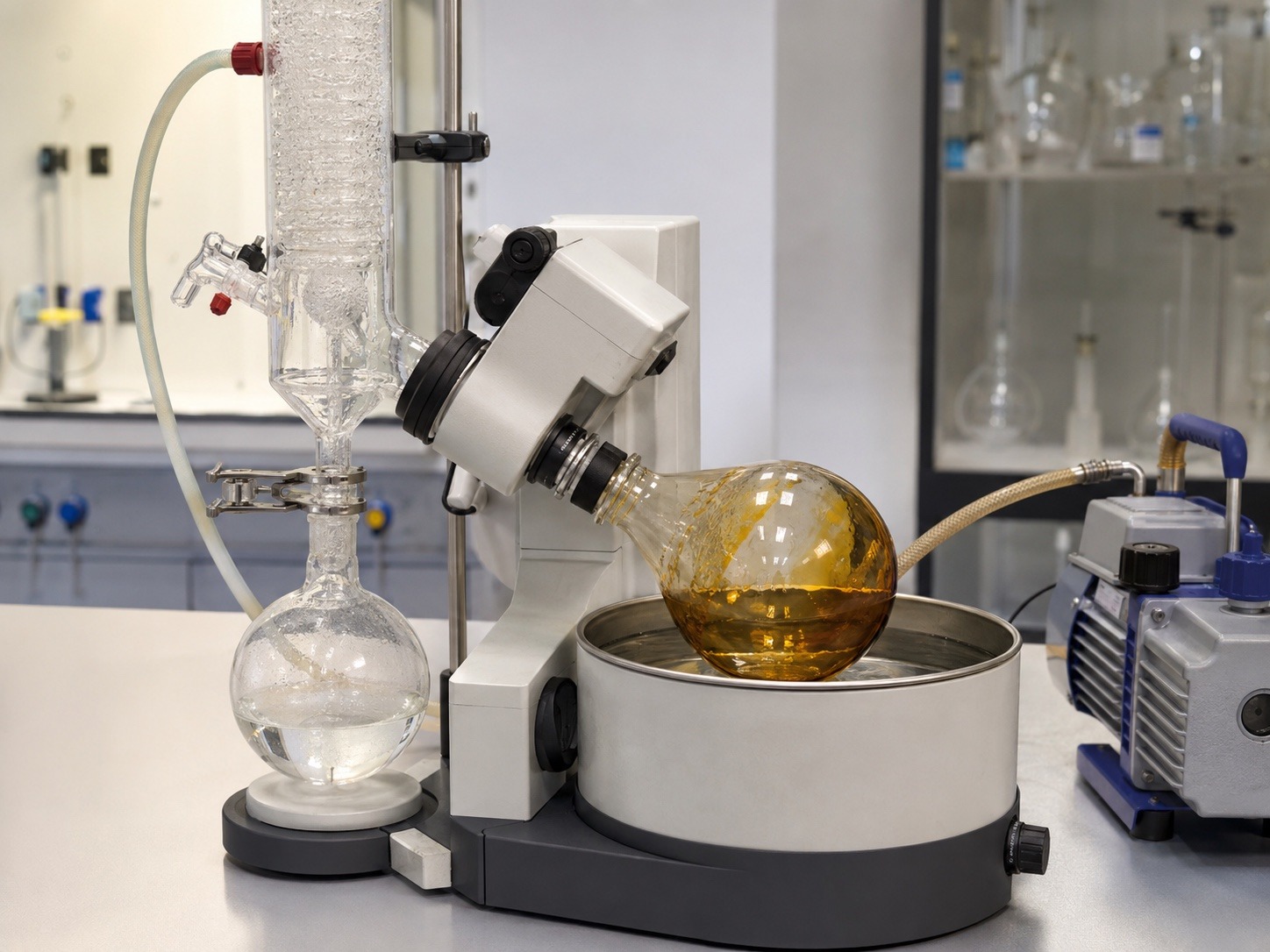
Transfer the dried solution to your rotary evaporator flask. Set the condenser coil to -10°C (or run cold water through it). Heat the water bath to 40-45°C. Start rotation at 100-150 RPM. Apply vacuum gradually, starting at 200 mbar and reducing pressure in 50 mbar increments as heptane volume decreases.
Heptane boils at approximately 40-45°C at 200 mbar. If the solution bumps (sudden violent boiling), increase pressure by 50 mbar and slow the rotation until it calms down.
Continue until no more drops collect on the condenser coil. The heptane collects in the receiving flask for reuse. All that remains in your evaporating flask is your converted THC crude oil.
Final strip: reduce vacuum to 10 mbar at 40°C for 30 minutes to remove the last traces of heptane.
Step 8: Finish the Product
Your crude oil can be used in two ways:
- Tincture: Dissolve in a carrier oil (MCT, olive oil) for sublingual use.
- Distillate: Run through a small short path distillation unit to create a vapable product. Add terpenes for flavor if desired. For more on distillation, see our guide on cannabis distillation theory.
Expected Results and Cannabinoid Profile
Using this BF3/acetic acid isomerization method at 0°C for 1 hour, you can expect approximately:
- 50-60% delta 9 THC
- 30-40% delta 8 THC
- Remaining percentage: minor cannabinoids (residual CBD, CBN)
The product will have both medicinal and psychotropic properties. For higher delta 9 concentrations, running at colder temperatures (-10 to -20°C with a recirculating chiller) and shorter reaction times (30-45 minutes) pushes the kinetic selectivity further toward D9. For professional laboratory setups with more precise temperature control and analytical testing equipment (HPLC), WKU Consulting offers full turnkey lab design and training services.
Acid Catalyst Comparison: Choosing the Right Chemistry
The SOP above uses BF3·AcOH. That is one option. pTSA, HCl/ZnCl2, CSA, and Amberlyst-15 all catalyze this reaction. They do not all work the same way. Your choice of catalyst changes your yield, your selectivity, your byproduct profile, and your post-processing burden.
Here is what each one does at the molecular level and what it means for your product.
| Catalyst | Type | Temp Range | Reaction Time | D9:D8 Ratio | Total cannabinoid yield | Best For | Key Downside |
|---|---|---|---|---|---|---|---|
| BF3·AcOH | Lewis acid | 0-5°C | 1-2 hours | 60:40 | 70-85% | Highest D9 selectivity at low temp | Corrosive, generates HF on moisture contact |
| pTSA | Brønsted acid | 60-80°C | 2-4 hours | 30:70 | 75-90% | Delta-8 production, lowest cost | More unknown byproducts at high temps |
| HCl/ZnCl2 | Brønsted + Lewis | RT-40°C | 4-8 hours | 40:60 | 50-70% | Common lab chemicals, no specialty reagents | Emulsion problems during neutralization |
| CSA | Brønsted acid | 40-60°C | 2-6 hours | 35:65 | 65-80% | Gentler than pTSA, fewer byproducts | Higher cost, harder to source |
| Amberlyst-15 | Solid acid | 80-120°C | 4-12 hours | 20:80 | 60-75% | No aqueous workup, catalyst removed by filtration | Highest temp, lowest D9 selectivity |
Bottom line: If delta-9 is your target, BF3·AcOH at 0-5°C is the only catalyst that consistently delivers 60%+ selectivity for D9 in a mixed D9/D8 product. If delta-8 is the product, pTSA is cheaper and gives higher total yield. Amberlyst-15 eliminates the separatory funnel entirely but trades away temperature control and selectivity. There is no universal best catalyst. There is a best catalyst for your specific target compound and your specific lab setup.
Troubleshooting Common CBD to THC Conversion Failures
For a complete diagnostic guide covering all eight common isomerization failures with specific root causes and fixes, see our CBD isomerization troubleshooting guide.
Most failed isomerizations trace back to five root causes. Each one has a specific mechanism and a specific fix. For a deeper dive into the full byproduct landscape of acid-catalyzed CBD isomerization, including how to read your chromatogram and identify every peak, see our CBD isomerization byproducts guide.
Incomplete Conversion (Under 50% Yield)
Three variables. Catalyst concentration too low, reaction temperature drifted outside the window, or moisture killed the catalyst before it could work. BF3·AcOH is moisture-sensitive. If humidity was above 50% when you opened the bottle, the catalyst may already be partially hydrolyzed. Weigh the catalyst fresh each run and store it sealed. If your CBD isolate did not fully melt before addition to the reactor, undissolved crystals at the bottom of the flask are not participating in the reaction. That is wasted starting material and will show up as residual CBD on your COA.
Dark or Discolored Product
Oxidation during the reaction or excessive heat during solvent recovery. If your product is dark amber to brown, check two things: was your reaction flask exposed to air during the reaction, and did your rotovap bath exceed 45°C? The color comes from quinone-type oxidation products and from thermal decomposition of minor cannabinoids. Keeping the flask sealed during the reaction and using gentle evaporation temperatures prevent this. If the color appeared during the wash phase, your sodium bicarbonate solution may have been too concentrated, causing localized pH spikes that degrade cannabinoids at the interface.
Unexpected Byproduct Isomers
Every acid-catalyzed isomerization generates a portfolio of minor cannabinoids alongside the target product. Delta-8-iso-THC, exo-THC, 9(11)-THC, and various CBC derivatives are common at reaction temperatures above 10°C with BF3. Standard CoA testing panels do not test for all of these. If your HPLC chromatogram shows unknown peaks representing 5-15% of total area, you are running too hot or too long. The fix: lower the temperature and shorten the reaction time, then retest. Faster reaction at lower temperature with adequate catalyst concentration produces cleaner results than slow reaction at high temperature with less catalyst.
Emulsion During Wash Phase
The in-vessel wash method described in this SOP largely eliminates emulsion problems because you are stirring gently (200 RPM) rather than shaking a separatory funnel. If an emulsion does form at the interface, add a tablespoon of sodium chloride (table salt) to the flask and stir gently. The salt increases the ionic strength of the aqueous layer and breaks the emulsion. Allow 15-20 minutes for complete phase separation before removing the aqueous layer.
Low Delta-9 Selectivity
If you are getting mostly delta-8 when you want delta-9, your temperature is the problem. BF3·AcOH at 0°C gives the best D9 selectivity because the kinetic product (delta-9) is favored at low temperatures. Delta-9-THC forms first in the reaction. Delta-8-THC is more thermodynamically stable, so higher temperatures and longer reaction times push the equilibrium toward D8. If your bath drifted above 5°C for a significant portion of the reaction, D8 will dominate. The fix is simple: better temperature control. If you are using the ice bucket method, add more ice more frequently. If you have a chiller, set it to -5°C to give yourself thermal mass below the 0°C target.
We walk through every conversion pathway, D8, D9, D10, CBN, HHC, THCP, with real parameters and batch records in our extraction training course at extractiontraining.com.
2026 Regulatory Landscape for CBD to THC Conversion
The legal framework for CBD-to-THC conversion is shifting. The 2018 Farm Bill defined hemp as cannabis with under 0.3% delta-9 THC by dry weight. It did not address what happens when you chemically convert hemp-derived CBD into THC. That regulatory gap created the entire delta-8 industry.
The same 0.3% line runs in the other direction too. A hemp processor who needs to take THC out of a CBD extract is undoing this exact ring closure by separation instead of synthesis, and the THC remediation guide covers crystallization and chromatography with the recovery and cost numbers.
As of 2026, here is where things stand. At the federal level, the DEA considers any synthetically derived THC to be a Schedule I controlled substance regardless of starting material. The term “synthetically derived” is doing a lot of legal work and the courts have not settled on a definition. Is acid-catalyzed isomerization of a natural cannabinoid synthetic? Federal circuits have split on this question.
State enforcement varies dramatically. Texas banned smokable hemp products but a temporary restraining order blocked enforcement. Several states have explicitly banned delta-8 THC by name. Others have legalized it through hemp regulatory programs. The safest operating assumption: converting CBD to delta-9 THC is federally illegal regardless of starting material. Converting CBD to delta-8 THC is a legal gray area that changes by state and by month.
If you operate a lab doing this work commercially, compliance means three things: knowing your state’s current position on converted cannabinoids, testing every batch with a full expanded cannabinoid panel (not just delta-9), and maintaining batch records that demonstrate you understand what you are producing and why. For a deeper look at the delta-8 THC production process specifically, see our dedicated SOP guide.
Frequently Asked Questions
Can you turn CBD into THC?
Yes. CBD and THC are structural isomers, meaning they share the same chemical formula (C21H30O2) but differ in molecular arrangement. A Lewis acid catalyst rearranges CBD’s bond structure into delta 9 or delta 8 THC through a process called isomerization. In the SOP on this page, BF3 acetic acid complex at 11.3 mol% in n-heptane at 0C for one hour converts 98% CBD isolate to a crude that is 50 to 60% delta-9 THC with most of the balance as delta-8, at a 70 to 85% total cannabinoid yield. The reaction was first documented in the 1940s and remains the basis for every modern conversion process.
What solvents are used in the CBD to THC conversion process?
The primary solvent is heptane, a non-polar hydrocarbon that dissolves CBD efficiently and recovers cleanly at low temperatures via rotary evaporation. Acetic acid serves as the complexing ligand for the BF3 catalyst. Post-reaction washes use distilled water, sodium bicarbonate solution, and citric acid solution in sequence to neutralize the catalyst and chelate residual boron compounds from the organic phase.
How do you convert CBD to delta 8 versus delta 9 THC?
Temperature is the primary control variable. Delta-9 is the kinetic product: it forms first, and it is favored at low temperatures (0-5°C) where the reaction is under kinetic control. Delta-8 is the thermodynamic product: it is more stable, and higher temperatures (above 40°C) or extended reaction times push the equilibrium toward D8. Both pathways use the same catalyst system and starting material. To maximize delta-9: run cold (0°C), run short (1 hour), quench immediately. To maximize delta-8: run warm (60-80°C with pTSA or Amberlyst), run longer (4-12 hours).
What is CBD isomerization to delta 9?
CBD isomerization to delta 9 THC is the acid-catalyzed rearrangement of cannabidiol into delta-9-tetrahydrocannabinol. Both molecules contain the same atoms but in different structural configurations. The Lewis acid coordinates the terpenoid hydroxyl and phenolic oxygen of CBD, facilitating intramolecular cyclization to form the THC dibenzopyran ring. At laboratory scale the reaction is complete in one hour at 0C with BF3 acetic acid complex at 11.3 mol%, and the isomer ratio is set by temperature: roughly 60:40 delta-9 to delta-8 at 0C, shifting toward delta-8 above 40C because delta-8 is the thermodynamic product.
Is CBD to THC conversion legal?
Legality depends entirely on jurisdiction. In the United States, converting hemp-derived CBD into delta 9 THC creates a Schedule I controlled substance under federal law regardless of starting material, and the 2026 federal hemp rule closes the delta-8 route as well: synthetically derived cannabinoids fall outside the hemp definition from November 12, 2026, and the total-THC test (delta-9 plus 0.877 times THCA, 0.3% by dry weight) applies to hemp products from December 11, 2026. A conversion product is synthetic by that definition. This guide is provided for educational and research purposes only. Consult applicable federal, state, and local regulations before attempting any cannabinoid conversion.
Can you convert CBD to THC with just heat?
No. Heat alone (decarboxylation) converts CBDA to CBD and THCA to THC, but it does not rearrange CBD into THC. The structural transformation from CBD to THC requires an acid catalyst to break and reform specific carbon-oxygen bonds. There is no temperature at which CBD spontaneously becomes THC without a catalyst present. Forum posts claiming thermal conversion are confusing decarboxylation with isomerization. They are fundamentally different reactions.
How long does CBD to THC conversion take?
Total bench time depends on catalyst choice. BF3·AcOH at 0°C completes the reaction in 1 hour. pTSA at 60-80°C takes 2-4 hours. Amberlyst-15 at 80-120°C needs 4-12 hours. Add 1-2 hours for setup (melting CBD, cooling the bath, washing, drying, and solvent recovery). A single batch from weighing reagents to finished crude typically takes 3-5 hours for the BF3 method described in this SOP.
What yield can you expect from CBD to THC conversion?
Starting with pure CBD isolate (98%+), total cannabinoid yield (delta-8 + delta-9 + minor isomers) typically ranges from 70-85% with BF3·AcOH. The critical variable is not total yield but selectivity: what percentage of that total is the specific isomer you want. Running at 0°C gives roughly 60:40 D9:D8. Running warmer shifts that ratio toward D8. Always evaluate yield and selectivity together.
What is the difference between Lewis acid and Brønsted acid catalysts for isomerization?
Lewis acids (BF3·AcOH, BF3·OEt2, ZnCl2) accept electron pairs from the CBD molecule to initiate the rearrangement. Brønsted acids (pTSA, CSA, HCl) donate protons. The practical difference: Lewis acids typically operate at lower temperatures and give better delta-9 selectivity because kinetic control dominates at low temperature. Brønsted acids are cheaper, easier to handle, and produce higher total yields but with more byproduct diversity and stronger thermodynamic bias toward delta-8. Solid acids like Amberlyst-15 provide proton donation sites on a polymer surface, which means the catalyst stays solid throughout the reaction and gets filtered out at the end instead of requiring aqueous neutralization washes.
Watch the full video walkthrough
For the full chemistry of how CBD becomes novel cannabinoids like THCP, HHC, and THCV, see our novel cannabinoid synthesis guide covering every pathway from the same CBD starting material.
