
The Real Science Behind Infused Flower: Why 90% of the Market Is Doing It Wrong
Most “infused flower” on dispensary shelves is just cheap biomass with distillate sprayed on it. The oil pools in the crevices, burns hot and harsh, delivers wildly inconsistent dosing from puff to puff, and turns into a sticky mess that clogs every pre-roll machine it touches. That is not infusion. That is decoration. And it is why the infused flower category has a reputation problem that costs operators millions in returns, brand damage, and lost repeat customers every year.
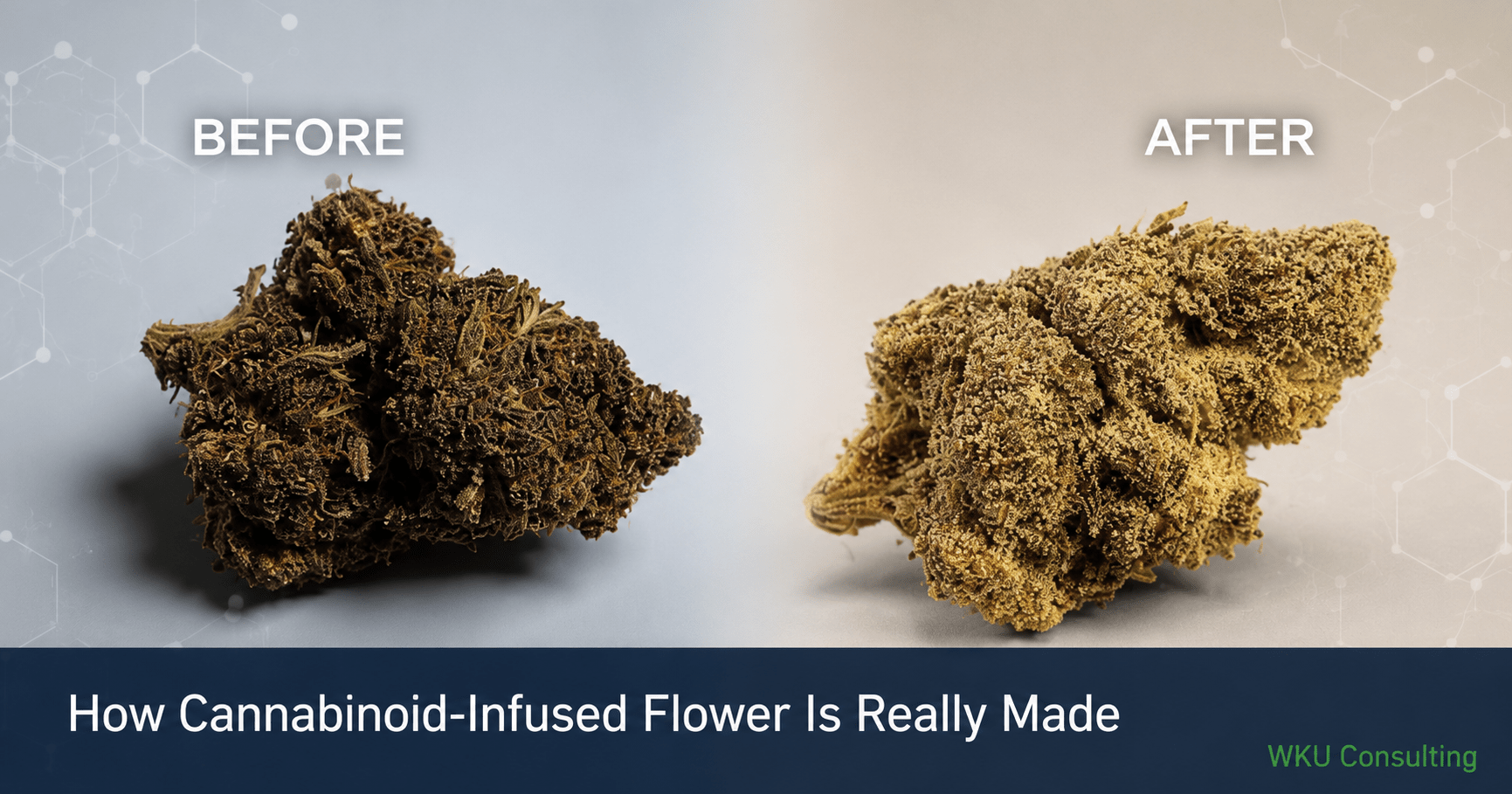
Professional-grade cannabinoid flower infusion uses an engineered carrier matrix: a food-grade powder precision-loaded with cannabinoid distillate at the molecular level, milled to a controlled particle size range, and applied to flower surfaces as a dry, free-flowing coating. The carrier is not passive filler. It controls how the cannabinoid interacts with moisture, heat, oxygen, and the flower’s surface chemistry. It governs combustion behavior, shelf stability, content uniformity, and bioavailability. The difference between spraying distillate on a bud and applying an engineered matrix is the difference between dumping house paint on a wall and electrostatically powder-coating a car panel. Same general concept. Completely different engineering. Completely different result.
This guide breaks down every layer of that engineering: the method hierarchy that separates amateur from professional, the surface chemistry that determines whether your powder sticks or falls off, the combustion science that determines whether your product burns clean or tastes like burning plastic, and the particle engineering that makes the whole system work. If you manufacture infused flower, infused pre-rolls, or any smokeable cannabinoid product, this is the technical foundation your operation needs.
What “Infused Flower” Actually Means (And Why Most Definitions Are Wrong)
The cannabis industry uses “infused” to describe everything from a bud dipped in distillate and rolled in kief to a precisely engineered powder-coated flower with verified content uniformity across every gram. These are not the same product. They are not even the same category of product. Calling both “infused” is like calling a bucket of water and a pharmaceutical tablet the same thing because both contain H2O.
True cannabinoid infusion means the active compound has been uniformly distributed across the flower’s surface at a controlled loading rate, adhered through engineered particle-surface interactions rather than a sticky adhesive layer, and stabilized against moisture uptake, oxidative degradation, and mechanical loss during handling. The infusion must survive packaging, shipping, retail shelf conditions, and consumer handling without significant potency loss or aesthetic degradation.
When you pick up a properly infused pre-roll and roll it between your fingers, the coating should not transfer to your skin. When you grind properly infused flower, the powder should distribute evenly through the ground material rather than clumping or separating. When you light it, the burn should be even and clean, with white ash rather than the black, oily residue that characterizes distillate-sprayed products. These are not subjective quality preferences. They are engineering outcomes that reflect whether the upstream formulation was done correctly.
The market is flooded with products that fail every one of these tests. Understanding why they fail requires understanding the science behind each infusion method and where each one breaks down.
The Infusion Method Hierarchy: Four Tiers from Worst to Best
Not all infusion is created equal. The industry currently uses four distinct approaches, and they exist on a clear quality hierarchy. Every operator needs to understand where their current process sits on this ladder and what it would take to move up.
Tier 1: Direct Distillate Spray (The Industry Default and the Worst Method)
Liquid cannabinoid distillate is warmed to reduce viscosity (typically to a honey-like consistency) and sprayed or dripped directly onto flower using anything from a modified paint sprayer to a squeeze bottle. This is the most common commercial method because it requires zero formulation knowledge and minimal equipment. It is also the method that produces the worst product.
The physics are straightforward and unforgiving. Liquid distillate is a viscous, hydrophobic oil. When it contacts the irregular surface of cannabis flower, it follows gravity and surface tension into the lowest points: the crevices between calyxes, the base of trichome stalks, the folds where leaves meet stems. The result is an uneven distribution where some areas carry ten times the cannabinoid concentration of others. This creates “hot spots” that burn differently than the surrounding material, delivering wildly inconsistent dosing from one puff to the next.
Combustion is the next failure. Concentrated distillate oil combusts at a different rate and temperature than dried plant material. Where the oil has pooled, the combustion zone overheats, producing acrid smoke, harsh throat hit, and visible black ash. The oil also interferes with airflow through the packed material, creating the “canoeing” problem that plagues infused pre-rolls: one side burns while the other goes out, because the oil-soaked section restricts air passage.
From a manufacturing perspective, distillate spray destroys automated packing equipment. Sticky, oil-coated flower gums up the hoppers, augers, and tamping mechanisms of pre-roll machines. Operators report cleaning cycles that consume 20-30% of production time, dramatically reducing throughput and increasing labor cost per unit. Some operations have abandoned automation entirely and returned to hand-packing, which eliminates the machine problem but introduces even worse consistency issues.
Tier 2: Dry Kief or Dry Sift Tumble
Flower is tumbled with natural kief (trichome heads separated from cannabis plant material) or dry sift. This produces better distribution than direct spray because the dry particles can move freely across flower surfaces during tumbling. The visual result is often appealing: flower develops a frosted, trichome-heavy appearance that consumers associate with quality.
The problem is adhesion. Natural kief adheres to flower through purely mechanical means: trichome heads lodge in the textural irregularities of the flower surface (between pistils, in the rough surface of sugar leaves, against intact trichome stalks). This mechanical interlocking is weak. During handling, packaging, and transport, kief continuously separates from the flower and accumulates at the bottom of the container. By the time the consumer opens the package, the top buds have lost a meaningful percentage of their coating while the bottom of the bag has a pile of loose kief.
Kief tumbling also offers no control over cannabinoid content. Natural kief varies wildly in potency (40-70% total cannabinoids depending on source material and separation method), and the application rate is difficult to control precisely because kief does not flow uniformly. The result is batch-to-batch variation that makes consistent labeling nearly impossible. Content uniformity testing (measuring cannabinoid concentration across multiple sample points within a batch) typically shows coefficient of variation (CV) values of 15-30% for kief-tumbled flower, well above the <10% CV that pharmaceutical-grade uniformity requires.
Tier 3: Distillate Coat Plus Kief Roll
This method attempts to solve kief adhesion by first coating the flower in warm distillate (as an adhesive layer), then rolling or tumbling it in kief. The distillate acts as a glue. Adhesion is dramatically better than dry kief alone. The product is visually striking and often commands premium “moonrock” pricing.
The problem is that the distillate adhesive layer reintroduces every failure mode from Tier 1. The oil layer combusts poorly, creates hot spots, produces harsh smoke, and makes the product nearly impossible to grind or process through automated equipment. The kief is effectively glued to the outside of a sticky mess. The interior of the bud remains untouched by the infusion. And because the distillate layer is applied before the kief, the oil is trapped between the flower surface and the kief coating, where it degrades faster due to oxygen exposure at the interface.
Tier 3 products often look spectacular on the shelf. The problem becomes apparent on first use. The harsh burn, inconsistent dosing, and difficulty handling the product create a consumer experience that rarely generates repeat purchases. Premium pricing on a poor-experience product is a recipe for brand erosion.
Tier 4: Engineered Carrier Matrix Infusion (The Professional Standard)
This is where flower infusion becomes an engineering discipline rather than a craft project. In Tier 4, the cannabinoid is not applied directly to the flower in any form. Instead, it is first formulated into an engineered carrier matrix: a food-grade, inhalation-safe carrier powder that has been precision-loaded with cannabinoid distillate through a controlled co-deposition process.
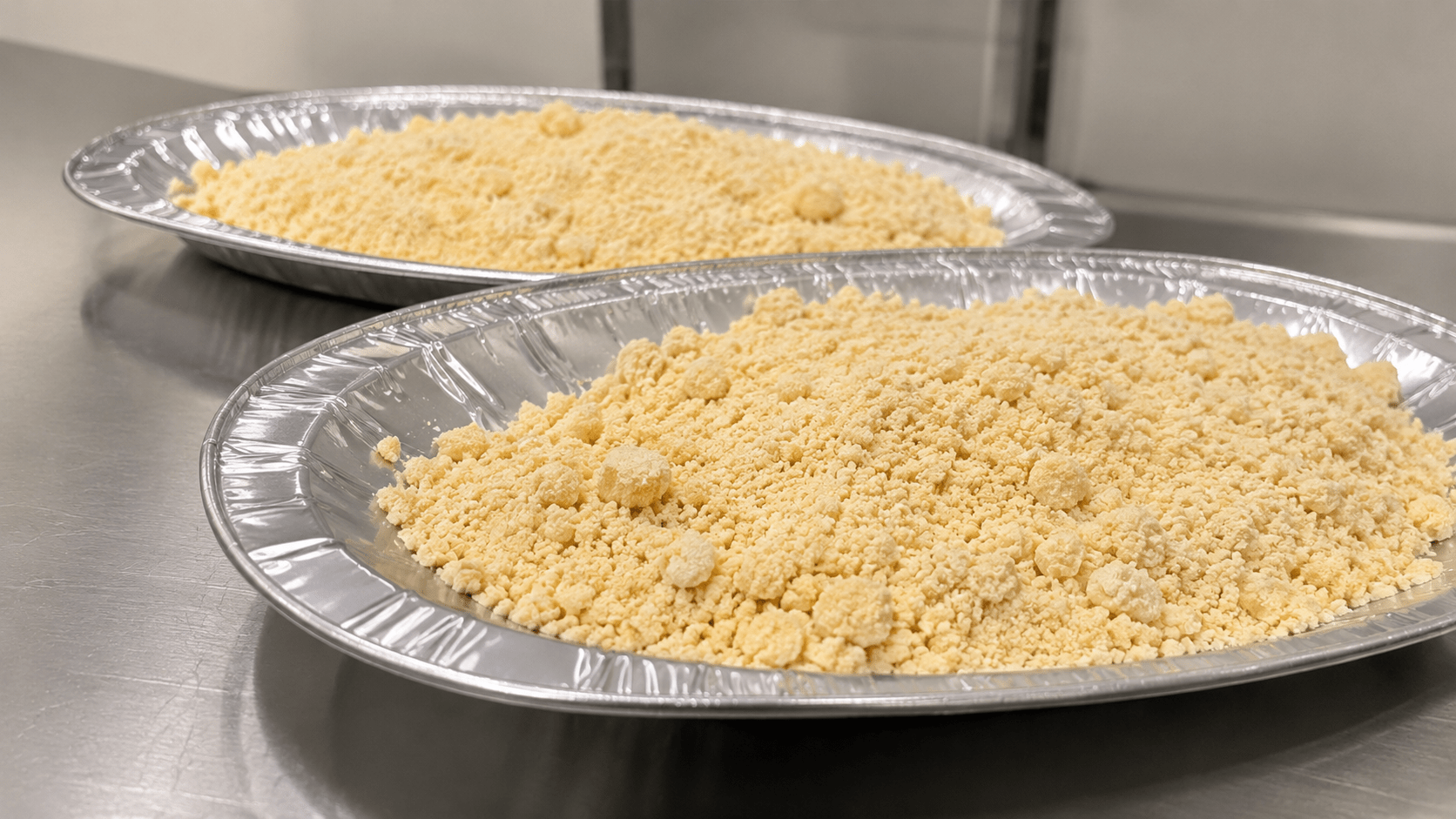
The carrier matrix is not a simple blend of powder and oil. The cannabinoid is dissolved alongside the carrier precursor in a solvent system, creating a true molecular-level solution. As the solvent is removed under controlled conditions, the cannabinoid and carrier co-deposit as a uniform solid matrix where every particle carries approximately the same cannabinoid loading. This co-deposited matrix is then cryogenically milled to a controlled particle size range and classified through precision sieving to remove oversize and undersize particles.
The finished powder flows freely from its container, distributes evenly across flower surfaces with gentle mechanical tumbling (30-60 seconds of agitation in a suitable vessel), and adheres to the flower through a combination of mechanical interlocking with the flower’s surface texture and engineered surface energy interactions. No liquid adhesive layer is required. No sticky residue transfers to hands, grinders, or equipment. The coating survives handling, packaging, and transport without significant loss.
The combustion profile is clean: the carrier decomposes to CO2 and water during combustion, releasing the cannabinoid payload into the smoke stream efficiently. The white-ash burn characteristic of properly engineered matrix infusion is immediately distinguishable from the black, tarry ash of distillate-sprayed products.
| Parameter | Tier 1: Distillate Spray | Tier 2: Kief Tumble | Tier 3: Coat + Roll | Tier 4: Engineered Matrix |
|---|---|---|---|---|
| Content Uniformity (CV%) | 25-40% | 15-30% | 20-35% | <10% |
| Combustion Quality | Black ash, harsh, canoeing | Moderate (kief burns clean) | Black ash from oil layer | White ash, even burn |
| Coating Adhesion (% retained after handling) | 85-95% (sticky, transfers to hands) | 40-60% (falls off in bag) | 80-90% (glued by oil) | 90-98% (mechanical + surface energy) |
| Machine Compatibility | Destroys automated packers | Compatible but dusty | Clogs everything | Fully compatible, zero gumming |
| Shelf Stability (ambient conditions) | 2-4 weeks before browning | 4-8 weeks (kief oxidizes) | 2-4 weeks (oil layer oxidizes first) | 6-12+ months (matrix protects actives) |
| Potency Uplift Range | 5-15% TAC (uneven) | 3-8% TAC (variable) | 8-20% TAC (concentrated exterior) | 6-15% TAC (uniform distribution) |
| Equipment Required | Spray gun, heat source | Tumbler or drum | Spray gun + tumbler | Formulation lab + tumbler |
| Formulation Knowledge Required | None | None | Minimal | Surface chemistry, particle engineering, combustion science, pharmaceutical formulation |
| Production Throughput (flower per 10-min cycle) | 5-10 lbs (batch spray) | 15-25 lbs (drum tumble) | 2-5 lbs (hand process) | 20-45 lbs (industrial tumble) |
The gap between Tier 3 and Tier 4 is not incremental. It is a category shift. Tiers 1 through 3 are variations on “put cannabinoid on flower.” Tier 4 is “engineer a delivery system, then apply it to flower.” Everything upstream of the tumbling step is where the real science lives.
Why the Carrier Matrix Is the Entire Game
If you take one thing from this entire article, make it this: the carrier is not inert filler. It is the most important functional component in the entire infusion system. The carrier controls five critical variables that determine whether your infused flower is a premium product or an expensive mistake.
1. Moisture Behavior and Glass Transition Temperature
Cannabis flower sits at 8-12% moisture content after proper curing. The surrounding environment in most production facilities, warehouses, and retail locations ranges from 30-70% relative humidity depending on geography and season. The carrier powder must navigate this moisture landscape without degrading.
This is a materials science problem, and it hinges on a property called glass transition temperature (Tg). Amorphous solid materials (which includes most carrier matrices used in powder formulation) exist in one of two physical states depending on temperature. Below Tg, the material is in a “glassy” state: hard, brittle, and free-flowing. Above Tg, the material transitions to a “rubbery” state: soft, tacky, and prone to sticking to everything it touches, including itself.
Here is the critical mechanism that separates engineered formulations from amateur ones: moisture acts as a plasticizer that lowers Tg. Every percentage point of moisture absorbed by the carrier drops Tg by several degrees. If the carrier absorbs enough moisture from the flower or from ambient air, Tg drops to room temperature. At that point, the powder surface goes from glassy and free-flowing to rubbery and adhesive. Your carefully milled, precisely classified powder turns into a sticky, clumpy mass that cannot be applied evenly and will not flow through any automated system.
This is why cheap, unengineered carrier powders fail catastrophically in humid climates like Florida, Louisiana, or coastal California during summer months. The carrier was never designed to handle the moisture environment it operates in. Professional-grade matrix formulations include molecular-level surface modification: a hydrophobic barrier at the particle surface that prevents moisture absorption and keeps Tg well above ambient temperature regardless of humidity conditions. The specific chemistry of this barrier is proprietary, but the principle is straightforward: if the carrier cannot absorb water, water cannot lower its Tg, and the powder stays glassy and free-flowing under any storage or handling condition.
Operators who skip this step discover the problem the hard way. A batch produced in January in Colorado (10-15% RH) works perfectly. The same formula produced in July in Florida (60-70% RH) arrives as a solid brick. The chemistry has not changed. The environment has. And the formulation was never engineered to handle both.
2. Combustion Chemistry and Pyrolysis Behavior
The carrier burns with the flower. This is not optional. When the consumer lights the product, every component in the matrix enters the combustion zone. If the carrier produces toxic decomposition products, acrid smoke, off-flavors, or dense particulate, the product fails at the moment of consumption, which is the only moment that actually matters.
Carrier selection must account for pyrolysis chemistry: the specific decomposition pathway each material follows when heated above its thermal stability threshold. Some materials that function perfectly as food ingredients produce unacceptable combustion byproducts when inhaled. The carrier must decompose cleanly to CO2 and water vapor through complete oxidation, not through pyrolytic charring that generates polycyclic aromatic hydrocarbons (PAHs) or other irritant compounds.
The combustion temperature window for cannabis flower sits between 400-900°C at the burning tip. The carrier must fully decompose within this window rather than forming a dense char that survives combustion. Materials that char rather than decomposing create two problems: they encapsulate unreleased cannabinoid (wasting active ingredient), and they contribute to harsh, particulate-heavy smoke that irritates the throat and lungs. The ideal carrier leaves behind white, powdery ash, not black, dense residue.
This is not a place for guessing. The pyrolysis behavior of every component in the matrix must be characterized before it goes into a product someone inhales. Thermogravimetric analysis (TGA) and differential scanning calorimetry (DSC) are standard tools for evaluating decomposition behavior. If your formulation team has not run these tests on your carrier, you do not know what your customers are inhaling.
3. Particle Adhesion Mechanics
The carrier particle must adhere to the flower surface without a liquid adhesive layer. This is a function of three interacting variables: particle size, surface energy, and mechanical interlocking with the flower’s natural surface texture.
Particle size operates within a narrow window. Particles that are too large (roughly above 150 microns for most flower applications) sit on top of the trichome canopy and fall off with minimal mechanical disturbance. They lack sufficient contact area relative to their mass to generate adhesive forces that overcome gravity and handling forces. Particles that are too fine (below approximately 10 microns) become airborne dust during application. They do not settle onto flower surfaces predictably, they create inhalation hazards for production workers, and they represent wasted material. The optimal particle size window for flower infusion typically falls in a range that balances sufficient contact area for adhesion against enough mass for predictable settling behavior during tumbling.
Surface energy governs how strongly the particle and flower surfaces attract each other at the molecular level. Cannabis flower surfaces are complex: trichome heads are waxy and hydrophobic, leaf surfaces are moderately hydrophilic, and pistil surfaces have yet another surface chemistry. An engineered carrier matches its surface energy to these natural surfaces to maximize adhesion without requiring a liquid bridge. This is one of the reasons that simple powders (even if the right size) underperform engineered matrices: the surface chemistry has not been tuned to the substrate.
Mechanical interlocking provides the final adhesion mechanism. Cannabis flower surfaces are not smooth. They are covered in trichome stalks (50-100 microns tall), pistil fibers (100-300 microns long), and leaf surface irregularities. Properly sized carrier particles lodge in the spaces between and around these structures during tumbling. The flower’s natural architecture acts as a mechanical retention system, holding particles in place against gravitational and handling forces. This is the same principle that makes the cellulose fiber bonding in paper manufacturing work: bring the surfaces into close contact with mechanical energy, and secondary bonds form at the interface.
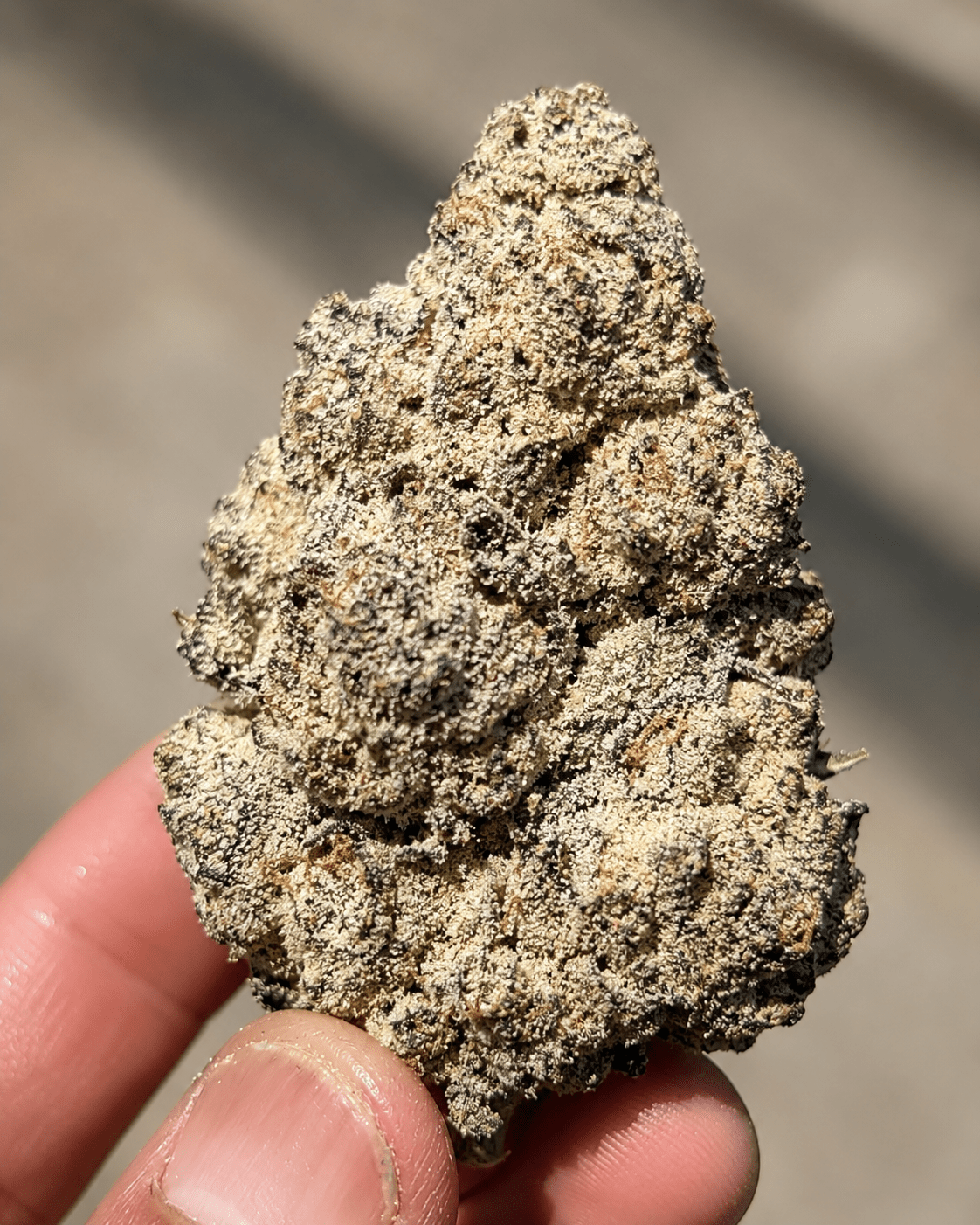
At proper application rates (typically 8-15% carrier powder by weight of flower), the carrier particles fill the interstitial spaces of the flower’s surface texture without overloading it. The result is a product that looks like natural, heavily trichomed flower rather than a bud coated in visible powder. At application rates above 15-20%, the coating becomes visibly obvious and begins to fall off because the surface texture is saturated. The powder has nowhere to lodge and just sits on top.
4. Cannabinoid Release During Combustion
The carrier must release the cannabinoid during combustion, not trap it. This is the distinction that catches most operators off guard: a carrier that holds the cannabinoid perfectly during storage and handling is useless if it does not let go at the right moment.
Some matrix materials form dense chars during combustion that encapsulate the cannabinoid and prevent it from volatilizing into the smoke stream. The cannabinoid is physically present in the ash but was never delivered to the consumer. This is wasted active ingredient, and it shows up as a gap between the labeled potency (measured by extracting cannabinoid from the matrix with a solvent in the lab) and the experienced potency (what the consumer actually feels).
The carrier should decompose cleanly ahead of or simultaneously with cannabinoid volatilization. As the carrier breaks down, it releases its payload into the gas phase where it can be carried by the smoke stream into the consumer’s lungs. Efficient release means the bioavailability of the infused cannabinoid approaches that of natural trichome-borne cannabinoid, rather than being diminished by incomplete release from the carrier.
Testing for release efficiency requires combustion simulation under controlled conditions and analysis of the resulting gas phase. This is not a standard cannabis lab test. It is a pharmaceutical-grade analysis that most cannabis testing facilities are not equipped to perform. Operations that skip this step are operating on faith rather than data, and the gap between “our COA says 30% THC” and “this smokes like 20% THC” is often a release efficiency problem.
5. Content Uniformity: The Line Between Amateur and Professional
If the cannabinoid is not uniformly distributed throughout the carrier matrix at the particle level, every puff from the joint delivers a different dose. This is the single most important quality attribute of an infused flower product, and it is the one most commonly ignored.
Content uniformity is achieved during the formulation step, not during the infusion step. By the time the powder reaches the flower, every particle must carry approximately the same cannabinoid loading. If some particles are heavily loaded and others are nearly bare, no amount of even tumbling will produce a uniform product on the flower. The heterogeneity is baked into the powder itself.
This is where the co-deposition process becomes critical. When the cannabinoid distillate is dissolved into a true molecular solution alongside the carrier precursor material, and the solvent is then removed under controlled, continuous-mixing conditions, the cannabinoid and carrier precipitate together as a homogeneous matrix. Every particle that forms during this process carries the same ratio of cannabinoid to carrier because they were molecularly mixed before solidification.
The alternative, physical blending of dry cannabinoid isolate or distillate with dry carrier powder, produces a heterogeneous mixture. The cannabinoid exists as discrete domains within or on the surface of the carrier particles rather than being uniformly distributed throughout the matrix. When this blend is milled, some resulting particles are mostly cannabinoid, others are mostly carrier, and the content uniformity is poor. This manifests as hot spots in the finished flower product: some puffs are intensely potent while others taste like nothing happened.
The United States Pharmacopeia (USP) standard for content uniformity in pharmaceutical dosage forms requires a coefficient of variation (CV) below 6%. While cannabis products are not held to pharmaceutical standards (yet), the principle is the same. Well-formulated matrix powders routinely achieve CV values of 5-8% when tested across multiple sample points within a batch. Poorly formulated blends test at 20-40% CV, which means the potency can vary by a factor of 2x or more across a single batch.
The Powder Production Process: What Happens Before the Flower
The infusion step itself, tumbling the powder onto flower, takes 30-60 seconds. It is the simplest and fastest step in the entire operation. Everything that makes it work happens upstream, in the formulation lab where the carrier matrix is engineered, produced, and prepared for application.
Stage 1: Dissolution and Molecular Mixing
The cannabinoid distillate must be dissolved, not melted and stirred in. “Dissolved” means every cannabinoid molecule is individually surrounded by solvent molecules, forming a true molecular solution with no remaining microdomains of concentrated distillate. “Melted and stirred” means the distillate is liquified by heat and mechanically dispersed through the carrier, leaving microscopic globules of oil trapped in a powder matrix. The difference is invisible to the naked eye. The difference in the finished product is enormous.
True molecular dissolution requires a suitable solvent: one that fully dissolves the cannabinoid distillate, is compatible with the carrier material, and can be removed completely without leaving toxic residue in the finished product. The solvent must also be removable under conditions gentle enough to avoid degrading the cannabinoid or damaging the carrier’s functional structure.
The carrier material is introduced to this solution so that both the cannabinoid and the carrier precursor coexist in a single, homogeneous liquid phase. At this stage, there is no “carrier particle” and no “cannabinoid droplet.” There is a single solution where both components are molecularly intermixed. This molecular-level starting point is what enables the uniform co-deposition that follows.
Stage 2: Solvent Removal and Co-Deposition
This is where most amateur operations fail, and where the engineering matters most. As solvent is removed from the solution, the cannabinoid and carrier simultaneously precipitate out of solution and deposit together as a solid matrix. If this happens under controlled conditions with continuous, uniform mixing, the resulting solid is homogeneous: every microscopic region has the same cannabinoid-to-carrier ratio.
If solvent removal happens unevenly (in a static tray, in a container without agitation, or too quickly), concentration gradients form. The cannabinoid migrates with the receding solvent front and concentrates in certain regions while leaving others depleted. The result is a batch where some chunks of the dried matrix are heavily loaded with cannabinoid and others are nearly bare. No amount of downstream milling fixes this: the heterogeneity is locked in at the macro scale and manifests at the particle scale after grinding.
Professional operations use apparatus that provides continuous, uniform mixing throughout the entire evaporation process. Rotary evaporation under vacuum is the gold standard: the rotating flask ensures that the solution is constantly mixed as solvent is removed under reduced pressure (which lowers the boiling point and prevents thermal degradation of the cannabinoid). The vacuum environment also excludes oxygen, reducing oxidative degradation during the most vulnerable phase of production, when the material has maximum surface area as a thin film inside the flask.
The endpoint of solvent removal is critical. Residual solvent in the finished matrix causes three problems: it lowers the glass transition temperature of the carrier (back to the moisture problem), it represents a potential inhalation hazard if volatile residues remain, and it can cause the matrix to soften and clump during storage. Residual solvent must be driven below safe inhalation limits, which for most common solvents used in cannabis processing is 500 ppm or less by weight (per USP <467> and equivalent cannabis-specific guidelines).
Stage 3: Cryogenic Milling and Particle Size Reduction
After solvent removal, the matrix exists as coarse granules, chunks, or a solid mass. This must be reduced to a controlled particle size range suitable for flower coating. This is not as simple as throwing the material into a blender.
The carrier matrix is often thermally sensitive. Mechanical energy from grinding generates friction heat that can soften the matrix, smear the cannabinoid, and produce a sticky, unusable paste instead of a free-flowing powder. The solution is cryogenic milling: combining the material with a cryogenic agent before and during grinding.
The cryogen serves three purposes simultaneously. First, it embrittles the matrix so it fractures cleanly along crystal planes and particle boundaries instead of smearing and deforming. Brittle materials produce well-defined particle size distributions with predictable surface characteristics. Ductile (warm, soft) materials smear and produce broad, unpredictable distributions with damaged surfaces. Second, the cryogen absorbs the heat generated by grinding, keeping the material well below its glass transition temperature throughout the entire milling process. Third, the cold, dry atmosphere created by the cryogen prevents moisture absorption during the highest-risk moment in the entire production process: immediately after grinding, when freshly created surfaces have enormous surface area and maximum affinity for moisture from ambient air.
After milling, the powder must be classified through precision sieving to remove oversize particles (which adhere poorly to flower) and undersize fines (which become airborne dust). The classification step is not optional. It is what converts a ground powder with a broad, unpredictable size distribution into a controlled-size material with predictable adhesion and flow behavior.
Stage 4: Packaging and Stability Window
The window between grinding and packaging must be minimized. Freshly ground carrier powder has enormous specific surface area (surface area per gram of material) and will absorb moisture from ambient air rapidly. Every minute the powder sits exposed on a bench in a humid production environment degrades its flow properties. Professional operations package immediately after classification, using moisture-barrier packaging (typically foil-lined or multi-layer polymer) with desiccant to maintain the powder in its engineered glassy state through storage and shipping.
A properly packaged carrier matrix powder maintains its flow properties, content uniformity, and functional performance for 12-18 months under standard warehouse conditions (15-25°C, below 60% RH). Improperly packaged powder, or powder left exposed during production delays, can degrade within hours to days depending on ambient humidity.
The Infusion Step: Why It Is the Easiest Part of the Entire Process
If every upstream step was done correctly, applying the matrix powder to flower is genuinely simple. The powder flows freely from its container, distributes evenly across flower surfaces with gentle tumbling or shaking, and adheres through the mechanical and surface energy mechanisms described above.
The equipment required is minimal: a drum tumbler (commercial operations use rotary drums; small-scale operations use anything from a Pyrex dish with a lid to a 5-gallon bucket to a modified concrete mixer), a scale for weighing, and a clean workspace. The application process takes 30-60 seconds of gentle agitation. Aggressive tumbling is counterproductive: it breaks trichomes off the flower and creates excess shake, reducing the quality and yield of the finished product. The goal is enough mechanical energy to distribute the powder across surfaces and drive it into the flower’s textural features, not enough to destroy the flower structure.
The application rate (grams of powder per gram of flower) is calculated from the cannabinoid loading of the matrix and the desired potency uplift. A matrix loaded at 50% cannabinoid content applied at a 10% rate (10 grams of powder per 100 grams of flower) delivers approximately 5 percentage points of potency uplift. The math is linear and predictable, which makes scaling straightforward. If your base flower tests at 18% total THC and you want to hit 25% total THC on the COA, you calculate the exact application rate to deliver 7 percentage points of uplift. No guessing. No trial and error. Just math.
The tumbling process also generates a secondary product: potent infused shake. Loose flower material that separates during tumbling collects at the bottom of the drum. This shake carries the same cannabinoid loading as the coated flower and is perfectly suited for pre-roll production. Operations that use drum tumblers routinely report that 10-15% of input flower mass converts to infused shake, which becomes a separate, high-margin product SKU rather than waste.
If you want to learn this process hands-on with lab walkthroughs and SOPs you can actually use, that is exactly what we built extractiontraining.com for.
Infused Pre-Roll Manufacturing: Why Powder Solves the Industry’s Biggest Production Problem
The infused pre-roll category is one of the fastest-growing segments in legal cannabis, with some markets showing 30-40% year-over-year growth. It is also the category where manufacturing quality problems are most visible to consumers and most damaging to brands.
The core manufacturing problem is simple: distillate-sprayed flower destroys automated pre-roll packing machines. The sticky, oil-coated material gums up hoppers, augers, vibration plates, and tamping mechanisms on every major pre-roll automation platform. Operators report that cleaning cycles consume 20-30% of total production time, and some machines require complete disassembly for cleaning after every 500-1,000 units. At a labor rate of $25-35/hour and a cleaning cycle of 30-60 minutes, the cleaning overhead alone adds $0.05-0.15 per pre-roll in direct labor cost, not counting the lost throughput from machine downtime.
Powder-infused flower eliminates this problem entirely. The dry, free-flowing nature of matrix-coated flower means it behaves identically to standard uninfused flower in automated packing equipment. Hoppers fill normally, augers meter normally, vibration plates settle material normally, and tamping mechanisms compress normally. No cleaning cycle is required between infused and uninfused production runs. Operators can switch between product SKUs by simply changing the flower input, with no machine reconfiguration or cleaning.
The burn quality advantage is equally significant for pre-rolls. The “canoeing” problem, where one side of the pre-roll burns while the other goes out, is almost always caused by uneven oil distribution in the packed material blocking airflow. Powder-infused material has no oil layer to obstruct airflow. The burn progresses evenly from tip to end, the draw resistance is consistent, and the ash is white and clean. Consumer complaints about burn quality drop dramatically when operations switch from spray to powder infusion.
| Manufacturing Metric | Distillate-Sprayed Flower | Powder-Infused Flower |
|---|---|---|
| Machine cleaning frequency | Every 500-1,000 units | Standard maintenance only |
| Cleaning downtime per shift | 60-90 minutes (20-30% of shift) | 0 minutes (no oil to clean) |
| Effective throughput (units/8hr shift) | 2,500-4,000 | 5,000-8,000 |
| Labor cost overhead per unit | $0.08-0.15 (cleaning labor) | $0.00 (no added labor) |
| Burn quality complaints (per 1,000 units) | 15-40 (canoeing, harsh taste) | 1-3 (standard defect rate) |
| SKU changeover time | 30-60 min (full clean required) | 5-10 min (hopper swap only) |
Quality Control: How to Know If Your Infusion Is Actually Working
Quality control for infused flower is underdeveloped across most of the cannabis industry. Most operations test a single sample from a batch and report the result as the batch potency. This tells you almost nothing about the product the consumer actually receives, because the entire point of quality control for infused products is measuring uniformity, not average potency.
Content Uniformity Testing
The gold standard for infused flower QC is multi-point content uniformity testing. Take 10 individual samples from different locations within a batch (top, bottom, center, edges of the tumbling vessel). Test each independently. Calculate the mean, standard deviation, and coefficient of variation (CV). A well-formulated, properly applied infusion should produce a CV below 10%. If the CV is above 15%, the formulation has a uniformity problem that needs to be traced upstream.
Adhesion Retention Testing
Weigh a sample of infused flower. Subject it to a standardized handling protocol: three inversions of the container, 30 seconds of gentle shaking, and five minutes of sitting upright. Weigh the loose material that has separated from the flower. Adhesion retention is calculated as the percentage of the original coating that remains on the flower. Professional-grade matrix infusion should retain 90% or more of the applied coating under this test. If retention drops below 80%, the particle size distribution, surface energy, or application rate needs adjustment.
Combustion Quality Assessment
Light the product and observe. White ash indicates complete combustion of all organic material in the matrix. Gray or black ash indicates incomplete combustion, charring, or residual non-combustible material. The burn should be even across the entire cross-section. If one side burns faster than the other, the distribution is uneven. If the smoke is harsh or carries off-flavors not present in the base flower, the carrier or a degradation product is contributing to the smoke profile.
Moisture Activity Monitoring
Water activity (aw) should be measured before and after infusion. The carrier powder should not significantly increase the water activity of the flower. Cannabis flower for retail sale typically maintains aw between 0.55-0.65 (humidity-pack conditioned) to prevent microbial growth while maintaining consumer-acceptable moisture feel. If the infusion process raises aw above 0.65, either the carrier has absorbed and is releasing moisture, or the tumbling environment is too humid. Water activity above 0.70 creates conditions favorable for mold growth and is a compliance failure in most regulated markets.
Common Failures and How to Diagnose Them
Every infusion failure can be traced to a specific upstream cause. The finished product does not lie. If you know what to look for, the failure mode tells you exactly where the process broke down.
| Symptom | Root Cause | Diagnostic Test | Fix |
|---|---|---|---|
| Powder clumps and won’t flow from container | Moisture absorption has lowered Tg below ambient temperature. Particle surfaces have gone rubbery. | Measure loss on drying (LOD) of the powder. If LOD is above 3-4%, moisture uptake is the cause. Check storage packaging for seal integrity. | Reformulate with hydrophobic surface modification. Store in moisture-barrier packaging with desiccant. Reduce exposure time between opening and application. |
| Powder distributes evenly but falls off flower during handling | Particle size too large for mechanical interlocking. Particles sitting on top of trichome canopy rather than lodging between structures. | Sieve analysis: if >30% of particles are above 150 microns, the grind is too coarse. Microscopy of coated flower confirms particles sitting proud of surface. | Re-mill with tighter classification. Remove oversize fraction through additional sieving. |
| Product burns harsh with black ash and acrid taste | Carrier material is charring rather than fully combusting. Dense carbon char is forming and trapping unreleased cannabinoid. | TGA of the carrier alone: does it reach >95% mass loss by 600°C? If residual mass is above 5% at 600°C, the carrier is charring. | Switch carrier to a material with cleaner pyrolysis. Target >98% mass loss by 600°C in TGA. |
| COA shows target potency but product “smokes weak” | Cannabinoid release efficiency is poor. Carrier is trapping cannabinoid during combustion rather than releasing it. | Analyze combustion residue (ash) for residual cannabinoid content. If ash retains >5% of original cannabinoid loading, release is incomplete. | Reformulate carrier for faster decomposition kinetics. The carrier must break down ahead of or simultaneously with cannabinoid volatilization. |
| Potency varies wildly between samples in same batch | Content uniformity failure. Cannabinoid was not uniformly distributed in the matrix, either from physical blending instead of co-deposition or from concentration gradient during solvent removal. | 10-point content uniformity test. CV above 15% confirms heterogeneous matrix. Examine matrix production log for static drying or insufficient mixing during evaporation. | Switch from physical blending to true co-deposition from molecular solution. Use rotary evaporation or equivalent continuous-mixing evaporation during solvent removal. |
| Flower turns brown within 1-2 weeks of infusion | Oxidative degradation at the flower-matrix interface. The carrier or residual solvent is accelerating oxidation of the flower’s chlorophyll and cannabinoids. | Compare stored infused flower to uninfused control from same batch under identical conditions. If infused browns faster, the carrier is the variable. Check residual solvent levels. | Ensure complete solvent removal (residual <500 ppm). Evaluate carrier for pro-oxidant behavior. Some carriers include anti-oxidant properties in formulation that extend shelf life to 6-12+ months. |
| Infused pre-rolls canoe (uneven burn) | Uneven distribution of the infusion material within the packed pre-roll. This is usually a packing problem rather than an infusion problem, but heavy clumping of matrix material can contribute. | Cut open three pre-rolls from the batch and visually inspect material distribution. If distinct clumps of coated vs. uncoated material are visible, the flower was not tumbled long enough or the powder was not flowing freely. | Extend tumbling time by 15-30 seconds. Verify powder flow properties before application. If using shake from tumbling, re-blend before packing to break up any settling segregation. |
| Powder creates visible dust cloud during application | Excessive fines fraction in the milled powder. Particles below ~10 microns become airborne rather than settling onto flower surfaces. | Sieve analysis: if >15% of particles pass through the finest classification sieve, the fines fraction is too high. This is a milling or classification failure. | Add additional classification step to remove fines. Adjust milling parameters (speed, feed rate, cryogen ratio) to reduce fines generation. Fines can be recycled into the next formulation batch rather than discarded. |
The Business Case: Why Proper Infusion Engineering Is a Competitive Moat
Infused flower and infused pre-rolls are among the highest-margin product categories in legal cannabis. A well-infused pre-roll commands $8-15 retail versus $3-6 for a standard pre-roll. The raw material cost of the matrix powder (carrier plus cannabinoid distillate) typically adds $0.15-0.40 to the cost of goods per pre-roll, depending on the target potency uplift and the cost of input distillate. That is a margin expansion of 300-500% on the COGS delta.
The bottleneck is not cost. It is formulation knowledge. The companies producing genuinely well-engineered infused flower are rare because the science sits at the intersection of four disciplines that rarely overlap in the same operation:
- Pharmaceutical particle engineering (carrier formulation, particle size control, content uniformity)
- Food science (GRAS carrier selection, moisture behavior, shelf stability)
- Surface chemistry (adhesion mechanics, surface energy matching, hydrophobic modification)
- Cannabis processing (flower handling, regulatory compliance, market-specific requirements)
Most cannabis operators have deep knowledge in one of these domains, maybe two. Matrix formulation requires competence in all four simultaneously. This knowledge gap is the moat. Operations that invest in proper engineering produce a product that is visually distinct (simulated-trichome powder coating vs. sticky globs), functionally superior (consistent dosing, clean burn, 6-12+ month shelf life), and defensible against competitors who are still spraying distillate on buds and wondering why their customers don’t come back.
The operational economics compound further when you consider inventory management. Powder infusion technology can transform aging, oxidized B-grade flower (which might sell for $200-400/lb bulk) into premium infused flower (which commands $800-1,600/lb retail equivalent). The powder coating visually rejuvenates the flower (lighter, frostier appearance), delivers genuine potency enhancement, and extends the sellable shelf life of material that would otherwise be written down or destroyed. For operations sitting on unsold outdoor harvest or poor crop cycles, this is not just a product innovation. It is crop insurance.
Custom Cannabinoid Blending: The Formulation Advantage
One of the most powerful applications of engineered matrix infusion is the ability to create custom cannabinoid profiles that do not exist in any natural plant variety. Natural cannabis flower contains primarily THC (or CBD in hemp varieties), with minor cannabinoids present at trace levels: typically less than 1% each for THCV, CBG, CBN, CBC, and other boutique compounds. Some of the most therapeutically interesting cannabinoids, like THCP, THCB, and THCV, are present at concentrations so low (often below 0.1%) that they contribute nothing meaningful to the pharmacological experience.
Matrix infusion changes this equation completely. Because the carrier can be loaded with any cannabinoid distillate or blend of distillates, operators can engineer specific effect profiles by selecting their active ingredients:
- Sleep formulation: Base CBD or CBN flower infused with a matrix loaded with CBN distillate plus minor amounts of THC for synergistic sedation. CBN alone at low doses (5-10mg) produces mild sedation; combined with THC it activates different receptor pathways that deepen the effect.
- Energy/focus formulation: THCV-loaded matrix on a sativa base. THCV acts as a CB1 antagonist at low doses, producing a clear, focused, appetite-suppressing effect distinct from THC’s typical CB1 agonism.
- Pain management formulation: THC + CBD matrix at specific ratios (1:1, 2:1, 4:1) applied to flower for precise dosing. These ratios have distinct pharmacological profiles: 1:1 produces significant pain relief with reduced psychoactivity; 4:1 produces strong psychoactivity with anti-inflammatory support.
- Full-spectrum enhancement: A blend of Delta-8, Delta-9, THCA, THCP, and CBC loaded into a single matrix and applied to premium flower. This creates a product with an entourage effect that no single-cultivar flower can achieve naturally, because the minor cannabinoid concentrations are pharmacologically meaningful rather than trace.
The business implication is speed-to-market. Traditional hybrid breeding to achieve a specific cannabinoid profile takes 6-18 months of grow cycles. Matrix infusion achieves the same pharmacological outcome in a single production run. An operator can launch a new SKU with a novel cannabinoid profile in days, not seasons. For brands competing on product differentiation, this is the manufacturing equivalent of a cheat code.
Spray vs. Powder: Why the Industry Is Shifting
The market is moving away from distillate spray and toward powder-based infusion for reasons that go beyond product quality. Regulatory pressure, manufacturing efficiency, and consumer education are all pushing in the same direction.
Regulatory scrutiny: Several state regulators have begun examining the solvents and thinning agents used in spray-based infusion processes. Some operators thin their distillate with MCT oil, propylene glycol, or even isopropyl alcohol to make it sprayable. These thinning agents are either not approved for inhalation (MCT oil has been linked to lipoid pneumonia in vaping studies), not disclosed on product labels, or both. Powder-based infusion uses no solvents or thinning agents at the application step. The powder is dry. There is nothing to thin. The regulatory risk profile is fundamentally different.
Automated manufacturing compatibility: As the cannabis industry matures and consolidates, large-scale automated manufacturing is replacing hand-production. Every major pre-roll automation vendor (and the operators who buy their equipment) is dealing with the distillate-clogging problem. Powder infusion is the only method that is fully compatible with existing automated packing lines without modification, cleaning, or compromise.
Consumer sophistication: The legal cannabis consumer is becoming more educated. “Infused” as a marketing term is losing its novelty. Consumers are learning to check for burn quality, evenness of coating, and lack of stickiness. Reviews and social media exposure of poorly infused products (black ash, harsh taste, uneven burn) are creating reputational consequences for brands that continue using crude methods. The operators who invest in proper infusion engineering now are building brand equity that will compound as consumer standards continue to rise.
Scaling Infused Flower Production: From Kitchen Table to Commercial Throughput
One of the most attractive features of powder-based infusion is the simplicity of scaling. The infusion step is a mechanical tumbling operation, and mechanical tumbling scales linearly with vessel size. A small operation can start with a hand-shaken container processing ounces at a time. A mid-scale operation uses a 5-20 gallon rotary drum processing 5-15 pounds per cycle. A commercial operation uses industrial tumbling drums processing 20-45+ pounds of flower per 10-minute cycle.
The upstream formulation process (matrix production) scales independently of the downstream infusion process. A single formulation batch can produce enough matrix powder to infuse thousands of pounds of flower. The formulation lab operates in batch mode; the infusion floor operates in continuous or semi-continuous mode. This decoupling means the formulation team can produce matrix in advance and stockpile it, while the infusion team draws from inventory as needed for production runs.
The capital requirements differ dramatically between the two operations. The infusion step requires only a tumbling vessel, a scale, and a clean workspace. Total equipment cost: $500-5,000 depending on scale. The formulation lab requires rotary evaporation capability, cryogenic milling, precision sieving, analytical instrumentation for QC, and a controlled-environment workspace. Total equipment cost: $15,000-75,000 depending on throughput targets and QC rigor. This asymmetry means operators can start with toll-manufactured matrix powder (buying the powder from a formulation partner) and bring formulation in-house only when volume justifies the investment.
Beyond Flower: Using Cannabinoid Powder to Make Hash
Flower infusion is the primary application, but the same engineered matrix powder opens a second product category that most operators have not considered: hash production without traditional extraction. The process uses the same cannabinoid-loaded carrier powder as flower infusion, but instead of tumbling it onto flower surfaces, you bind it into a solid, cohesive mass using cannabis-derived terpenes as the binding agent.
The chemistry is straightforward. The carrier matrix powder consists of plant-derived cellulose fibers loaded with cannabinoid. These fibers are held together by interfiber hydrogen bonding, the same mechanism that gives paper its structural integrity. In powder form, the fibers are discrete particles. When cannabis-derived terpenes are introduced at approximately 10% by weight, the terpenes act as a solvent that partially dissolves and re-bonds the fiber surfaces. As the terpene integrates into the matrix, the discrete powder particles fuse into a continuous, cohesive mass with a texture and consistency nearly identical to traditional solvent-extracted or pressed hash.
The Process
Start with finely ground cannabinoid matrix powder. Grinding matters here even more than it does for flower infusion: any clumps that survive into the final product create visible inconsistencies when the hash is cut open, and they represent pockets where terpene penetration was incomplete. A mortar and pestle produces the most consistent results. Coffee grinders work but generate heat that can soften the matrix, and some material is lost to the grinding chamber walls.
Weigh out the ground powder and add cannabis-derived terpenes at approximately 10% by weight. Strain-specific terpene profiles (OG Kush, Gelato, Blue Dream, etc.) give the finished hash a recognizable flavor and aroma identity. The terpenes can be applied with a small spray apparatus for initial distribution, but for most batch sizes the most effective method is simply adding the terpenes directly and hand-kneading.
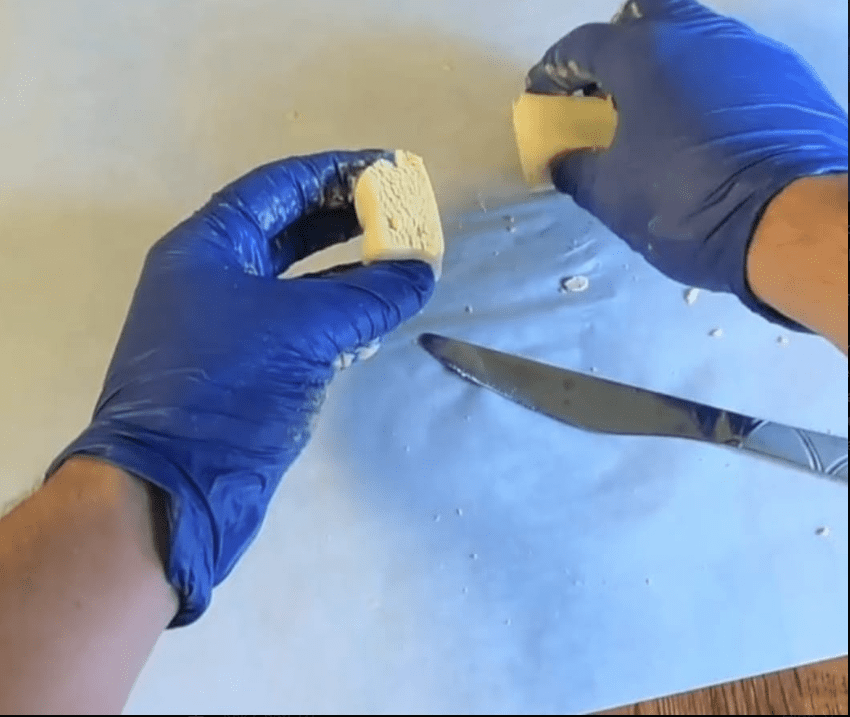
The kneading step is where the product comes together. As you work the mixture by hand (wearing nitrile gloves), the terpenes dissolve into the fiber-cannabinoid matrix and create new bonds between the fibers. The texture changes progressively from loose, crumbly powder to a cohesive, malleable mass. This process takes 5-10 minutes of continuous kneading depending on batch size and terpene ratio.
The consistency is adjusted by feel. Too crumbly: add a small amount of additional terpenes. Too soft or sticky: add more ground powder. The target is a firm, pliable mass that holds its shape when pressed but can be cleanly cut with a blade without crumbling. Periodically flatten the mass thin against parchment paper and inspect for visible clumps of unintegrated powder. Pick out any clumps, re-knead, and repeat until the cross-section is uniform throughout.
The finished hash requires no freeze-drying, vacuum sealing, or special curing. It is shelf-stable as produced: the terpene-fiber bond is mechanically stable at room temperature, and the cannabinoid payload is protected within the fiber matrix from oxidative degradation. The shelf life is comparable to traditional hash: 6-12+ months under standard storage conditions with minimal potency degradation.
Why This Is Better Than Traditional CBD Hash Methods
The conventional approach to making psychoactive hash from hemp starts with pressing CBD flower through a rosin press or ice water extraction to produce a CBD hash base, then adding THC distillate oil and kief or pollen to create a “spiked” hash product. This approach has the same problems as distillate-sprayed flower: the oil creates sticky handling, uneven potency distribution, and poor combustion behavior. The CBD base material also dilutes the psychoactive cannabinoid concentration because the hash already contains 40-60% CBD before any THC is added.
Starting with pure cannabinoid-loaded matrix powder eliminates both problems. There is no CBD base diluting the potency. The cannabinoid in the powder is whatever you loaded it with: Delta-8, Delta-9, THCA, THCP, or any custom blend. And the binding mechanism is terpene-fiber bonding rather than oil adhesion, which means the finished product burns cleanly with consistent flavor from first hit to last. No oil pooling, no hot spots, no sticky mess.
| Attribute | Traditional CBD Hash + Oil | Matrix Powder + Terpene Hash |
|---|---|---|
| Starting material | CBD rosin/hash + THC distillate + kief | Cannabinoid-loaded matrix powder + terpenes |
| Max psychoactive potency | Limited by CBD base dilution (typically 15-30% THC after spiking) | Limited only by matrix loading (40-60%+ TAC achievable) |
| Binding mechanism | Oil adhesion (sticky, uneven) | Terpene-fiber hydrogen bonding (cohesive, uniform) |
| Combustion quality | Oil layers burn inconsistently | Clean, even burn throughout |
| Equipment required | Rosin press + mixing tools | Mortar and pestle + mixing bowl |
| Time to finished product | 1-3 hours (pressing + mixing + curing) | 15-30 minutes (grind + knead) |
| Shelf stability | Oil layer oxidizes in 2-6 weeks | 6-12+ months (fiber matrix protects actives) |
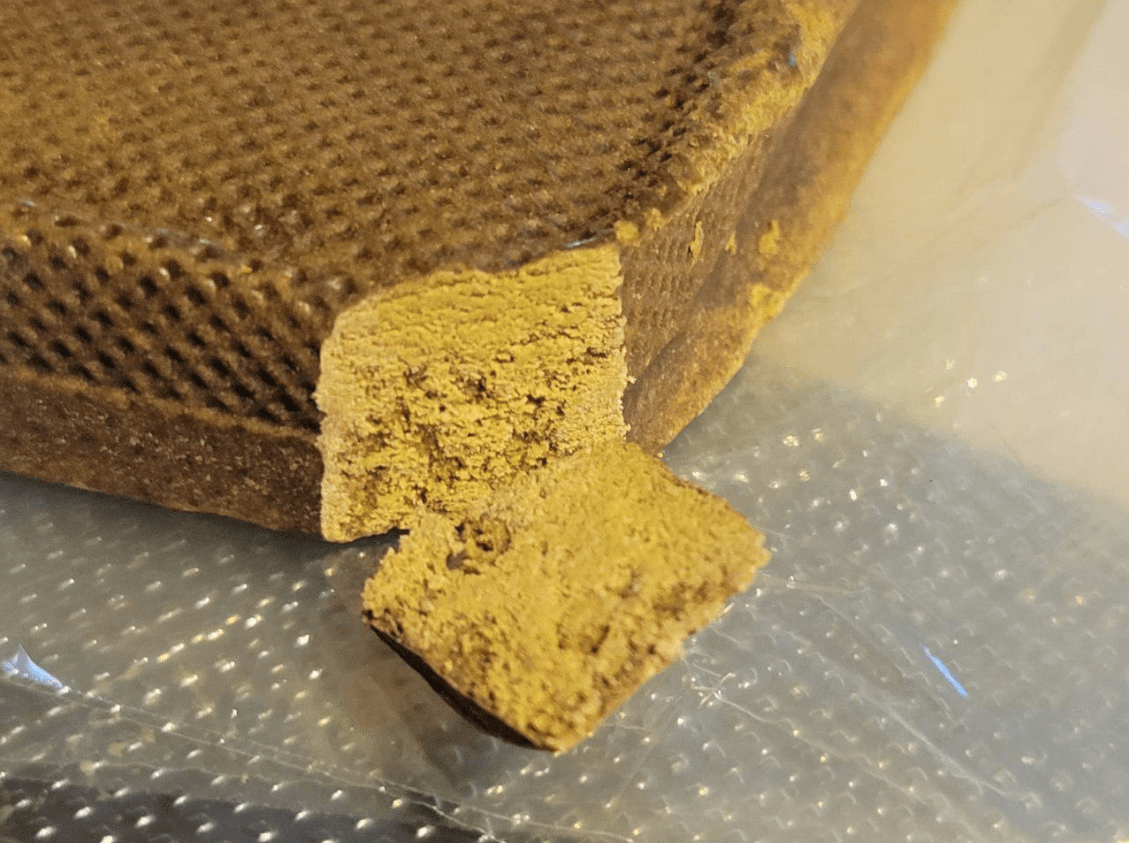
This hash application also creates an additional product SKU from the same matrix powder inventory. One batch of carrier matrix can be split between flower infusion (tumbled onto buds), pre-roll infusion (tumbled onto shake), and hash production (kneaded with terpenes). Three product categories from a single upstream formulation run, each commanding different price points and serving different consumer segments.
The Safety Dimension: What Should Never Go Into an Infusion Matrix
Not every powder that can carry cannabinoid should carry cannabinoid. The inhalation route of administration imposes safety constraints that do not apply to edible or topical formulations. Materials that are perfectly safe to eat can be dangerous to inhale. Materials that are GRAS (Generally Recognized As Safe) for food use are not automatically safe for combustion and inhalation.
Several materials that have appeared in commercial infusion operations should never be used in any smokeable product:
- MCT oil (medium-chain triglycerides): Used as a thinning agent for spray applications. Case reports have linked inhaled MCT oil to exogenous lipoid pneumonia. The oil does not fully combust at typical smoking temperatures and deposits lipid droplets in the alveoli.
- Propylene glycol (PG): Common e-liquid carrier that some operators use to thin distillate for spraying. PG decomposes at combustion temperatures to produce formaldehyde and acetaldehyde, both classified carcinogens.
- Synthetic cannabinoids (JWH-018, 5F-ADB, and similar): These compounds bind to CB1 receptors with dramatically higher affinity than natural cannabinoids (often 10-100x greater binding affinity). The dose-response curve is extremely steep, making overdose common and severe. Products containing these compounds have caused seizures, psychosis, kidney injury, and deaths. They have no place in any legitimate infusion operation. If you see someone spraying flower with synthetic cannabinoids, you are looking at a black market operation, not a cannabis manufacturer.
- Vitamin E acetate (VEA): The compound implicated in the 2019 EVALI (e-cigarette or vaping product use-associated lung injury) outbreak. VEA was used as a diluent in illicit THC vape cartridges. It has no legitimate role in any cannabis formulation.
The carrier material in a properly engineered infusion matrix must be food-grade, GRAS-compliant, and characterized for inhalation safety through pyrolysis analysis. It must fully decompose during combustion without producing irritant or toxic byproducts. This is a non-negotiable starting point, and any operation that cannot verify these properties for their carrier material is gambling with consumer health.
Frequently Asked Questions
What is the best method to infuse flower with cannabinoids?
Engineered carrier matrix infusion is the most effective method currently available. The cannabinoid is co-deposited with a food-grade carrier material from a molecular solution, cryogenically milled to a controlled particle size, and applied to flower as a dry, free-flowing powder through gentle tumbling. This method achieves content uniformity CV values below 10% (compared to 25-40% for distillate spray), coating retention above 90% through handling, and clean white-ash combustion. It is the only method fully compatible with automated pre-roll packing equipment without cleaning cycles or modifications.
Why does infused flower taste harsh and burn unevenly?
Harsh taste and uneven burn are caused by concentrated liquid distillate pooling in the crevices and low points of the flower surface. These oil pools combust at a different rate and temperature than the surrounding plant material, creating localized overheating that produces acrid smoke and black ash. The oil also blocks airflow through packed material, causing one side of a pre-roll to burn while the other side goes out (called “canoeing”). Properly engineered powder infusion eliminates both problems because the cannabinoid is distributed as individual dry particles rather than pooled liquid, and the carrier decomposes cleanly to CO2 and water during combustion.
How much potency can you add to flower through infusion?
A carrier matrix loaded at 50% cannabinoid content applied at a 10% rate by weight delivers approximately 5 percentage points of potency uplift. At a 15% application rate, the uplift is approximately 7-8 percentage points. For example, 18% THC base flower infused at a 10% application rate with a 50%-loaded matrix would test at approximately 23% total THC on the COA. Application rates above 15-20% by weight begin to visually overload the flower surface and compromise adhesion. For significant potency increases beyond 10 percentage points, higher cannabinoid loading in the matrix (60-70%) is preferable to higher application rates.
What is glass transition temperature and why does it matter for infused flower?
Glass transition temperature (Tg) is the temperature at which an amorphous solid material transitions from a hard, glassy state to a soft, rubbery state. For carrier matrix powders, this transition determines whether the powder flows freely (below Tg: glassy) or clumps and sticks (above Tg: rubbery). Moisture acts as a plasticizer that lowers Tg: each percentage point of absorbed moisture can drop Tg by 5-10°C. If a carrier absorbs enough ambient moisture to lower Tg to room temperature (approximately 20-25°C), the powder becomes sticky and unusable. This is why unengineered carrier powders fail in humid environments (Florida, coastal states in summer) and why professional formulations include hydrophobic surface modification to prevent moisture absorption.
Can you infuse flower with multiple cannabinoids at once?
Yes. The carrier matrix can be loaded with any blend of cannabinoid distillates during the formulation stage. Common multi-cannabinoid formulations include THC + CBD at specific ratios (1:1, 2:1, 4:1) for targeted therapeutic effects, THCV blends for appetite suppression and focused psychoactivity, CBN combinations for sleep promotion, and full-spectrum blends incorporating Delta-8, Delta-9, THCA, THCP, and minor cannabinoids for enhanced entourage effects. Because the formulation step uses molecular co-deposition, all cannabinoids in the blend are uniformly distributed throughout every particle of the finished powder, ensuring consistent multi-cannabinoid delivery from puff to puff.
How is infused flower different from moon rocks?
Traditional moon rocks use the Tier 3 method: whole buds are coated in warm liquid distillate (as an adhesive) then rolled in kief. The distillate layer creates an oil-saturated exterior that burns harshly, produces black ash, and makes the product nearly impossible to grind or use in pre-rolls. Properly infused flower uses an engineered dry powder coating with no liquid adhesive layer. The powder penetrates into the flower’s surface texture rather than sitting on top of an oil layer. The result is a product that grinds normally, packs normally in pre-roll machines, burns cleanly with white ash, and delivers consistent dosing. Moon rocks are a novelty product. Engineered infused flower is a manufacturing-grade product suitable for consistent, scalable production.
Does infused flower go bad faster than regular flower?
Properly engineered infused flower actually has equal or better shelf stability compared to uninfused flower from the same batch. The carrier matrix protects the cannabinoid payload from oxidative degradation through its physical structure and, in professional formulations, through anti-oxidant properties built into the carrier. Shelf life of 6-12+ months under standard storage conditions (15-25°C, below 60% RH) is achievable. Poorly infused flower (distillate-sprayed) degrades faster than uninfused flower because the exposed oil layer oxidizes rapidly, causing browning, off-flavors, and potency loss within 2-4 weeks at ambient conditions.
What equipment do I need to infuse flower with cannabinoid powder?
The infusion step itself requires minimal equipment: a tumbling vessel (rotary drum for commercial scale, 5-gallon bucket or Pyrex dish for small scale), a precision scale, nitrile gloves, and a clean workspace. The powder application takes 30-60 seconds of gentle tumbling. The upstream matrix formulation process is where the significant equipment investment lives: rotary evaporation for solvent removal under continuous mixing, cryogenic milling for particle size reduction, precision sieving for classification, and analytical instruments (HPLC, loss-on-drying, sieve analysis) for quality control. Total formulation lab cost: $15,000-75,000 depending on scale. Many operators start by purchasing toll-manufactured matrix powder from a formulation partner rather than investing in their own lab.
How do you test content uniformity in infused flower?
Multi-point content uniformity testing requires taking 10 individual samples from different locations within a single batch: top, bottom, center, and edges of the tumbling vessel. Each sample is tested independently via HPLC for total cannabinoid content. Calculate the mean, standard deviation, and coefficient of variation (CV). Professional-grade matrix infusion should achieve CV below 10%. CV of 10-15% indicates the formulation needs improvement. CV above 15% indicates a fundamental problem in either the matrix production (heterogeneous cannabinoid distribution in the powder) or the application step (insufficient tumbling time or non-flowing powder). The USP standard for pharmaceutical content uniformity requires CV below 6%, which provides a useful target for operations pursuing pharmaceutical-grade quality.
Is powder infusion safer than spray infusion for consumers?
Properly engineered powder infusion is safer for three reasons. First, it uses no liquid solvents, thinning agents, or adhesives at the application step. Spray-based methods often require thinning agents (MCT oil, PG, ethanol) to make distillate sprayable; some of these thinning agents produce toxic decomposition products when combusted. Second, the carrier material in a professional matrix is GRAS-compliant and characterized for pyrolysis safety, decomposing cleanly to CO2 and water. Third, the dry application process eliminates the residual solvent risk: there is no ethanol, isopropyl, or other volatile compound to incompletely evaporate. The product is dry before, during, and after the infusion step. No drying or off-gassing period is required before packaging.
What makes a carrier material safe for inhalation?
A carrier material for smokeable infused flower must meet three criteria: food-grade and GRAS-compliant as a baseline, full decomposition during combustion (>98% mass loss by 600°C on thermogravimetric analysis), and clean pyrolysis profile (no formaldehyde, acrolein, PAHs, or other irritant/toxic decomposition products in the smoke stream). Materials that char rather than fully decomposing create dense residues that trap unreleased cannabinoid and contribute to harsh, particulate-heavy smoke. Not every GRAS material meets the combustion criteria. Materials must be individually evaluated through TGA, DSC, and ideally gas-phase combustion product analysis before inclusion in any inhalation-route formulation.
Can I infuse CBD flower with THC to make it psychoactive?
Yes, and this is one of the most common applications of powder infusion technology. CBD or CBG hemp flower serves as an inexpensive base material ($50-200/lb) that provides the physical structure. A carrier matrix loaded with THC distillate (or any psychoactive cannabinoid blend: Delta-8, Delta-9, THCA, THCP, etc.) is applied through tumbling. The result is a product that looks, smells, and burns like natural cannabis flower but carries a custom-engineered potency and cannabinoid profile. Application at 10% by weight with a 50%-loaded matrix adds approximately 5 percentage points of THC. At a 15% rate, approximately 7-8 points. The base flower contributes its own terpene profile and minor cannabinoid content, creating a more complex experience than distillate alone. Compliance with local regulations regarding intoxicating hemp products is the operator’s responsibility: several states and the federal government are moving to restrict intoxicating hemp products in 2026-2027.
Can you make hash from cannabinoid infusion powder?
Yes. The same matrix powder used for flower infusion can be converted into a solid hash product by adding cannabis-derived terpenes at approximately 10% by weight and kneading by hand for 5-10 minutes. The terpenes act as a solvent that partially dissolves and re-bonds the cellulose fiber surfaces in the matrix, fusing discrete powder particles into a cohesive, cuttable mass with a texture and consistency nearly identical to traditional hash. The resulting product requires no freeze-drying or curing, is shelf-stable for 6-12+ months, and can achieve psychoactive potency of 40-60%+ TAC because there is no CBD base material diluting the cannabinoid loading. This method produces a cleaner-burning, more uniform product than traditional approaches of spiking CBD hash with distillate oil.
What terpene ratio should I use when making hash from infusion powder?
Start at approximately 10% terpenes by weight of the ground matrix powder. If the mixture is too crumbly after 5 minutes of kneading, add terpenes in small increments (1-2% at a time) until the mass holds together when pressed. If the mixture is too soft or sticky, add more ground powder. The terpene ratio is forgiving: anywhere from 8-15% by weight produces a workable product. Below 8%, the fibers do not bond sufficiently and the hash crumbles. Above 15%, the product becomes overly soft and does not hold its shape at room temperature. Cannabis-derived, strain-specific terpene profiles (OG Kush, Gelato, etc.) provide both the binding function and a recognizable flavor identity for the finished product.
Ready to level up your infusion operation? Contact WKU Consulting for formulation consulting, matrix engineering guidance, and facility-specific infusion system design. We work with operators from kitchen-table startups to multi-state commercial operations.
For more deep dives into cannabis chemistry, extraction SOPs, and processing science, subscribe to the WKU Consulting YouTube channel.
Watch the full dry powder infusion process:
Watch how to make hash from infusion powder:
Technical Partners
WKU is proud to partner with the industry leading ENHAZED to bring you the industry’s first and only technologically superior powder infusion matrix. Visit them here: https://enhazed.com/
