DEA Schedule III Registration for Cannabis Extraction Manufacturers: Forms, Fees, Facility Requirements, and the Compliance Gap

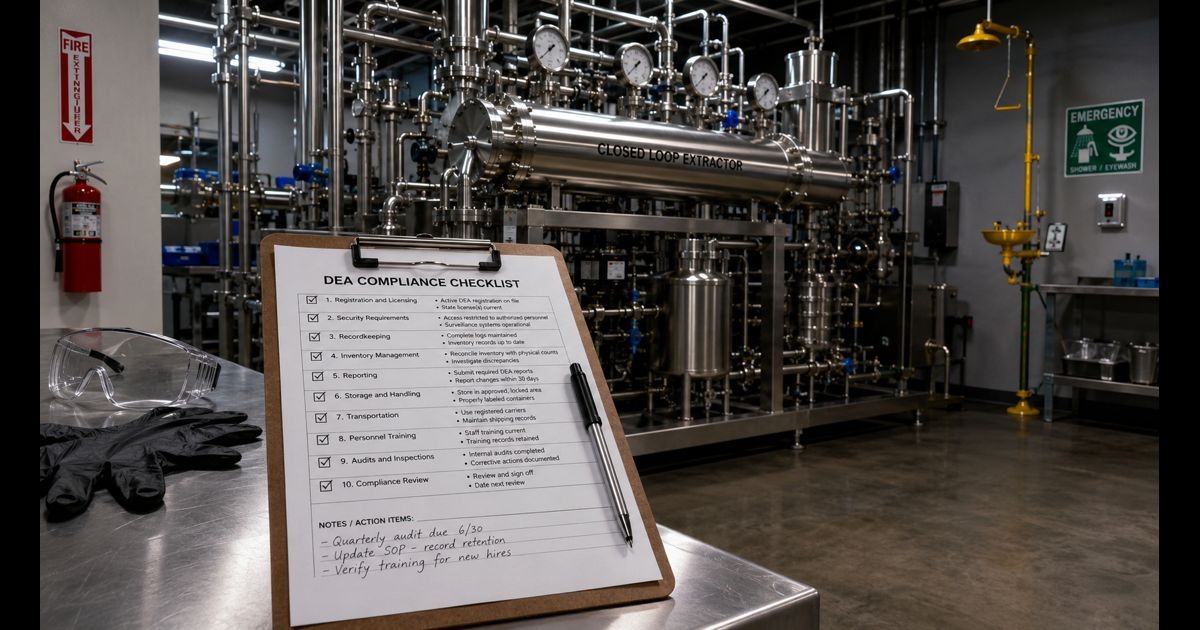
DEA Schedule III cannabis manufacturer registration requires DEA Form 225 with drug codes 7362 (marijuana extract), 7353 (tetrahydrocannabinols), or 7386 (marijuana). Annual fee: $3,699 for manufacturers. The 60-day priority filing window from the April 28, 2026 Federal Register final order closes June 26-27, 2026. Operators who file within that window receive a guaranteed 6-month DEA [...]

By |2026-08-25T16:31:05+00:00June 23rd, 2026|Industry & Regulation|Comments Off on DEA Schedule III Registration for Cannabis Extraction Manufacturers: Forms, Fees, Facility Requirements, and the Compliance Gap

Residual Solvent Purging in Cannabis: How to Remove Butane, Propane, and Ethanol Without Cooking the Batch

If your extract still carries residual solvent at the end of the process, the problem usually did not start in the vacuum oven. It started upstream with film thickness, solvent load, heat input, vacuum depth, or the operator trying to force mass transfer with temperature instead of time and surface area. Residual solvent purging in [...]

By |2026-06-28T17:15:12+00:00June 21st, 2026|Cannabis Safety, Lab Techniques, Post-Processing|Comments Off on Residual Solvent Purging in Cannabis: How to Remove Butane, Propane, and Ethanol Without Cooking the Batch

Cannabis Extraction SOP Templates: What Inspectors Actually Check and How to Pass Every Audit

What Is a Cannabis Extraction SOP? A cannabis extraction SOP is a written document that defines every variable in your extraction process with a target value, an acceptable range, and a defined action when you fall outside that range. It covers material inputs (solvent grade, starting material specs), process parameters (temperatures, pressures, hold times, solvent [...]

By |2026-06-16T22:27:10+00:00June 16th, 2026|Uncategorized|Comments Off on Cannabis Extraction SOP Templates: What Inspectors Actually Check and How to Pass Every Audit

How to Purge Residual Solvents from Cannabis Concentrates: Solvent-Specific SOPs

How to Purge Residual Solvents from Cannabis Concentrates: Solvent-Specific SOPs, State Limits, and Diagnostic Protocol Residual solvent purging for cannabis concentrates requires solvent-specific parameters: butane purges at 29-38C (85-100F) under 29+ inHg vacuum for 24-72 hours to reach sub-500 ppm. Ethanol purges at 40-50C (104-122F) under 28+ inHg for 8-24 hours. Propane purges faster than [...]

By |2026-06-09T17:00:53+00:00June 9th, 2026|Cannabis Safety, Extraction Techniques, Post-Processing|Comments Off on How to Purge Residual Solvents from Cannabis Concentrates: Solvent-Specific SOPs

Cannabis Lab Testing Fraud: How Fake COAs, Potency Inflation, and Corrupt Labs Are Poisoning the Legal Market

Nearly half of all licensed cannabis products on dispensary shelves carry THC labels that are wrong by more than 20%. A 2026 study found that 48% of licensed cannabis products deviated by more than 20% from their labeled THC concentration. A peer-reviewed PLOS One study of Colorado dispensary samples found average observed THC potency was [...]

By |2026-06-08T19:18:07+00:00June 8th, 2026|Cannabis Safety|Comments Off on Cannabis Lab Testing Fraud: How Fake COAs, Potency Inflation, and Corrupt Labs Are Poisoning the Legal Market

Cannabis Beverage Formulation Science: Nano Emulsion, Stability, and Why Most THC Drinks Fail

Why Most Cannabis Beverages Fail Within 6 Months Cannabis nano emulsion for beverages requires droplet sizes between 20-100nm (PDI below 0.3) using high-pressure homogenization at 15,000-30,000 PSI or ultrasonication at 20-25 kHz. At 50nm average droplet size, THC bioavailability jumps from 6-10% (standard edible) to 50-85%, with onset dropping from 45-90 minutes to 10-20 minutes. [...]

By |2026-07-09T19:26:57+00:00June 4th, 2026|Cannabis Chemistry, Lab Techniques, Post-Processing|Comments Off on Cannabis Beverage Formulation Science: Nano Emulsion, Stability, and Why Most THC Drinks Fail

Closed-Loop Extraction Systems for Cannabis: How They Work, What Matters, and What Fails

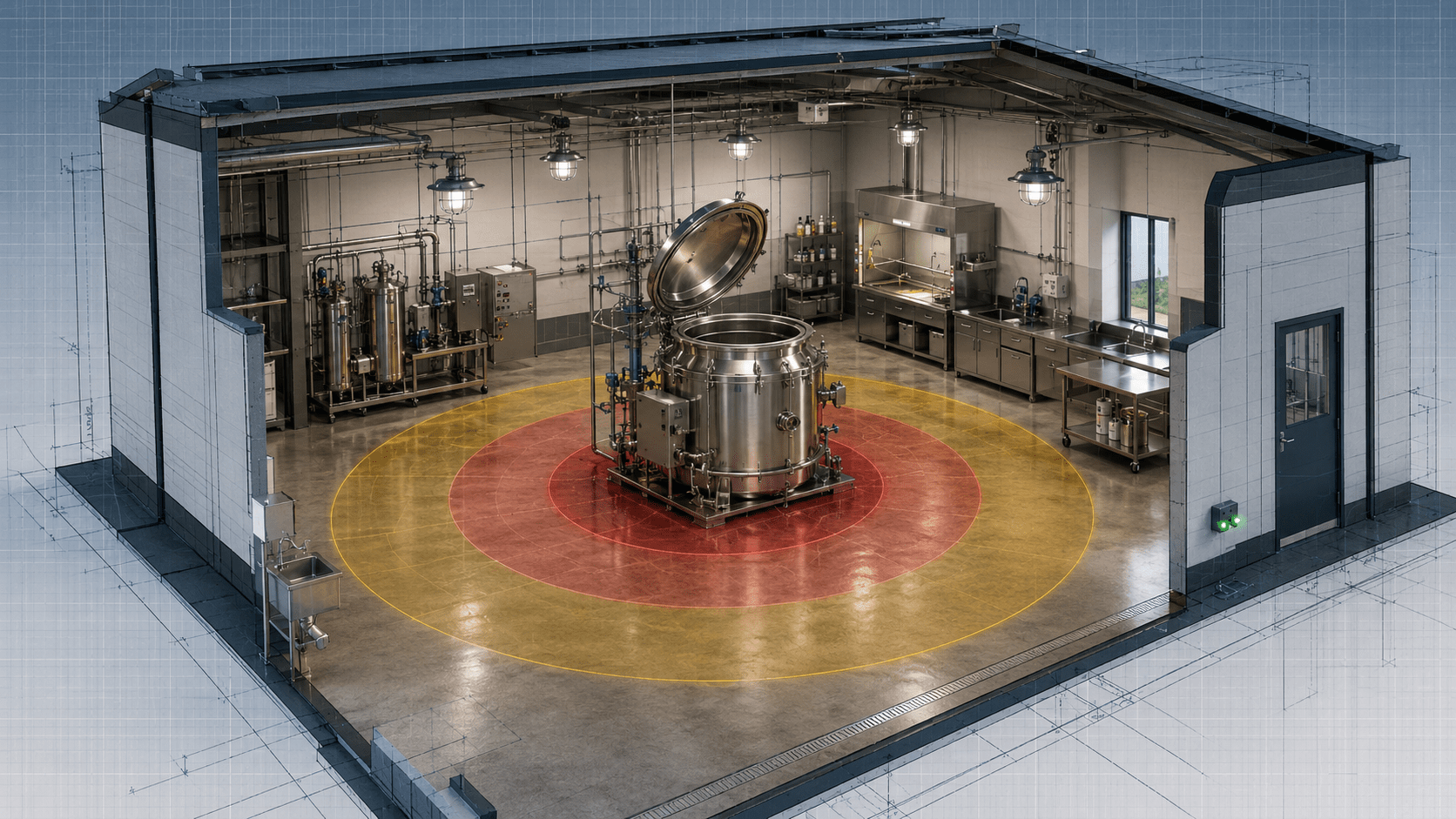
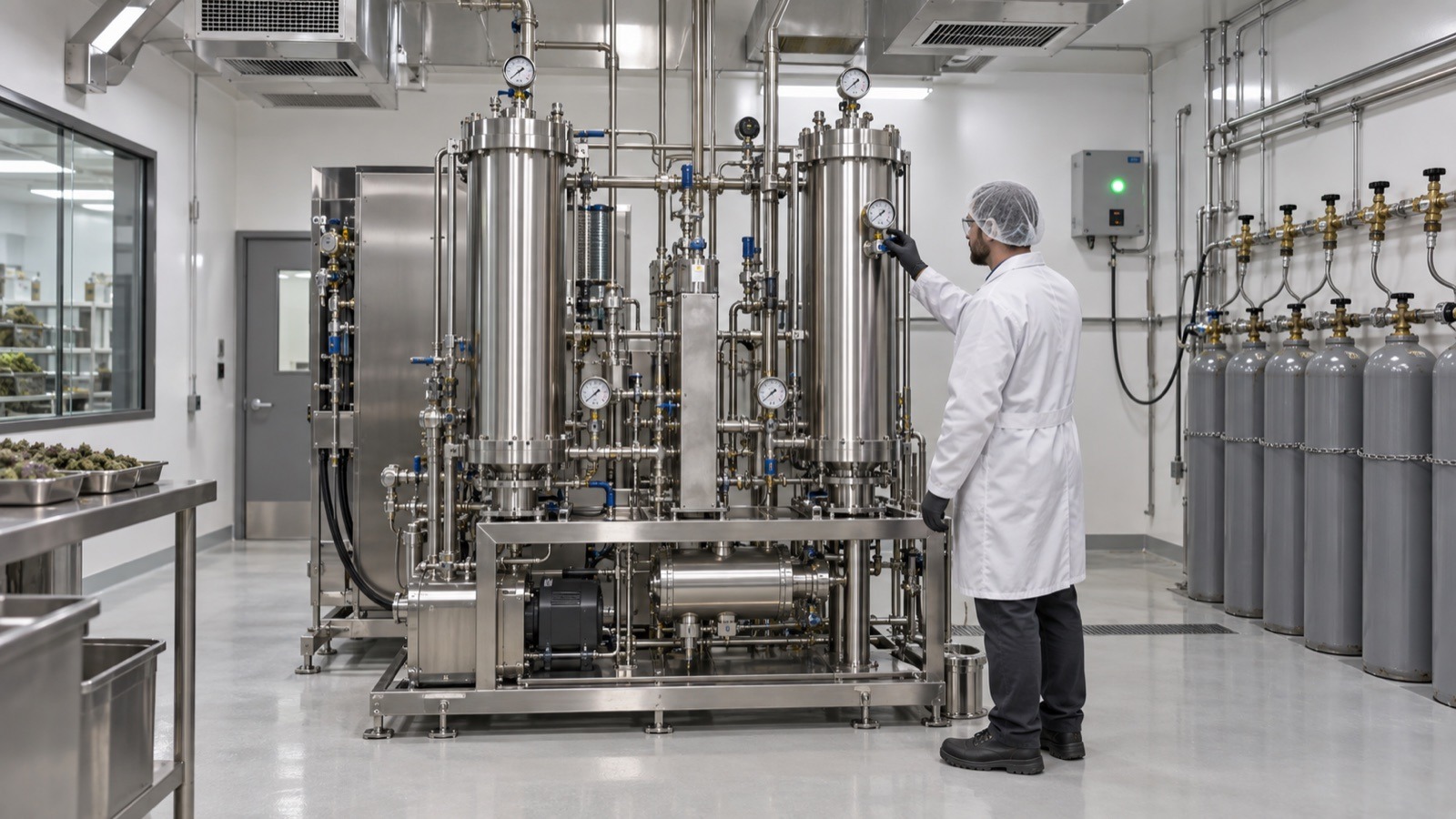
What is a closed-loop extraction system, and why does it matter? A closed-loop extraction system recovers and reuses its solvent in a sealed circuit instead of venting it. In cannabis processing it moves butane, propane, or a blend (commonly around 70:30 butane to propane for live resin) through chilled biomass, dissolving cannabinoids and terpenes, then [...]

By |2026-08-27T01:54:29+00:00May 31st, 2026|Cannabis Safety, Extraction Techniques, Lab Techniques|Comments Off on Closed-Loop Extraction Systems for Cannabis: How They Work, What Matters, and What Fails

RSO Dosing Protocol: Carrier Oil Bioavailability, Titration Schedules, and Pharmacokinetics

RSO Dosing Protocol: Carrier Oil Science, Titration Schedules, and Why Most Guides Get It Wrong RSO dosing starts at 5mg THC (a rice grain of 60% oil), titrates to 25-50mg over 4-6 weeks, and the carrier oil you dissolve it in changes bioavailability by 3-4x. MCT oil delivers 2.5x the plasma THC of olive oil [...]

By |2026-06-12T17:06:32+00:00May 28th, 2026|Cannabis Education, Post-Processing|Comments Off on RSO Dosing Protocol: Carrier Oil Bioavailability, Titration Schedules, and Pharmacokinetics

Novel Cannabinoid Synthesis from CBD: THCP, HHC, THCV Chemistry and Why Bans Keep Failing

Novel Cannabinoid Synthesis from CBD: THCP, HHC, THCV, and the Chemistry Legislators Cannot Outrun THCP binds CB1 receptors at 33x the affinity of delta-9 THC. HHC resists oxidation because catalytic hydrogenation eliminates the double bond at C9. THCV acts as a CB1 antagonist below 10mg and flips to partial agonist above 20mg. Every one of [...]

By |2026-08-04T22:18:18+00:00May 26th, 2026|Cannabis Chemistry, Industry & Regulation|Comments Off on Novel Cannabinoid Synthesis from CBD: THCP, HHC, THCV Chemistry and Why Bans Keep Failing
Go to Top